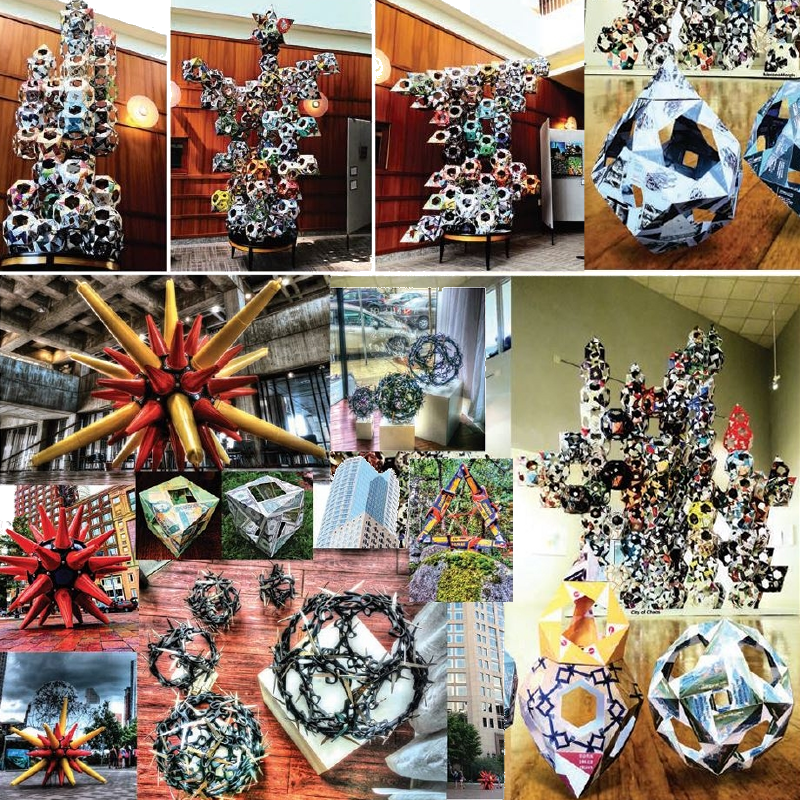
Deutilization
Developed by Viktor Genel beginning in 2013, Deutilization is a major branch of Arteanity that releases human-made objects from imposed practical function so their structural, geometric, and expressive existence can become visible. It is neither recycling nor decoration: utility is suspended rather than replaced.


Developed by Viktor Genel beginning in 2013, Deutilization is an earlier major branch of Arteanity. It begins from the proposition that human-made objects already contain art, but that necessity and convention often conceal it beneath usefulness. Scissors are required to cut, saws to divide, traffic cones to direct movement, and business cards to identify and circulate a person or enterprise. These assigned functions determine how the objects are handled, valued, and perceived.
Earlier Deutilization texts used the term Terra Creation for the wider field of human-made form concealed beneath practical purpose. The current Arteanity archive retains that earlier vocabulary as part of the documented conceptual lineage rather than as a separate branch.
Deutilization deliberately interrupts that condition. An object may be removed from its customary setting, rendered unable to perform its prescribed task, folded, joined, reoriented, divided, or subjected to another material operation. The purpose is neither destruction nor the invention of a substitute use. It is to release qualities that utility had made secondary: proportion, geometry, repetition, material behavior, structural capacity, and physical presence.
This distinguishes Deutilization from recycling, decorative reuse, and the simple presentation of a found object. Its subject is not waste as such. A work begins with a new and fully functional object or with one whose original role has been exhausted. In either case, the decisive event is the separation of the object from its assigned service. What follows is not an illustration of the idea but an actual material transition.
MeconoMorph, initiated in 2013, is one of the most extensive systems to emerge from Deutilization. Standard business cards are folded into repeatable units called Mecons and joined into expandable three-dimensional structures. The cards cease to function primarily as instruments of commercial identity; their fixed proportions and latent structural possibilities become generative. MeconoMorph persists as a system through changing works, installations, contributors, locations, and physical manifestations rather than as a single fixed object.
Scissaurus, HedgeCone (Rad), Sawrus, MoneyCube, and later subtractive investigations extend the same inquiry through other objects, materials, and procedures. Across these bodies of work, Deutilization remains one of Arteanity’s principal continuing disciplines: a sustained examination of what human creation can become when function no longer governs what an object is permitted to be.
Corpora of This Branch
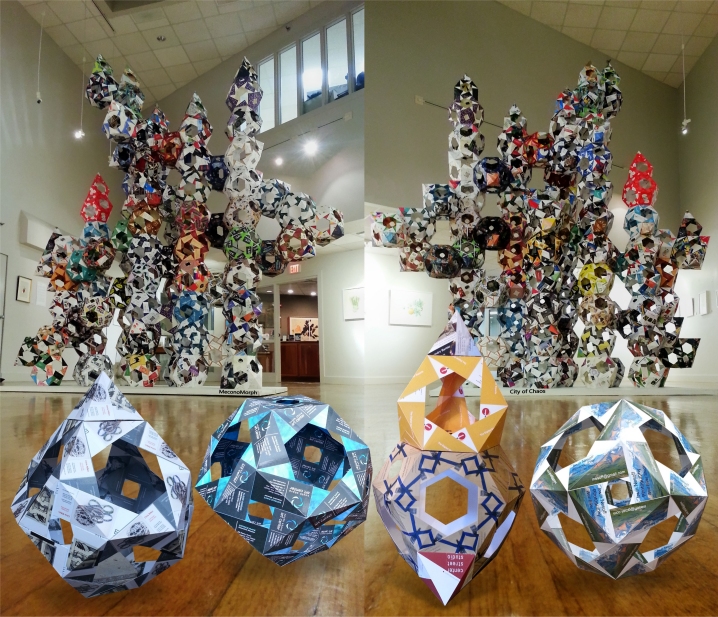
Deutilization is conceptually simple: an object is released from the authority of its prescribed function so that other possibilities within it can become perceptible.
The implications are less simple.
Function is one of the primary means through which contemporary life assigns identity and value - to objects, institutions, occupations and human activity. Deutilization therefore may become uncomfortable when its logic is carried beyond the material object. It does not claim that utility, profession, achievement or social function are meaningless. It asks a narrower and more disruptive question: do they exhaust what something is?
Some encounters with Deutilization may therefore produce disagreement rather than immediate recognition.
That disagreement is not an obstacle to the inquiry. It is part of its territory.