What Arteanity Is
Arteanity is the overarching creative framework developed by Viktor Genel, within which several related creative directions have developed. The name joins art and humanity, but it does not designate a single style, medium, or body of objects. It identifies a continuing inquiry into how creative force enters structures, systems, materials, actions, and material traces.
Across its development, Arteanity has taken different forms. Some have worked through geometry and mechanism; others through the release of objects from prescribed utility, the construction of generative systems, or the direct action of the body upon medium and substrate. These directions are neither interchangeable nor isolated. They belong to the same field because each investigates how an existing order can be interrupted and a deeper form of possibility allowed to emerge.
Earlier Directions
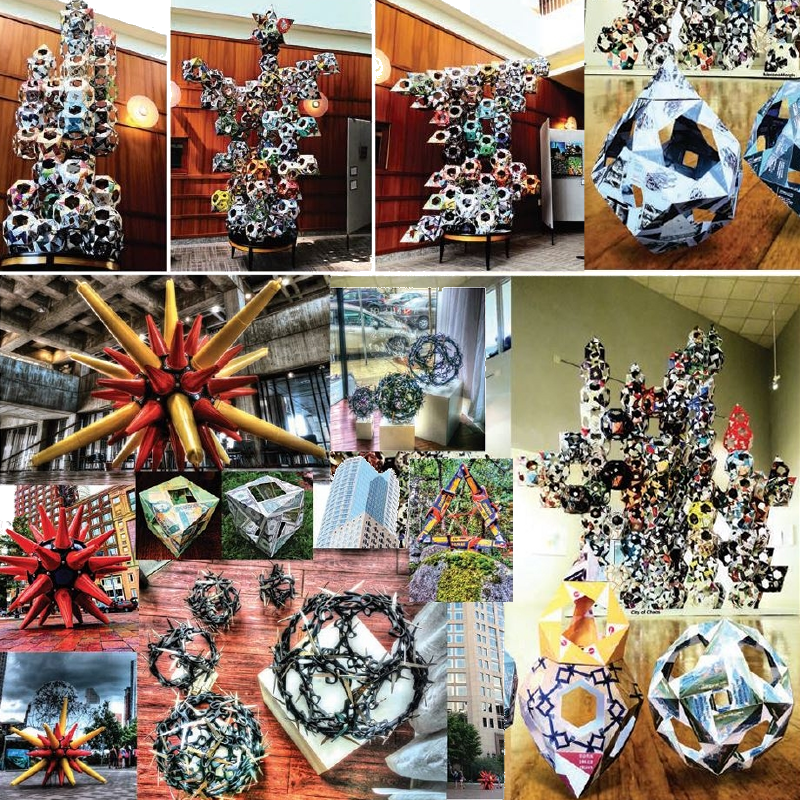
Primordial Mechanisms formed an early foundation of Arteanity through investigations of geometry, mechanism, transformation, and puzzle-like systems. These works established a persistent concern with structures that can be activated, rearranged, or understood through their internal relationships.
Deutilization later extended and reorganized this inquiry. Deutilization removes an object or material from the authority of its prescribed function so that its deep foundational traits can become visible.
Within this field, MeconoMorph developed as a generative system expressed through changing, sometimes participatory manifestations rather than as a single conventional object type.
Other artifact lineages pursued related transformations through tools, modules, repetition, and assembly. These directions overlapped and remained available to one another. They should not be understood as sealed chronological periods, but as stages in the development of an expanding field.
The Entrance of Somacentric Trajectilery
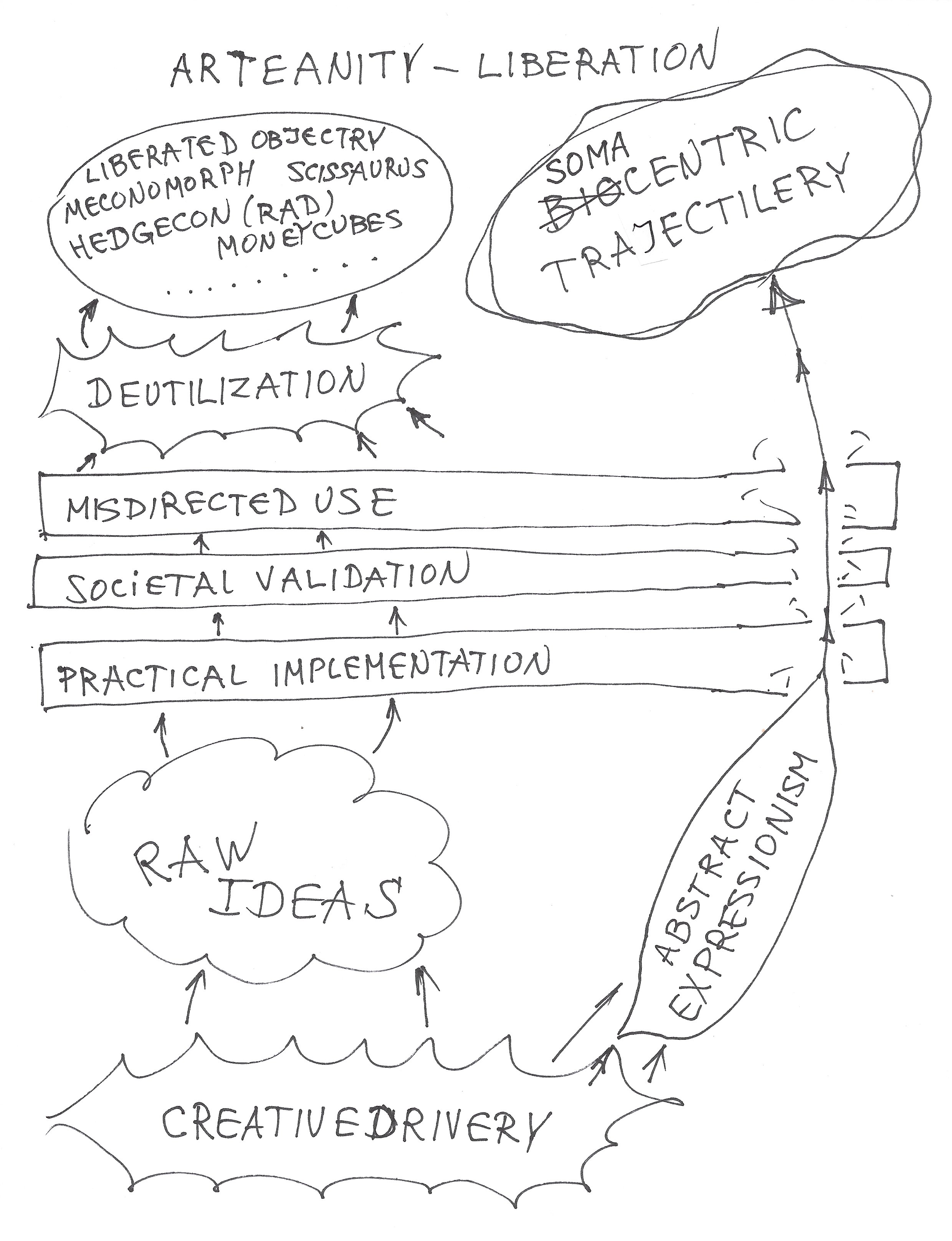
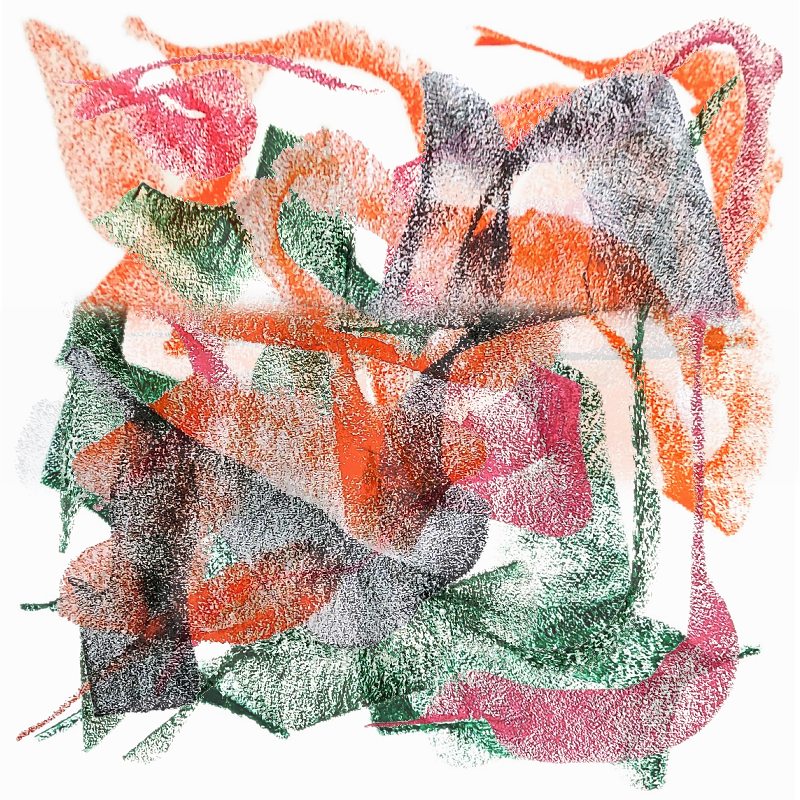
Somacentric Trajectilery entered Arteanity in May 2026 through the first Nameless artifacts. It revealed a route different from the mediated transformations of Deutilization. Instead of beginning with an existing object and releasing it from assigned utility, it begins with bodily action.
In this route, Creative Drivery passes through movement into medium and substrate before a predetermined image is ever formed.
The route is comparatively unmediated, but it is not without material conditions: bodily velocity, pressure, hesitation, and collision meet the resistance, fracture, adhesion, and movement of the materials. The resulting artifact records that encounter rather than illustrating an idea conceived in advance.
Somacentric Trajectilery did not replace Arteanity’s earlier directions. It entered the existing field as a new principal branch and disclosed another route by which Creative Drivery could acquire material form - a route beginning before any predetermined form or assigned function is conceived.
A General Ontology
Arteanity begins with Creative Drivery: the generating force that precedes any particular object, image, system, or method. That force may follow a mediated route, passing through an existing object, assigned function, conceptual translation, and deliberate transformation.
It may also follow a comparatively unmediated route, passing through bodily movement into resistant medium and substrate before conscious representation can govern the result.
What emerges from these routes does not always have the same status. A protocol establishes conditions for action. A system persists through rules and relationships and may produce multiple manifestations. A manifestation is a particular realization of such a system, while an artifact is a distinct material record with its own history.
Corpora bring related artifacts into meaningful sequences without erasing their individual identities.
Writings interpret, define, or record the field. Evidence documents events, processes, and contexts.
Lineages make continuity and transformation across different directions visible.
Together, these entities constitute Arteanity without being reduced to a single category of “work.”