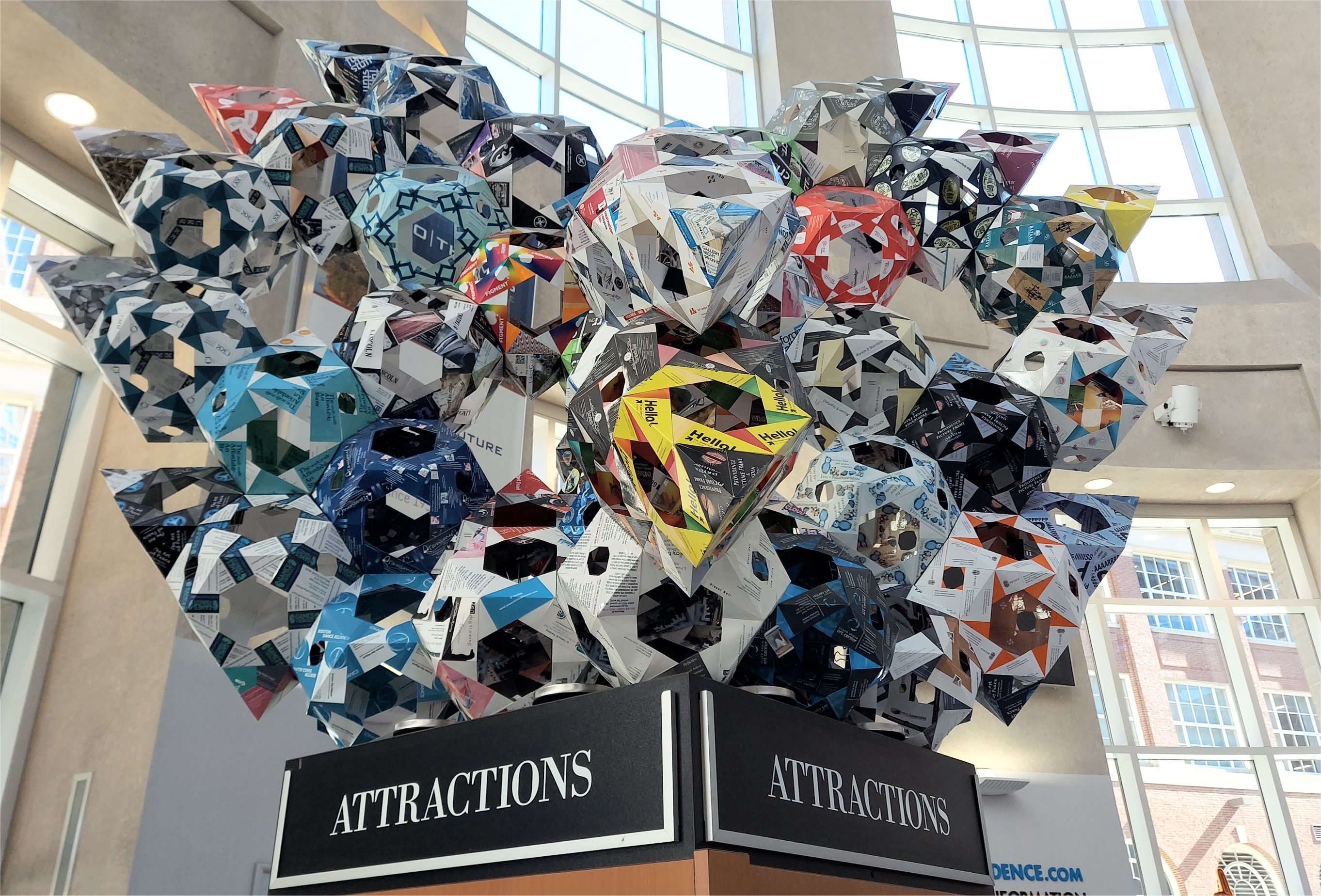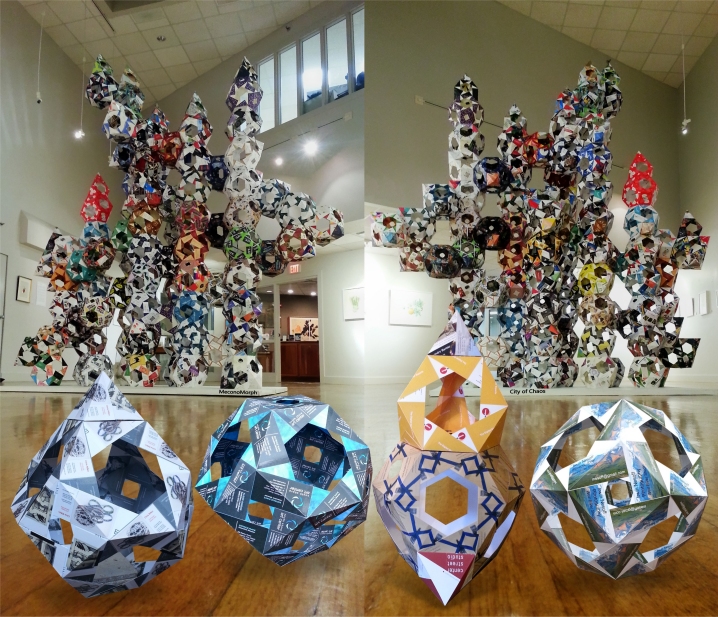
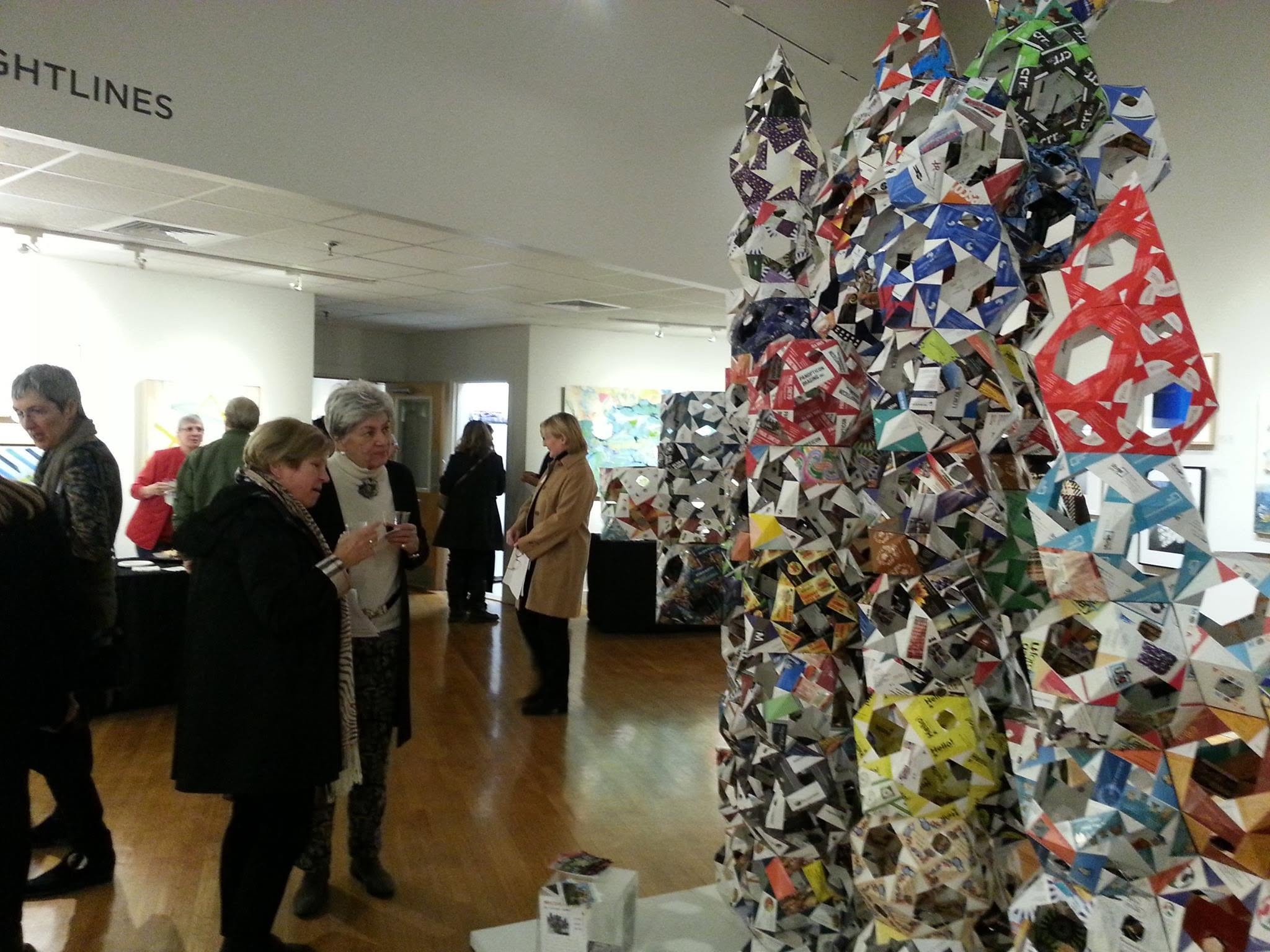
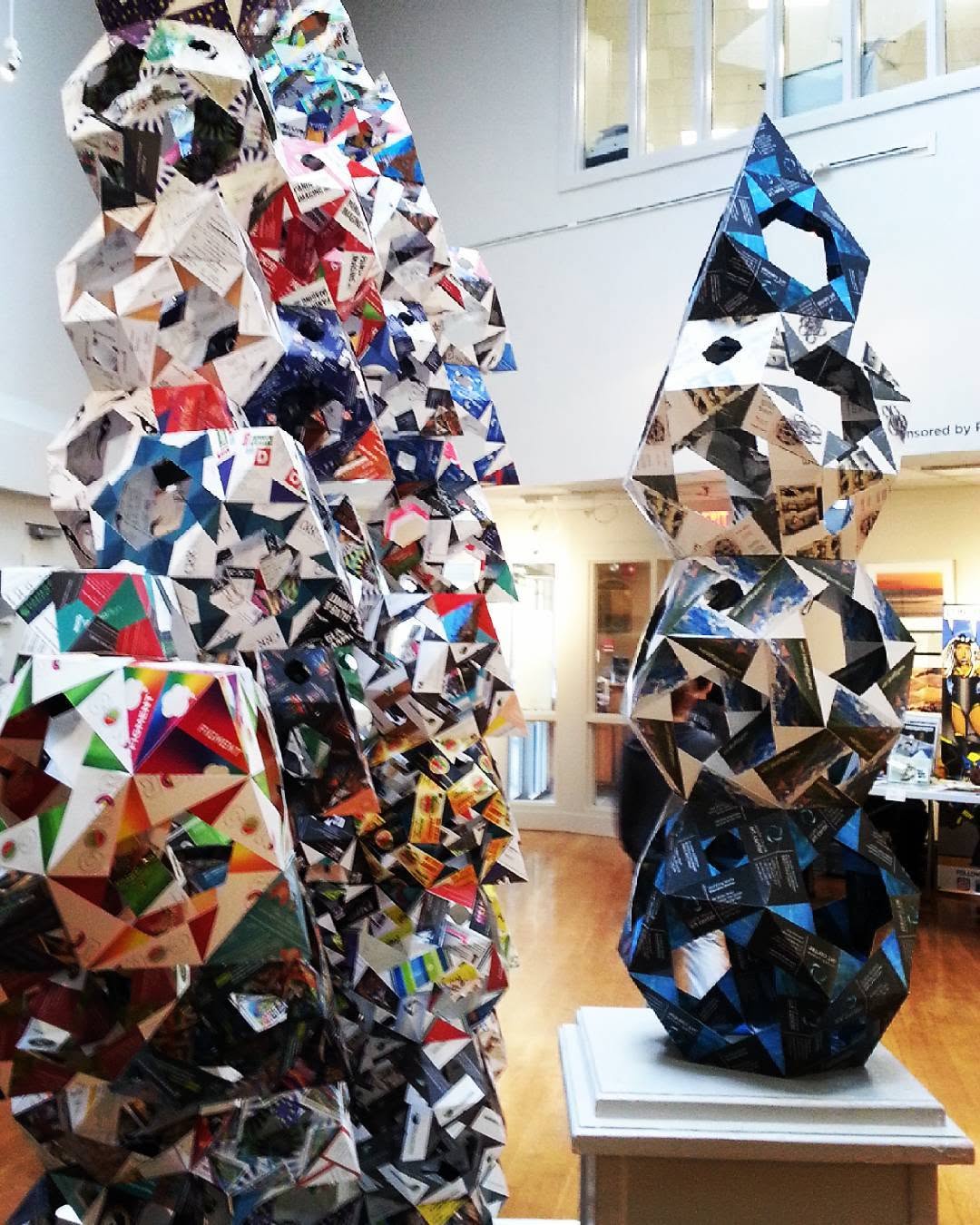
City of Chaos was a 2017 MeconoMorph artifact whose form emerged during installation at South Shore Art Center without a predetermined final configuration. Built from the accumulated MeconoMorph module pool, including modules previously used in Sand Clock and other intervening incarnations, it also generated new modules from cards collected at SSAC. The title was coined during the installation in response to the unplanned complexity of the resulting structure.
City of Chaos emerged during the 2017 MeconoMorph installation at South Shore Art Center.
It was not built toward a predetermined image or final configuration. The available MeconoMorph modules were assembled open-endedly, with the growing structure itself determining what could happen next. The title City of Chaos was coined during the installation in response to the complexity of the form that emerged.
Its material history was older than the artifact itself.
City of Chaos incorporated modules that had previously appeared in Sand Clock and in numerous intervening MeconoMorph incarnations. This continuity was material rather than genealogical: City of Chaos was not a structural descendant of Sand Clock. During the early years of MeconoMorph, scarcity meant that most available modules normally passed from one installation into the next, while new modules were gradually added to the shared population.
The SSAC installation also generated new material.
Business cards collected at the exhibition were used to continue building. A smaller tower grew beside the main installation from these new additions; its bottom Mecon and its top Mini Mecon were made from cards contributed at SSAC. The exhibition therefore functioned not simply as a display site but as an active point of module production and structural growth.
City of Chaos concentrated several years of MeconoMorph history into a single temporary configuration.
Older modules carried physical histories from preceding incarnations while newly fabricated modules entered the system beside them. The artifact's identity belonged to the particular emergent configuration and its naming, not to exclusive ownership of its constituent modules.
Shared modules establish material provenance but do not by themselves establish direct artifact descent.
An artifact can disappear while its modules persist, migrate, and later participate in structurally unrelated incarnations. City of Chaos is therefore connected materially to Sand Clock and other earlier works without being their formal continuation.
The making process was unusual even within MeconoMorph.
In retrospect, its open-ended formation anticipates aspects of the later Somacentric discipline, although City of Chaos was not produced by a trajectile. The operative agency was structural: each accumulated condition constrained and redirected what could be built next. The later term Structuretile provides a useful retrospective description of this mode of formation without relocating the artifact into Somacentric Trajectilery.
Contemporary SSAC documentation records both the earlier and later stages of this history.
The 2014 South Shore Art Center installation was identified as Sand Clock. In 2017, photographs and blog documentation identify the much larger returning MeconoMorph structure as the City of Chaos incarnation and document continued building from newly collected cards.