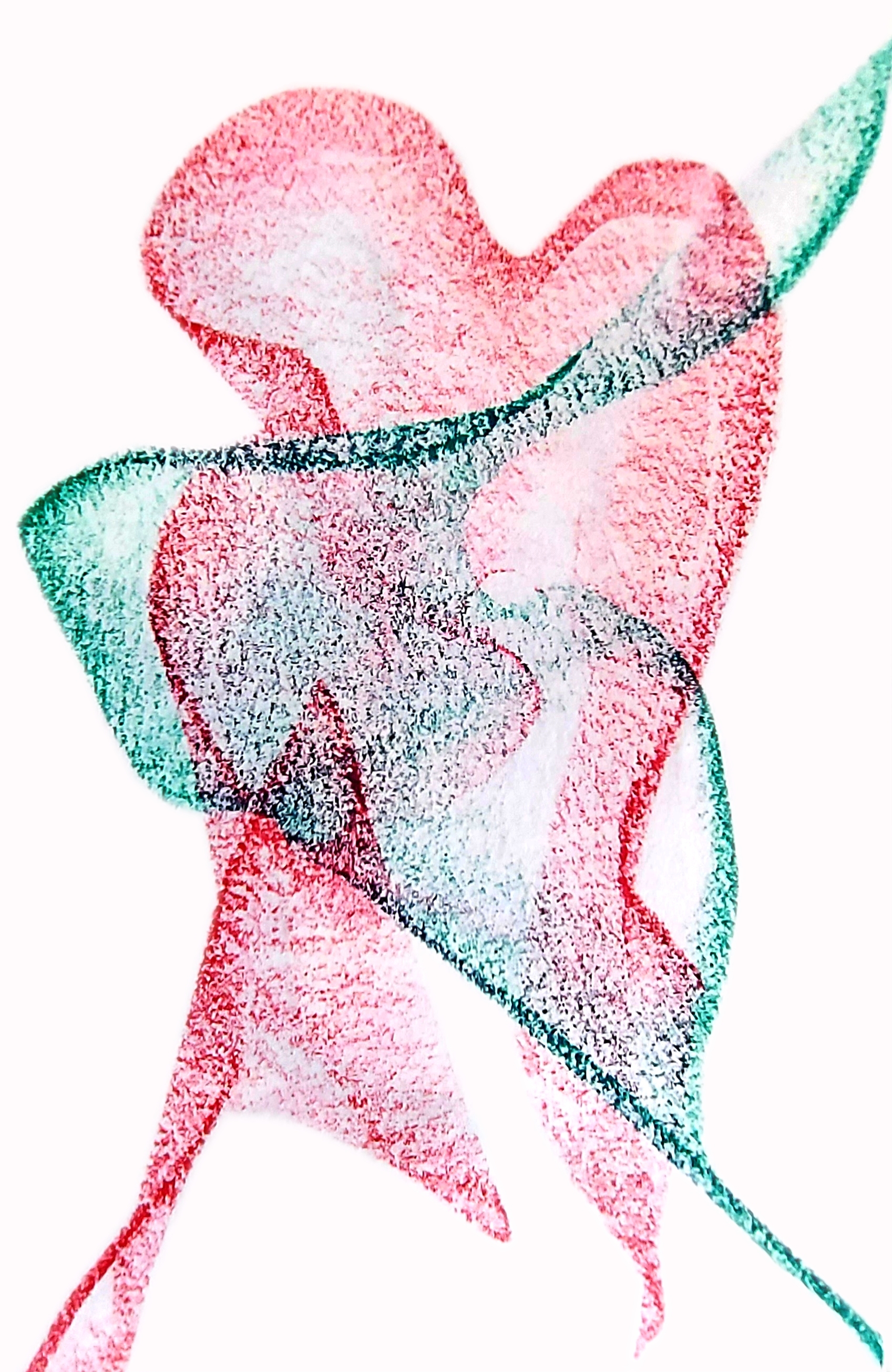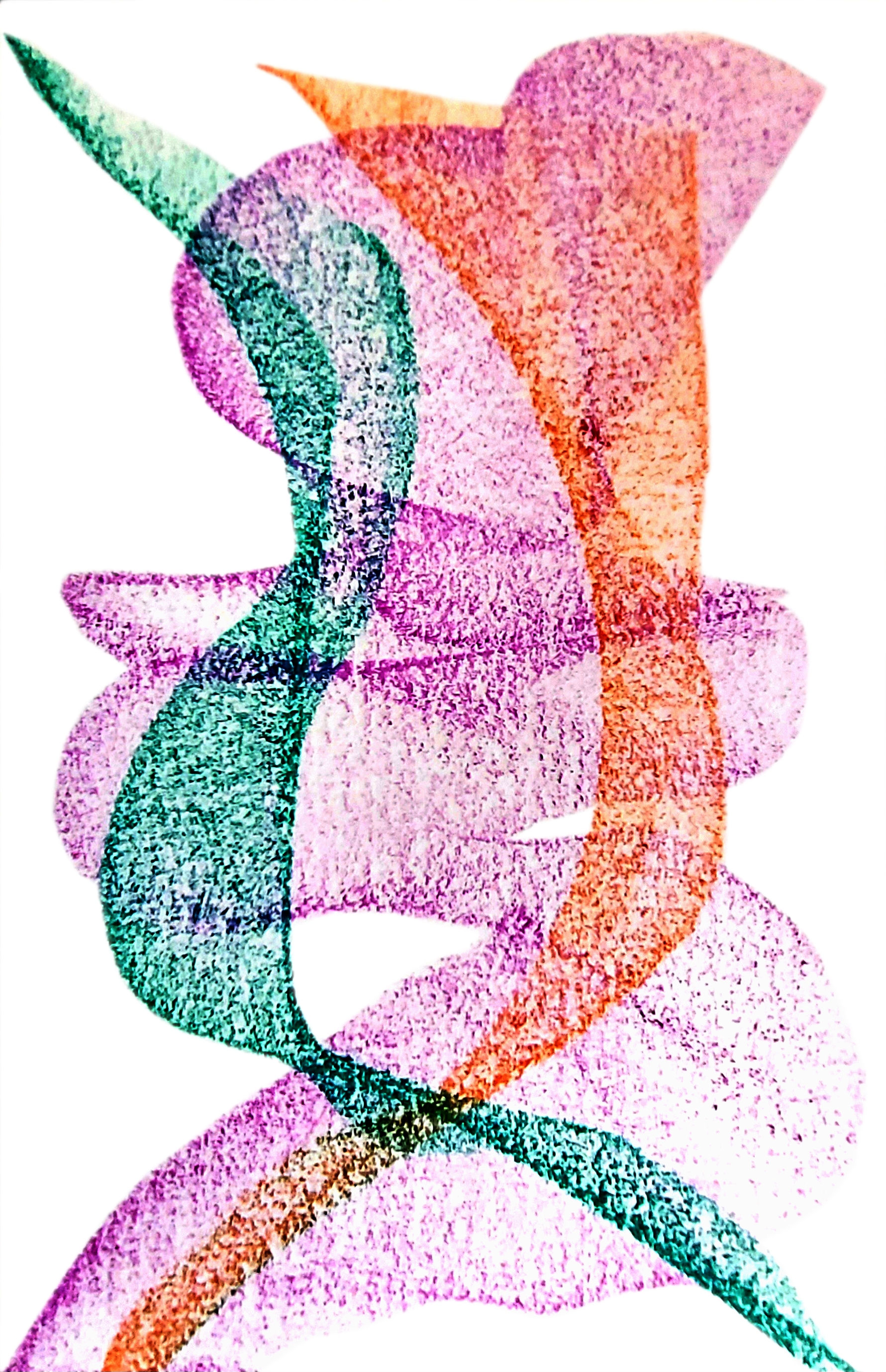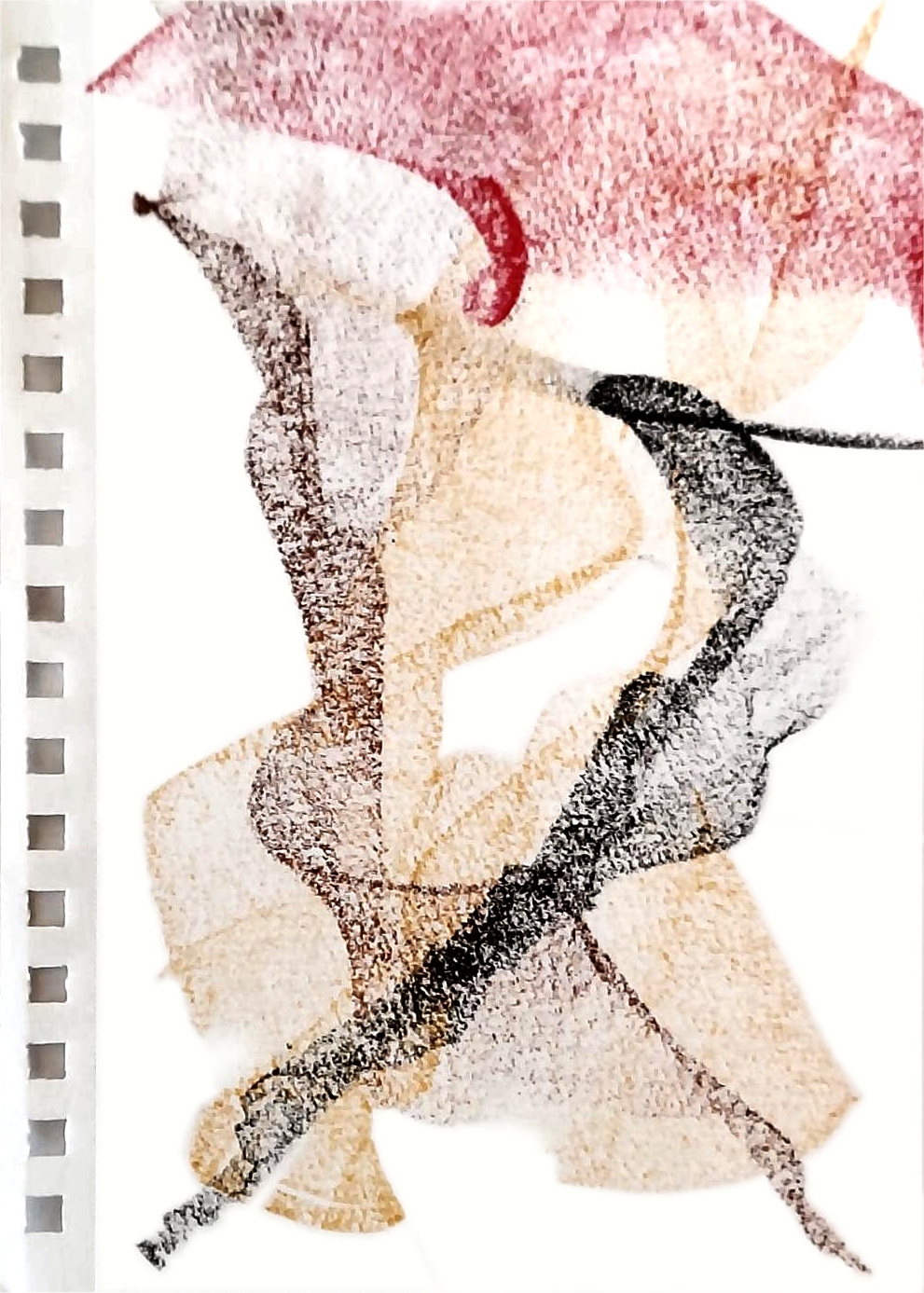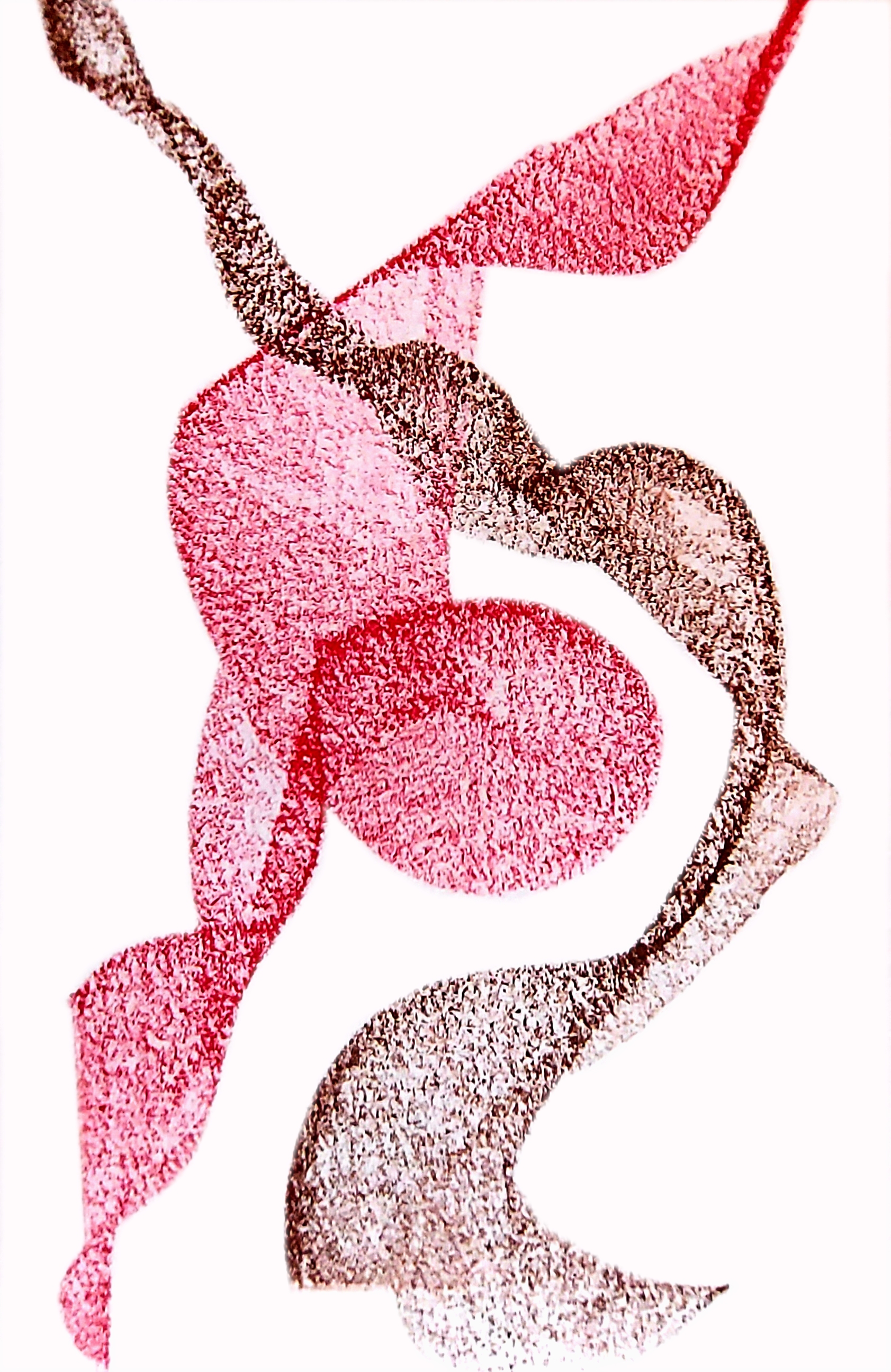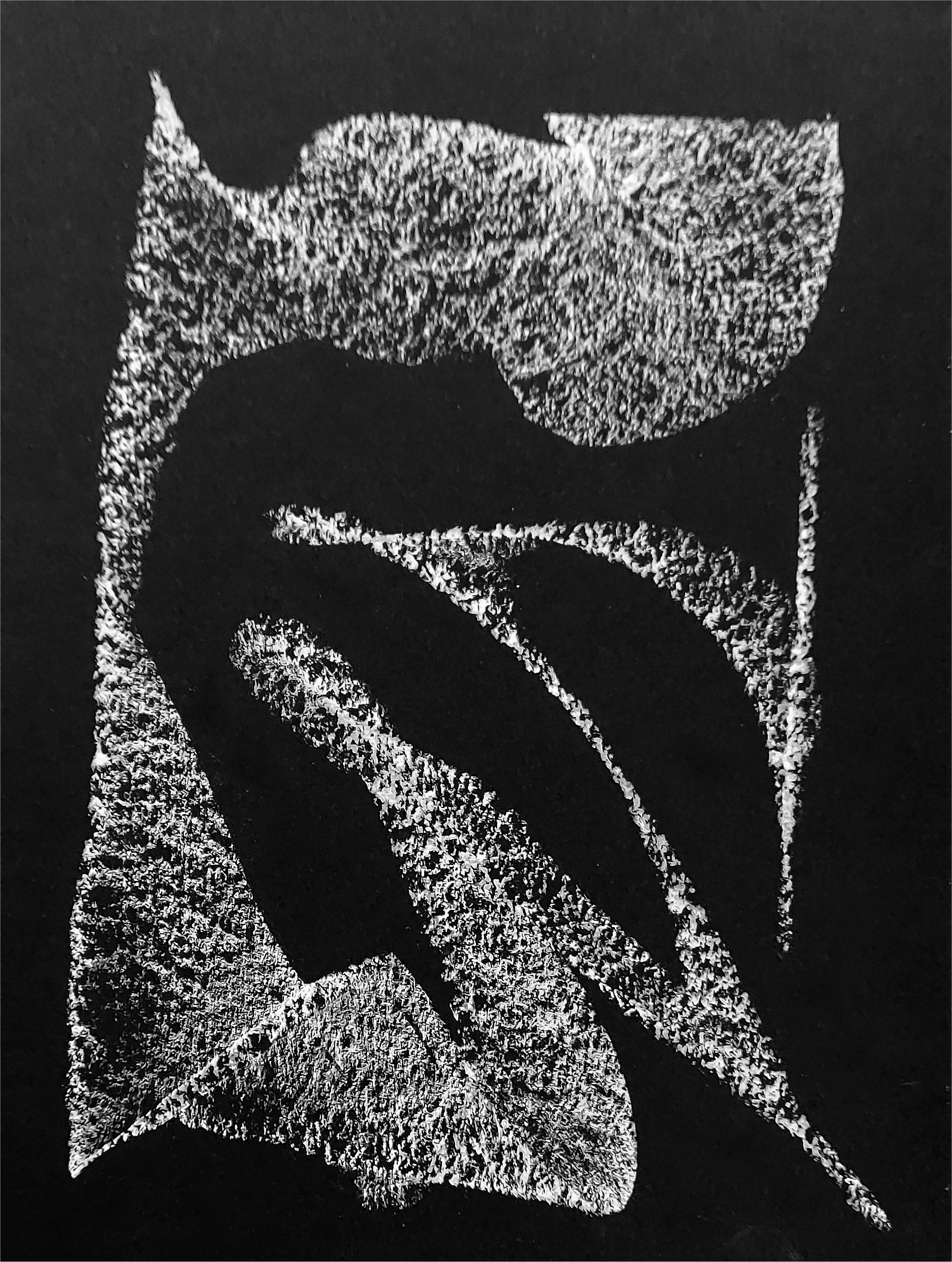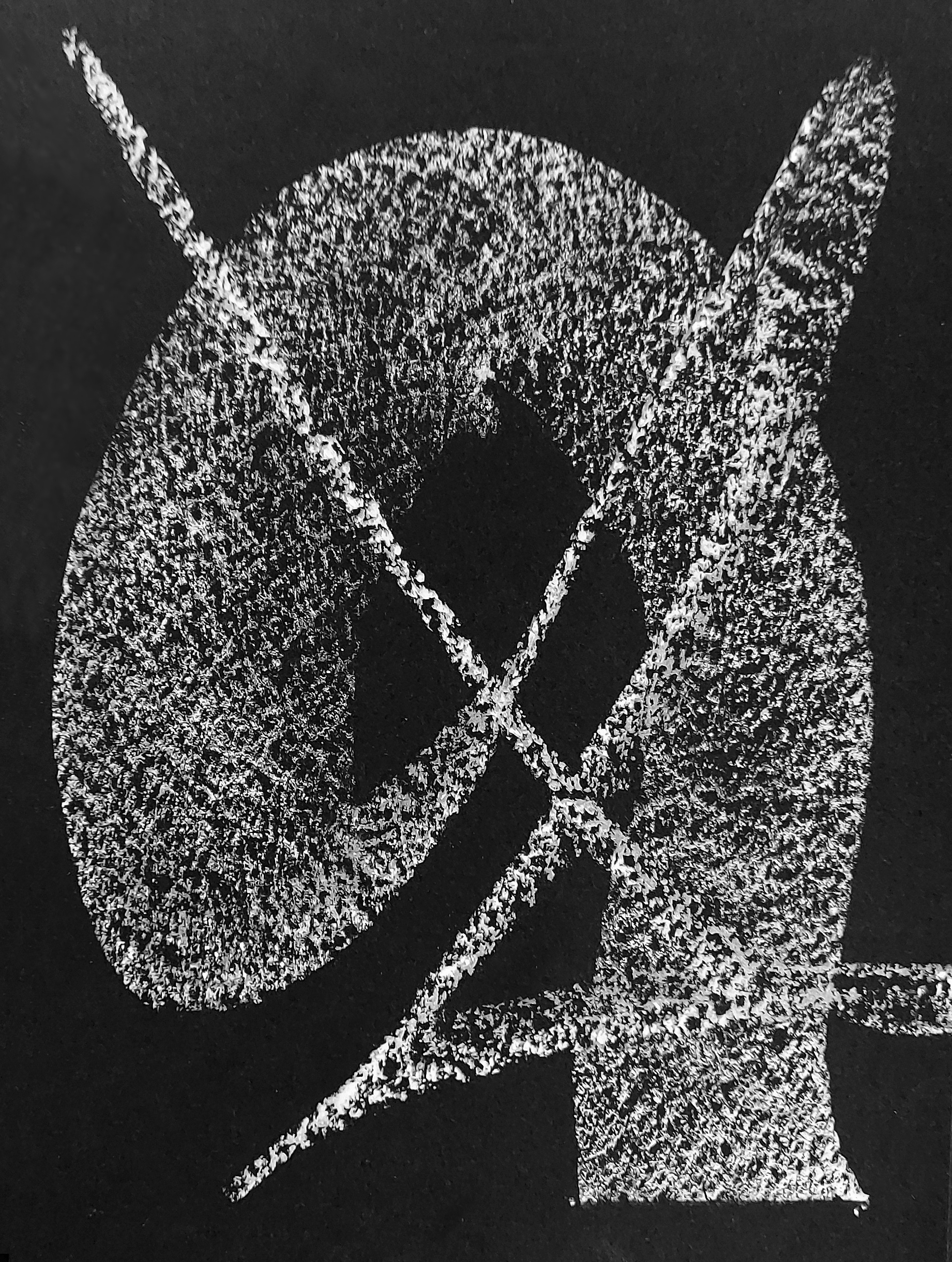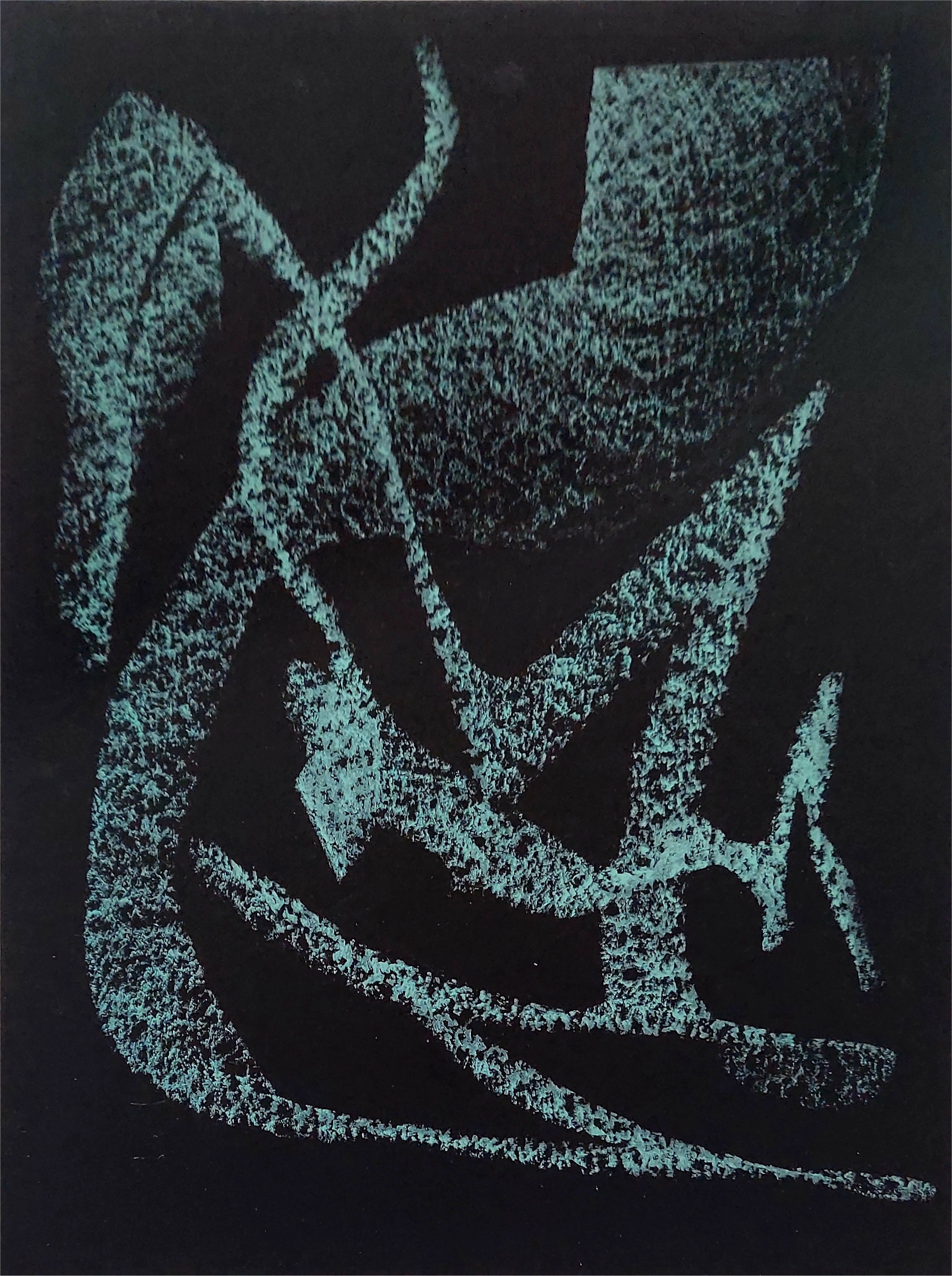
An early black-substrate Fracture-Completion Event in which an unidentified soft-pastel block snapped near the termination of the first broad trajectory. The broken fragment generated a narrower re-entry trajectory that crossed the existing field three times, converting material interruption—not failure of the trajectile—into a Completion Surge.
Nameless Number Eleven occupies a crucial position in the first black-substrate expansion of Somacentric Trajectilery. It is not a disposable opacity test, but a Fracture-Completion Event in which bodily propulsion, material limit, interruption, re-entry, and closure remain visibly joined.
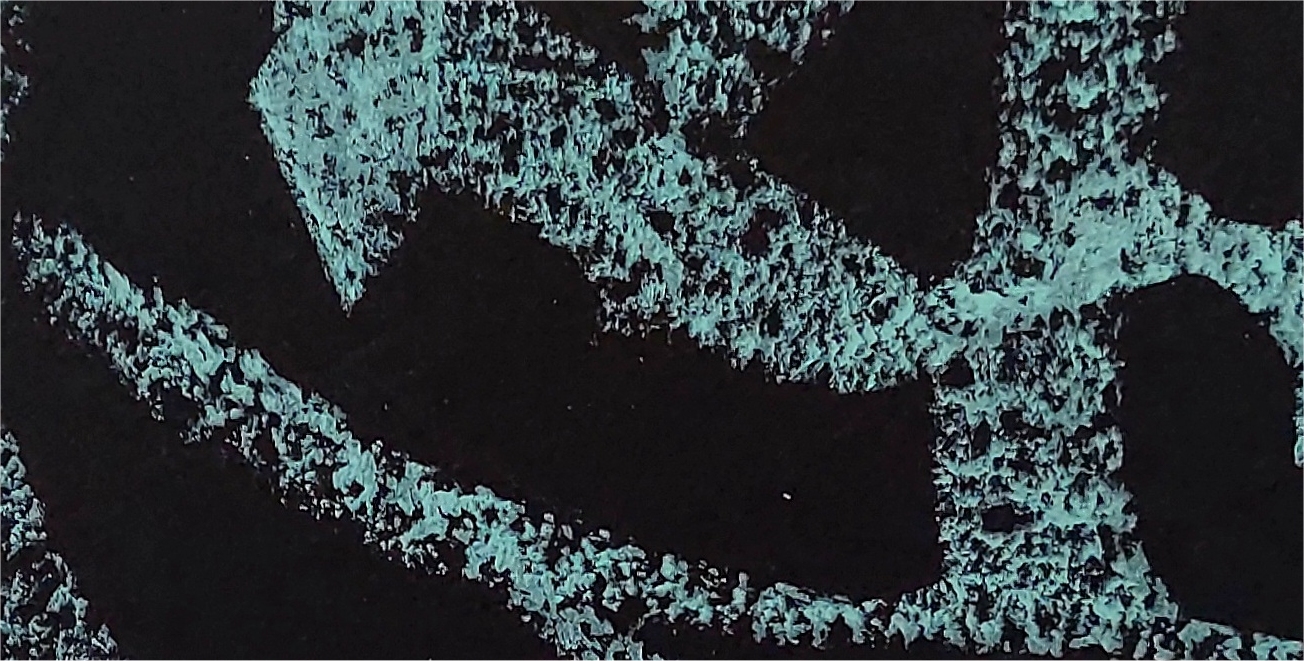
The black ground acts as active resistance. It absorbs and dulls the chromatic trace, causing the soft pastel to register as a granular, spectral deposit rather than an optically dominant field. This subdued visibility is part of the encounter: the substrate contests the mark and makes the distinction between chromatic intensity and recording capacity materially legible.
The first broad trajectory established the primary field and reached its terminal zone in the upper-left area, where the soft-pastel block snapped. The fracture produced a sharp dark rupture trace inside the finishing mass. The medium had exceeded its physical tolerance, but the trajectile had not failed; the interrupted event remained energetically unresolved.
A fragment of the broken pastel then generated a second, narrower trajectory.
Launched from the middle-right, it moved leftward and turned upward, crossing the earlier field three times without hesitation. This re-entry was not a repair or correction. It was a Completion Surge: the material interruption became the cause of a more focused return and final structural authority.
Number Six had prefigured pastel breakage, but Number Eleven is the first known work in which fracture generated a decisive second trajectory and became a formal event category. Within the Noir sequence, it precedes Number Twelve’s investigation of chromatic hierarchy and active void architecture. Its penetration, recoil, and evasion grammar remains an observation from the early corpus rather than a law imposed on future trajectiles.