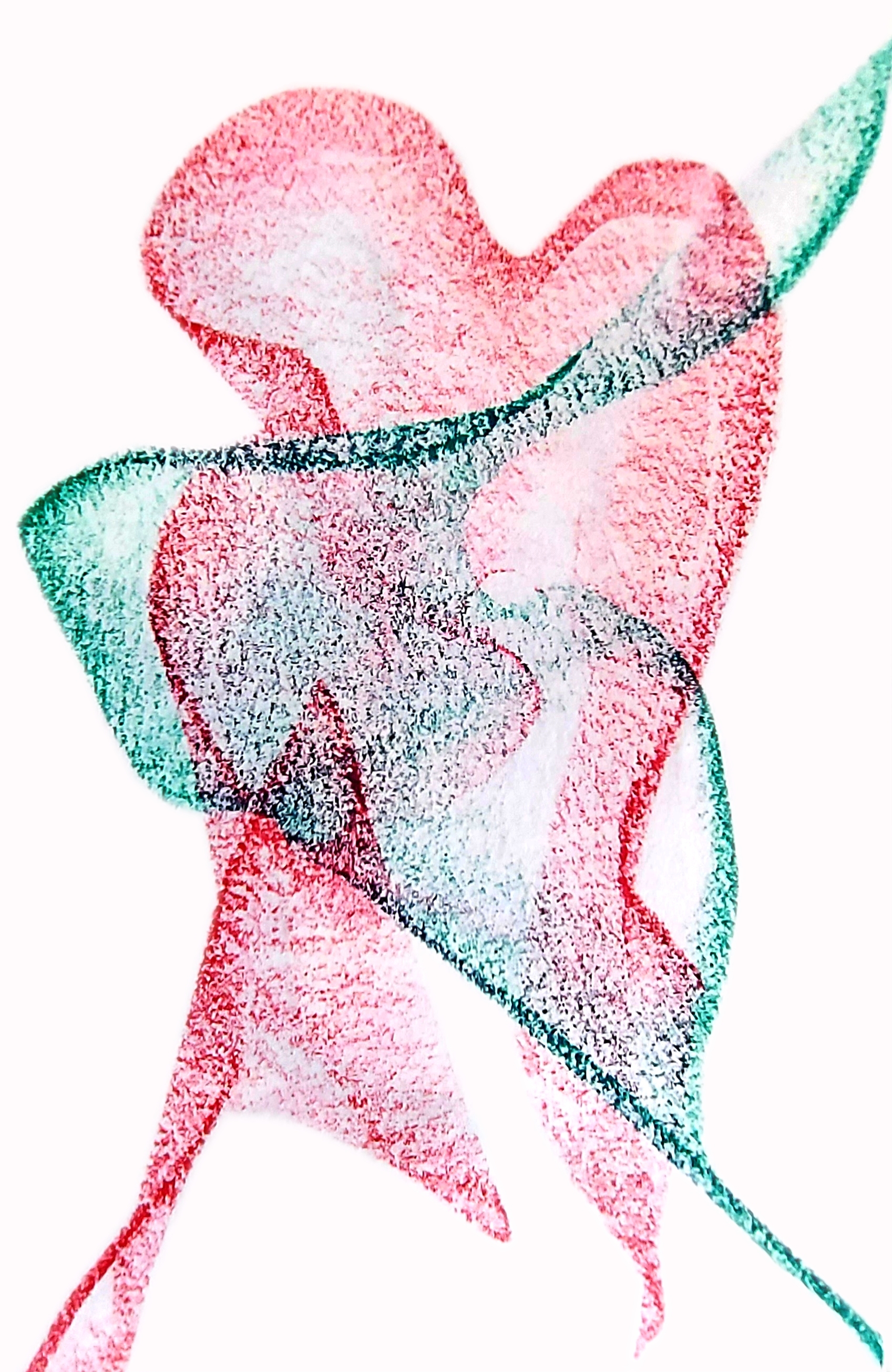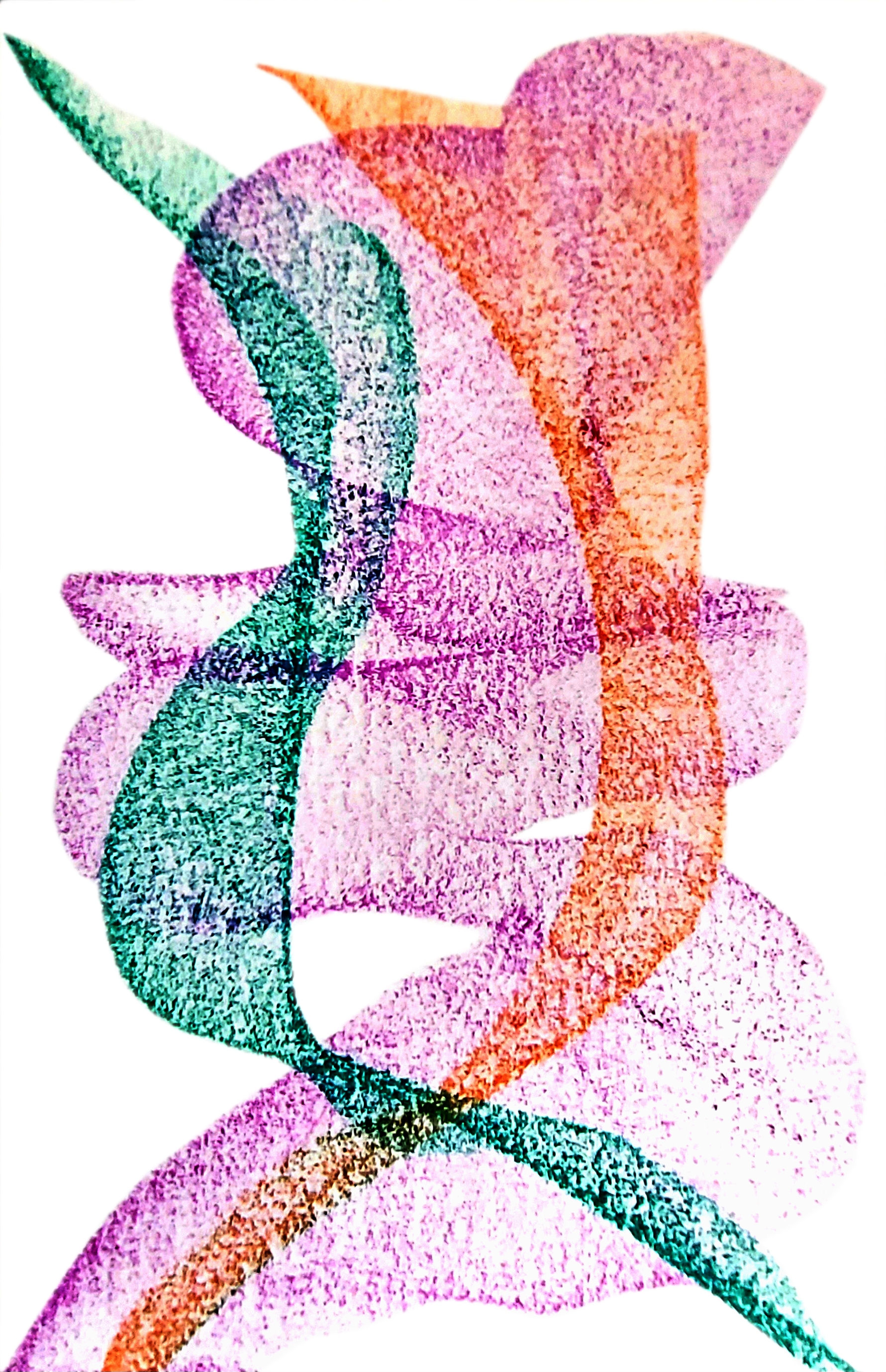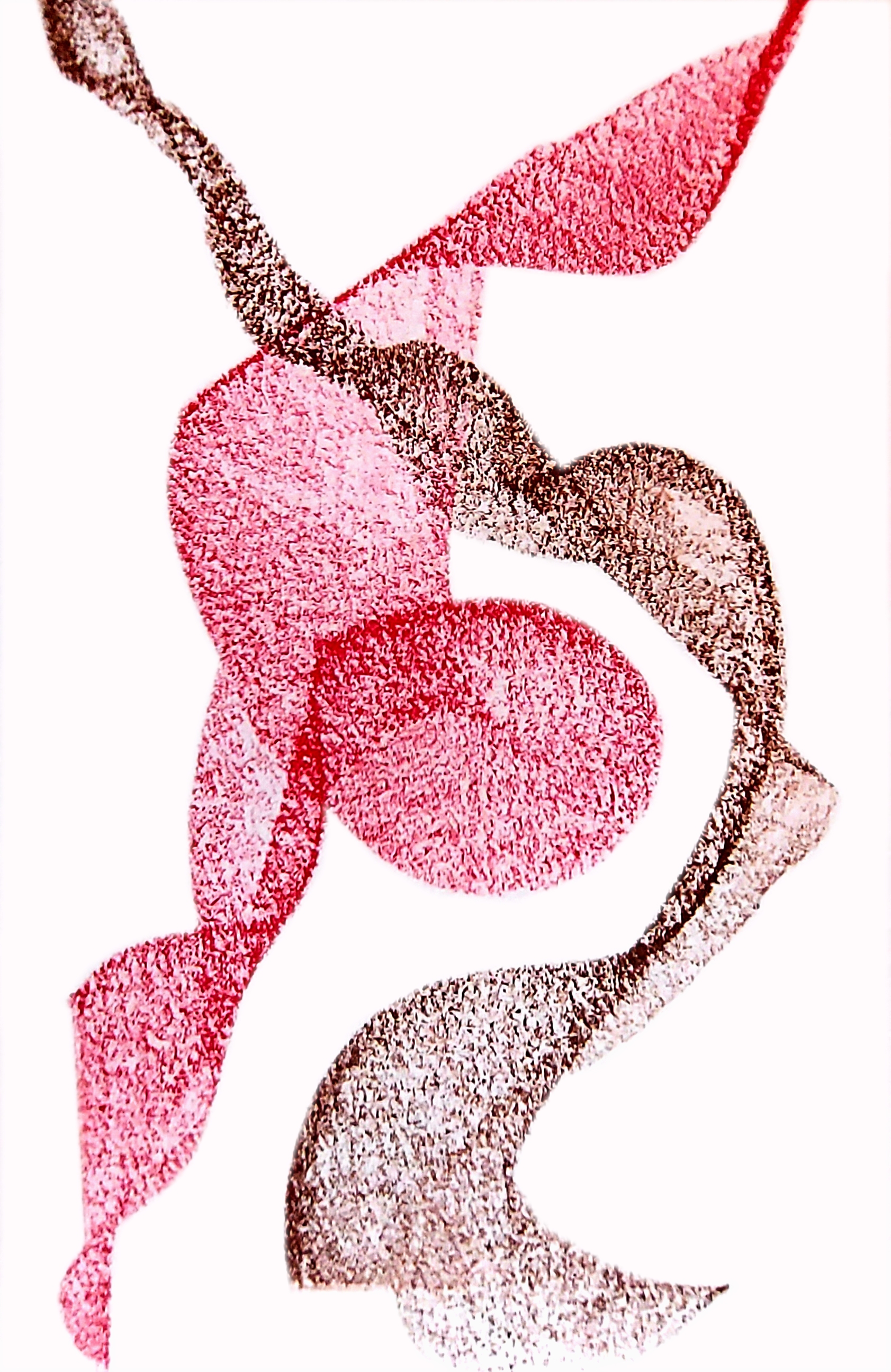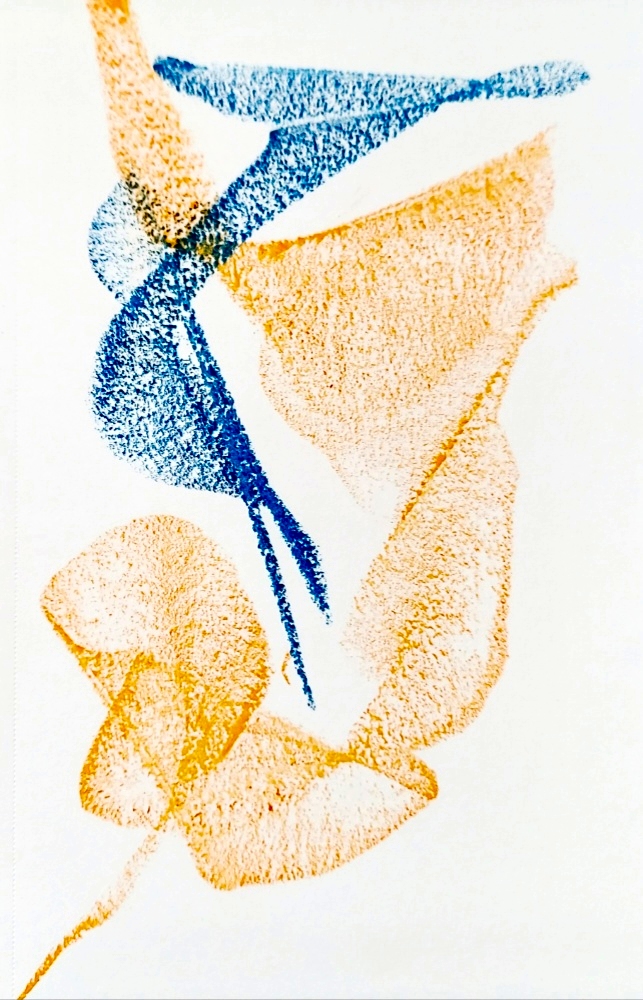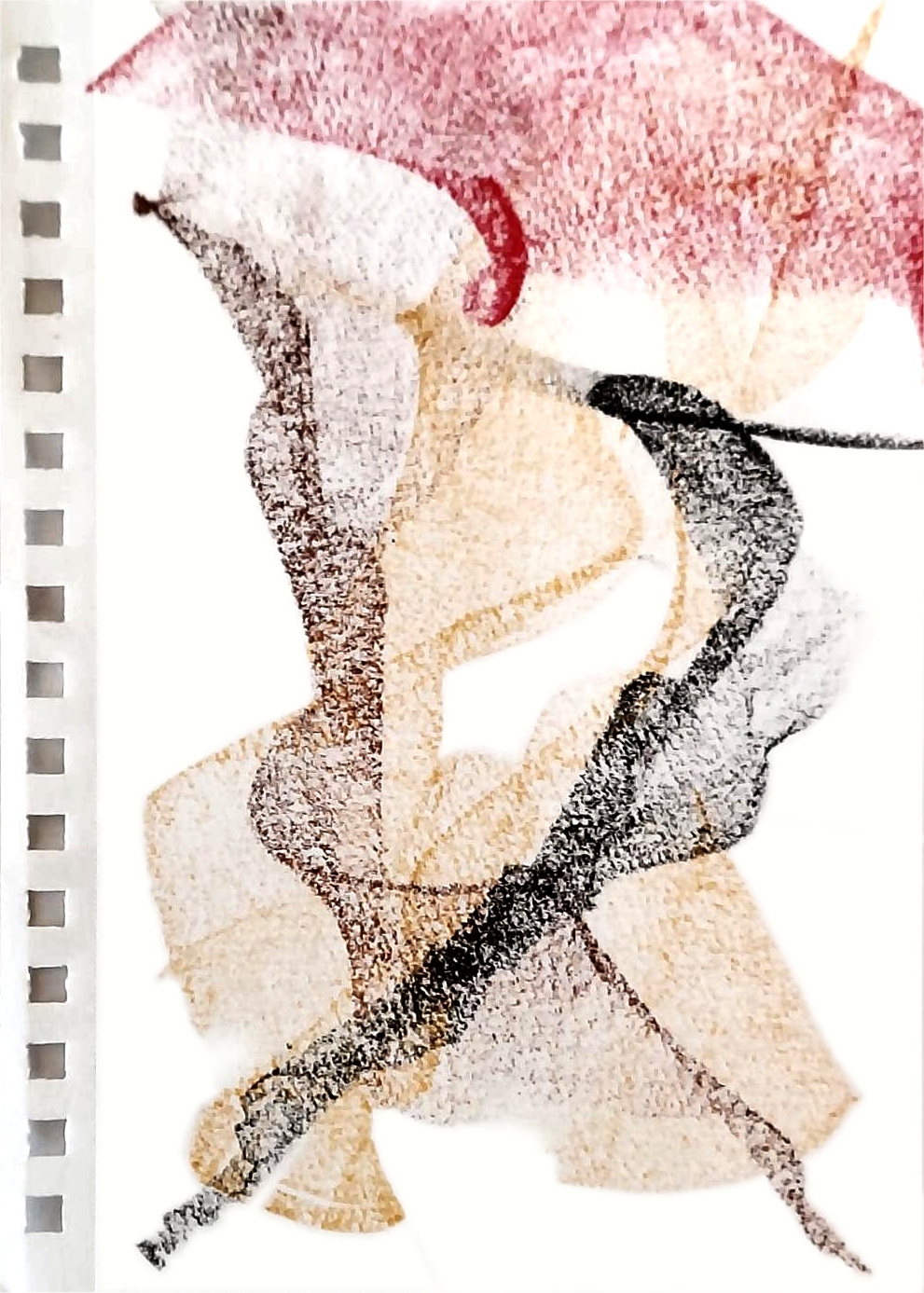
Nameless Number Three is the chromatic threshold of the closed Genesis Series: four independent pastel trajectories test how much density the founding format can sustain without becoming a composed image. Ochre, crimson, earth-brown, and dark charcoal cross the intimate white sheet without blending, preserving the order and friction of successive bodily movement. Porous deposits expose the paper tooth, while an untouched flank acts as a pressurized structural void. The artifact remains legible in four orientations.
Nameless Number Three belongs to the Genesis Series, the first numbered corpus of Somacentric Trajectilery. Within that closed five-work sequence, it marks the point at which the founding protocol moves from relative chromatic economy into deliberate overabundance. Four separate pastel trajectories occupy the intimate sheet at once, testing how much density the format can sustain without becoming a consciously composed image. The work is therefore not simply more colorful than its predecessors; it is a structural trial in which successive bodily events remain individually legible inside an increasingly congested field.
The four trajectories establish distinct functions. Ochre enters as a warm, expansive sweep; crimson answers with a more urgent counter-movement; earth-brown supplies weight and resistance; and the dark charcoal-colored passage asserts the strongest directional authority. Together they form a quad-vector lattice rather than a blended chromatic mass. Their crossings do not resolve into conventional depth or a stable figure. They record four deposits, four directional decisions, and four episodes of pressure retained on the same support.
The final dark diagonal is the decisive event. It cuts across the earlier trajectories and reorganizes their relations without erasing them. Because the pastel was applied with the side of the stick and left unblended, the diagonal behaves less like an outline than a broad shearing force. It divides, interrupts, and binds the field at once. Earlier colors remain visible through and around it, so the last movement reads as an intervention in accumulated time rather than a correction of what came before.
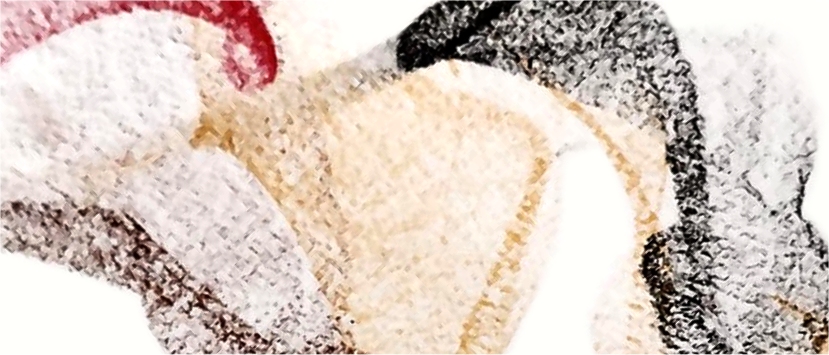
This chronological transparency is central to the work. Each deposit keeps its own grain, density, edge, and direction; intersections show contact without optical fusion. The image therefore offers a record of sequence: one bodily movement arrived, another crossed it, another pressed against the available field, and the dark diagonal finally claimed priority. The result is stratified but not concealed. Its order can be reconstructed from the material evidence that remains on the paper.
The unmarked paper is equally active. A broad white flank interrupts the crowded trajectories and prevents the composition from sealing into a continuous mass. This void is not passive background. It acts as structural pressure, holding the colored events apart while intensifying their proximity. The work gains a shallow, unstable relief from the alternation between opaque deposits, porous passages, and untouched support.
That porosity comes from the encounter between the pastel and the SuFly 5585 acid-free heavyweight sketch paper. Its fine-grained tooth breaks each side-of-stick movement into a micro-stutter of pigment and exposed fiber. At close range, the trajectories fragment into granular contact, skipped recesses, and small shifts in pressure. At a greater distance, those interruptions consolidate into broad directional bodies. The micro-perforated edge remains part of the artifact’s material history, identifying the sheet as a worked support rather than an abstract neutral plane.
The surface resistance matters because the image was not produced by filling a preconceived design. The hand encountered the paper incrementally, and the paper answered by accepting, interrupting, or thinning the deposit. The visible gaps are therefore not deficiencies in coverage; they are evidence of negotiation between pressure, velocity, pastel, and tooth. This reciprocal resistance is what keeps the trace from becoming a polished graphic symbol.
Nameless Number Three is orientation-independent. It can be presented in four valid rotations without requiring a fixed top, bottom, width, or height. Each rotation redistributes dominance among the trajectories: a passage that reads as ascent in one orientation becomes descent, suspension, or lateral thrust in another. The dark diagonal retains authority, but its role changes with the viewer’s position. Orientation is consequently part of the work’s operation rather than a secondary display decision.
Within Somacentric Trajectilery, the artifact functions as an embodied material record. Its meaning is inseparable from the unblended order of deposits, the friction of the paper, the changing pressure of the hand, and the evidence of interruption preserved in the surface. A digital image can reproduce the overall configuration, but it cannot fully reproduce the scale-dependent grain or the way physical viewing reveals the succession of contact. Nameless Number Three makes that distinction explicit: it is a polychrome stratification of bodily events whose legibility depends on their remaining materially separate.