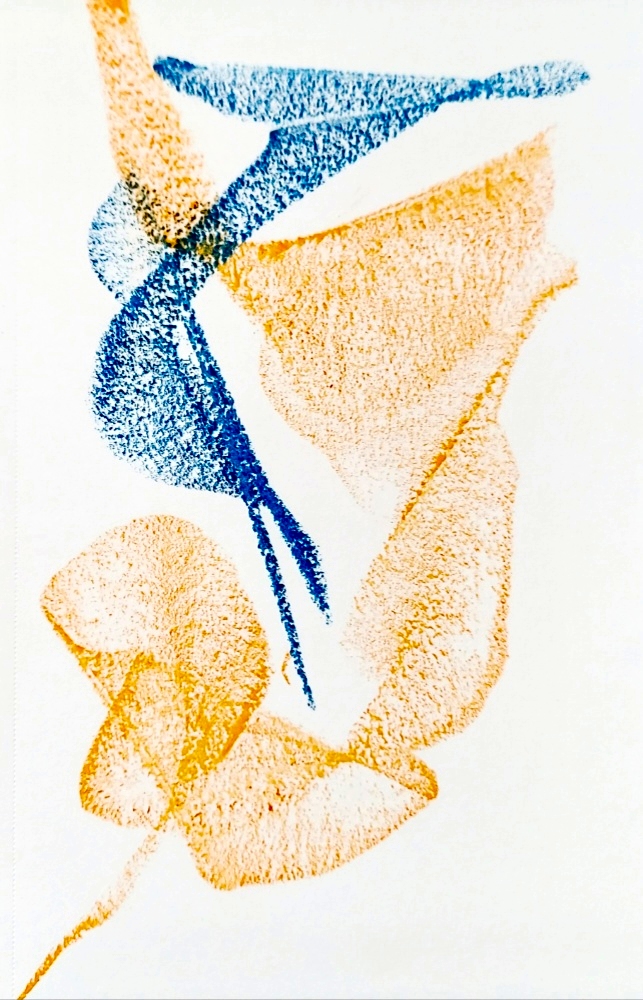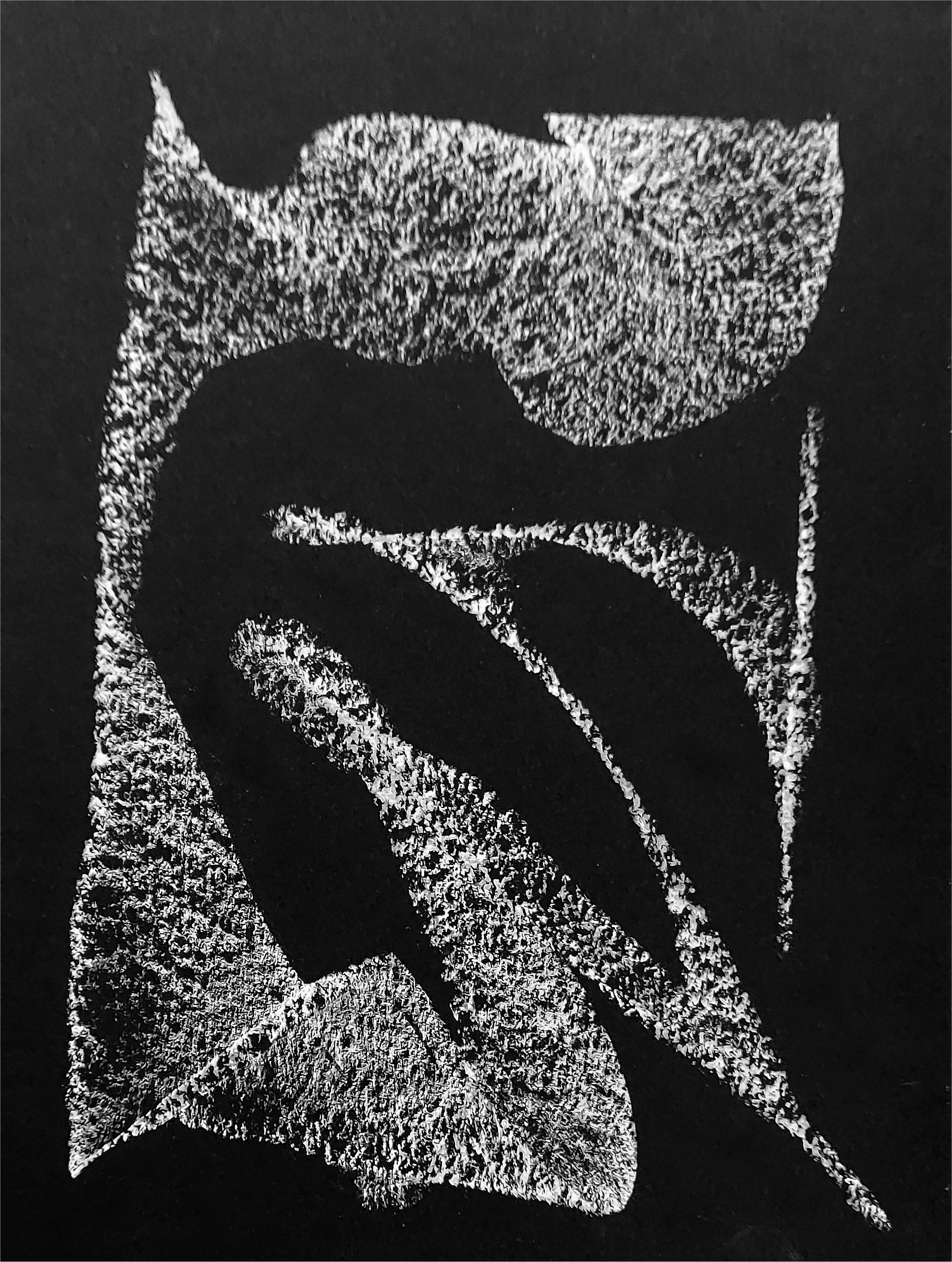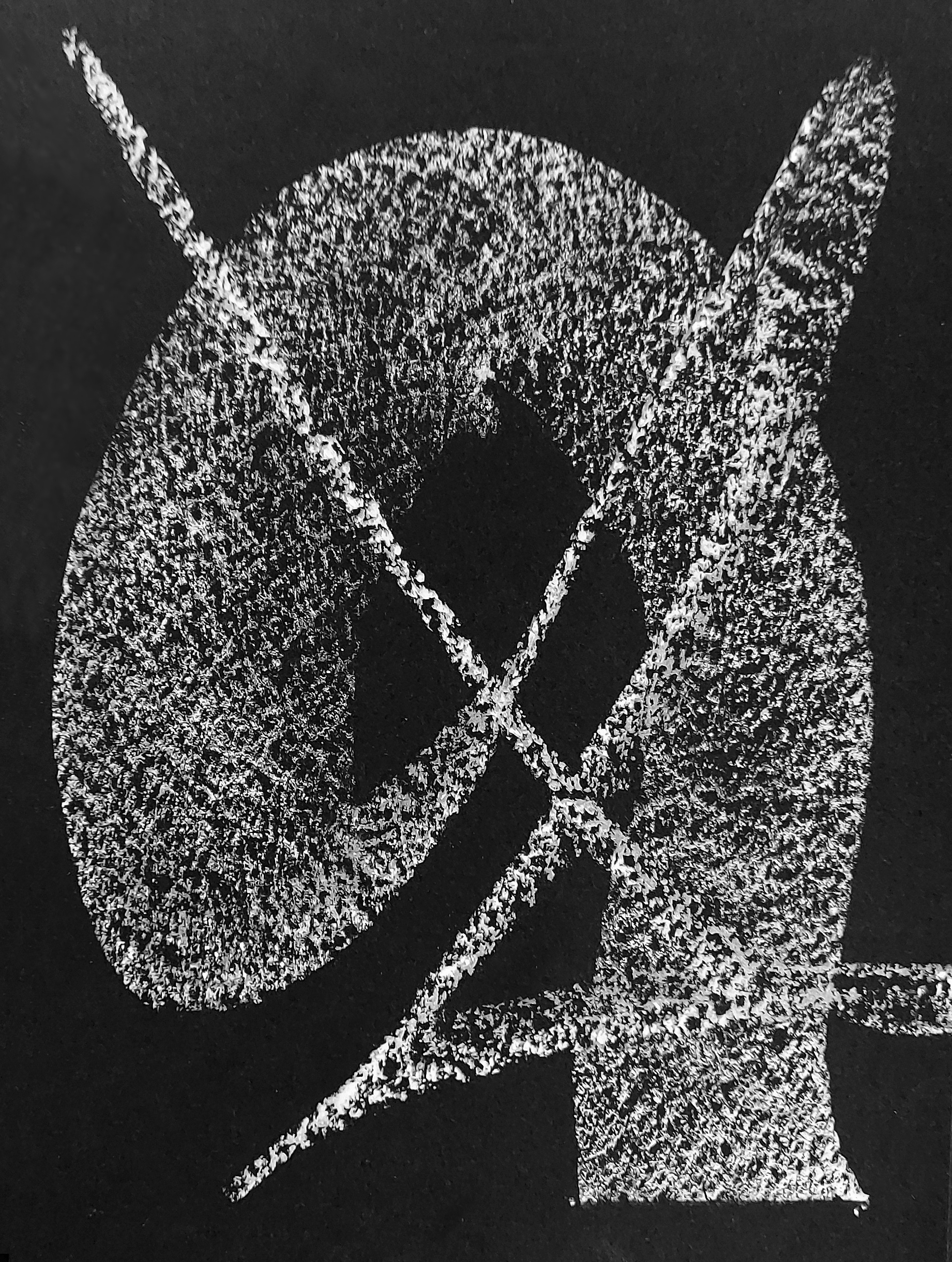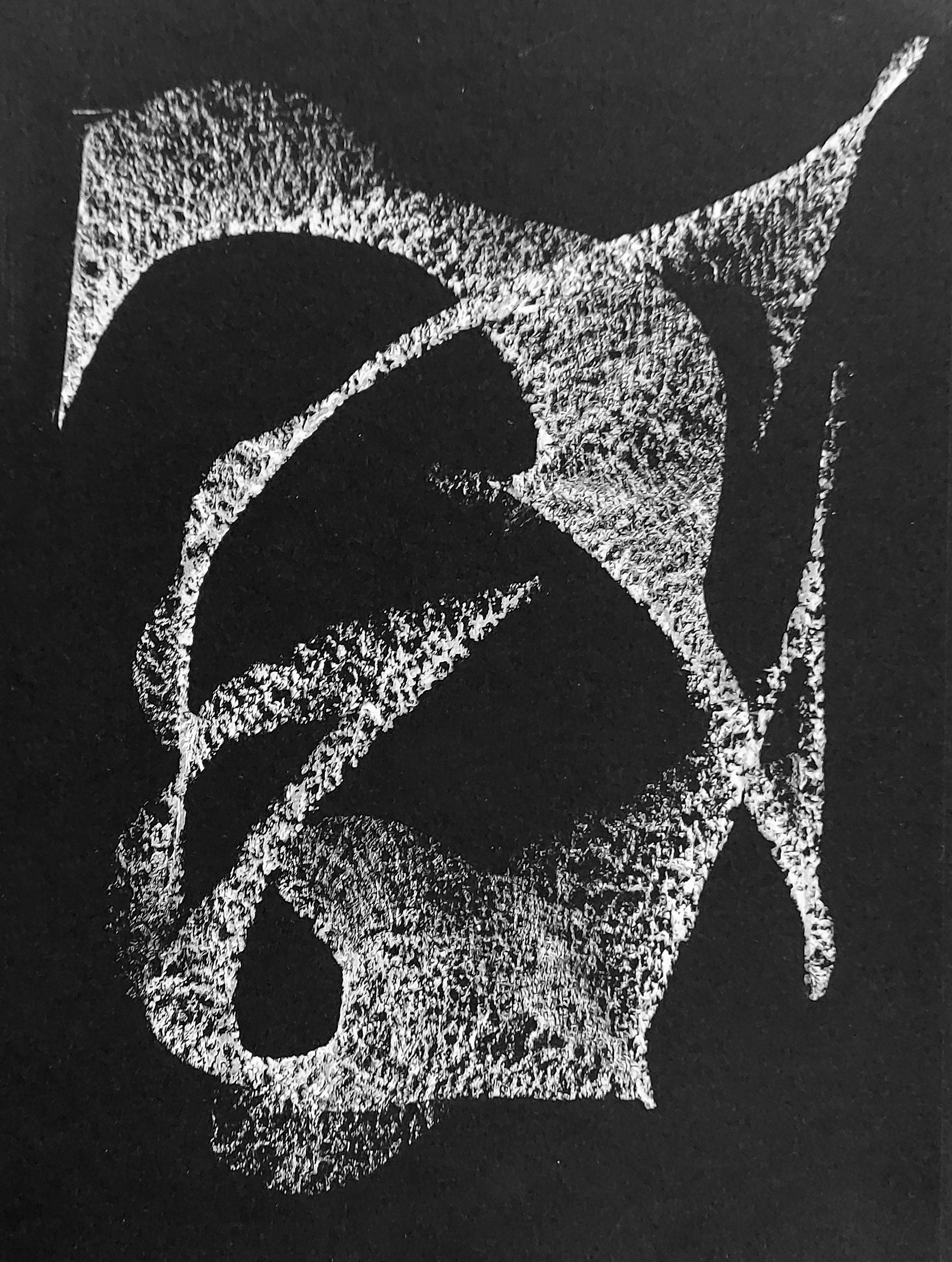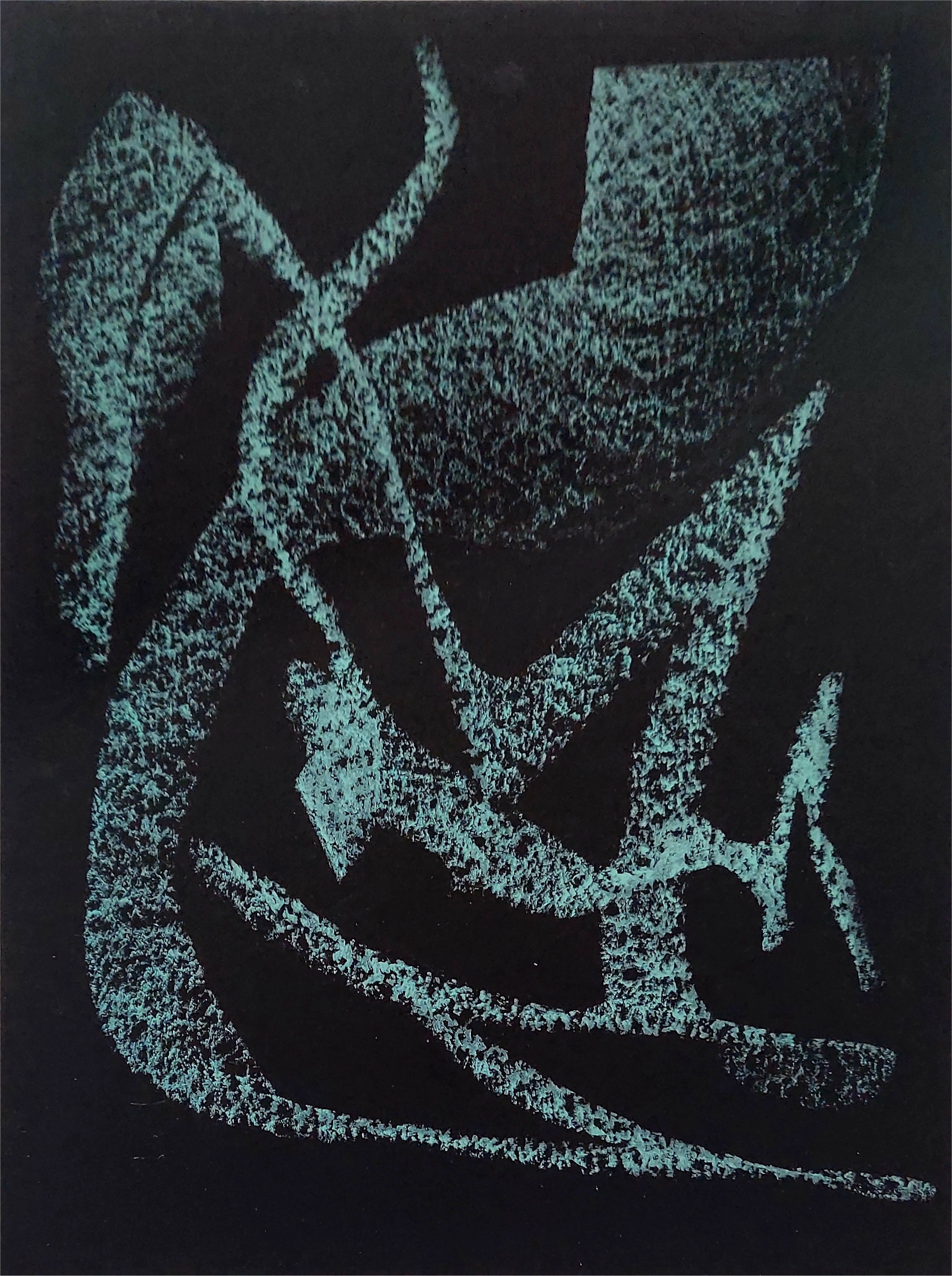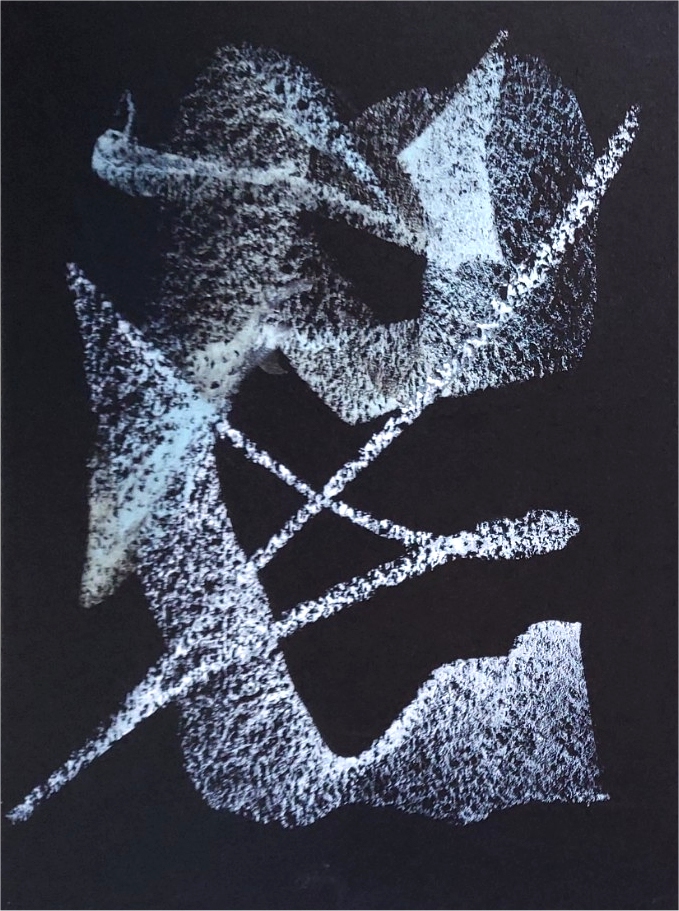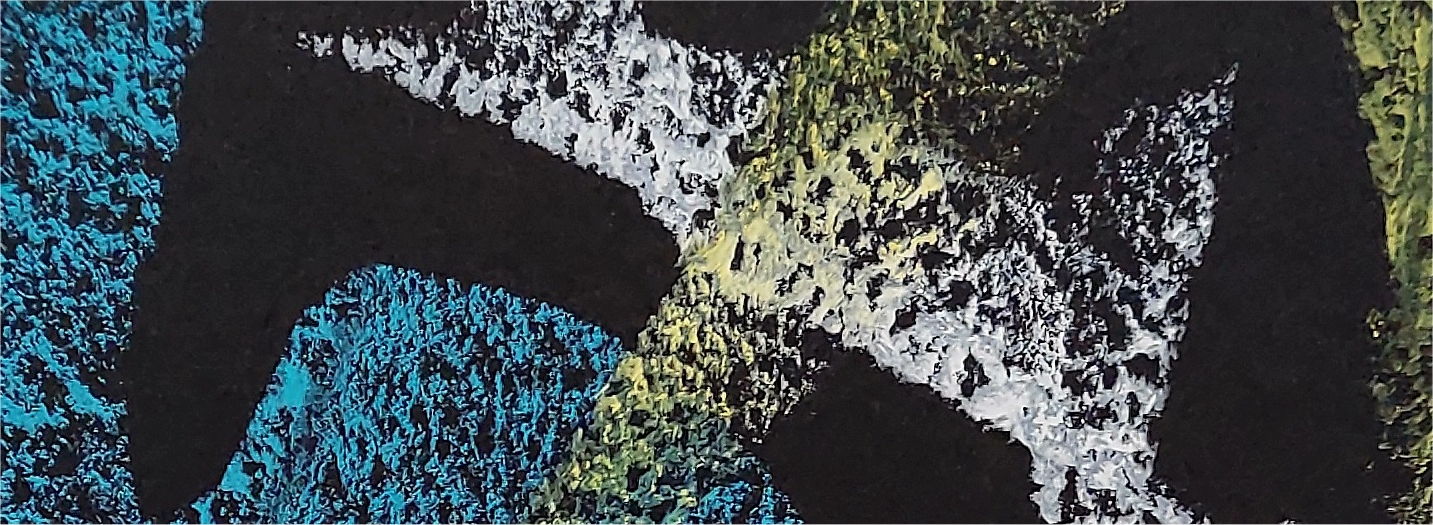
An early black-substrate record in which blue, yellow-green, and white Sakura Expressionist oil-pastel trajectories encounter unequal optical resistance. The central white event becomes a structural anchor while the exposed black field divides, suppresses, and intensifies the surrounding chromatic masses.
Nameless Number Twelve belongs to the first black-substrate expansion of Somacentric Trajectilery.
Made with Sakura Expressionist oil pastel, it records an early encounter between dense wax-based pigment and the optical resistance of black paper.
Blue/cyan masses establish breadth across the field, while yellow-green introduces a second chromatic pressure.
Neither color fully seals the surface: the black substrate remains visible through the deposit, producing porous color fields rather than continuous chromatic walls. White carries the greatest value contrast and becomes the work’s central structural anchor.
The exposed black is not passive background.
It divides the colored masses, opens interior chambers and narrow channels, and intensifies the central white event. In this sense the work is both a Black Substrate Chromatic Encounter and a Void-Activation Study: visibility is governed by the relation among hue, opacity, value, and ground.
The surviving documentation does not preserve the order in which the trajectories crossed.
The record therefore remains visually grounded: broad side-driven fields meet and taper around dark intervals, while a central angular white event provides the clearest site of contact and spatial negotiation.
Placed beside Nameless Number Eleven, Number Twelve marks a distinct archival development.
Where Eleven records fracture and completion, Twelve establishes chromatic hierarchy, white anchoring, and active void architecture. It is retained as a numbered work rather than a discarded material test because it makes optical resistance legible as part of the trajectile event.