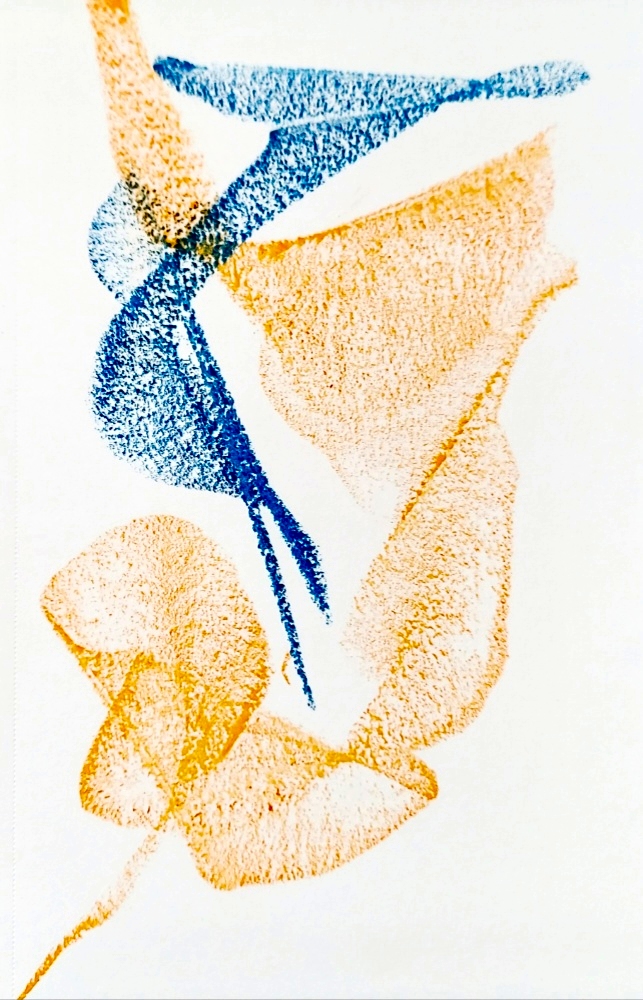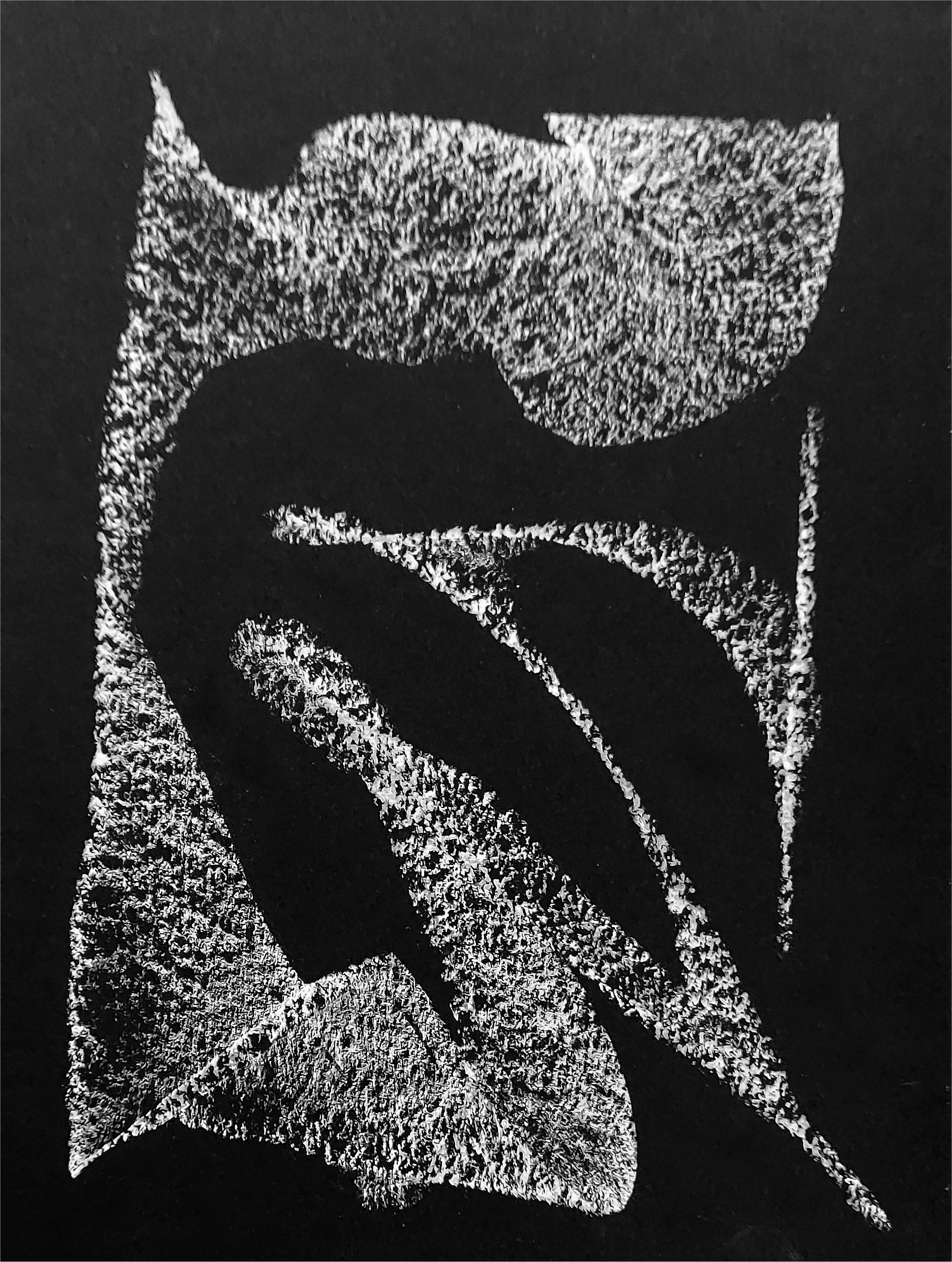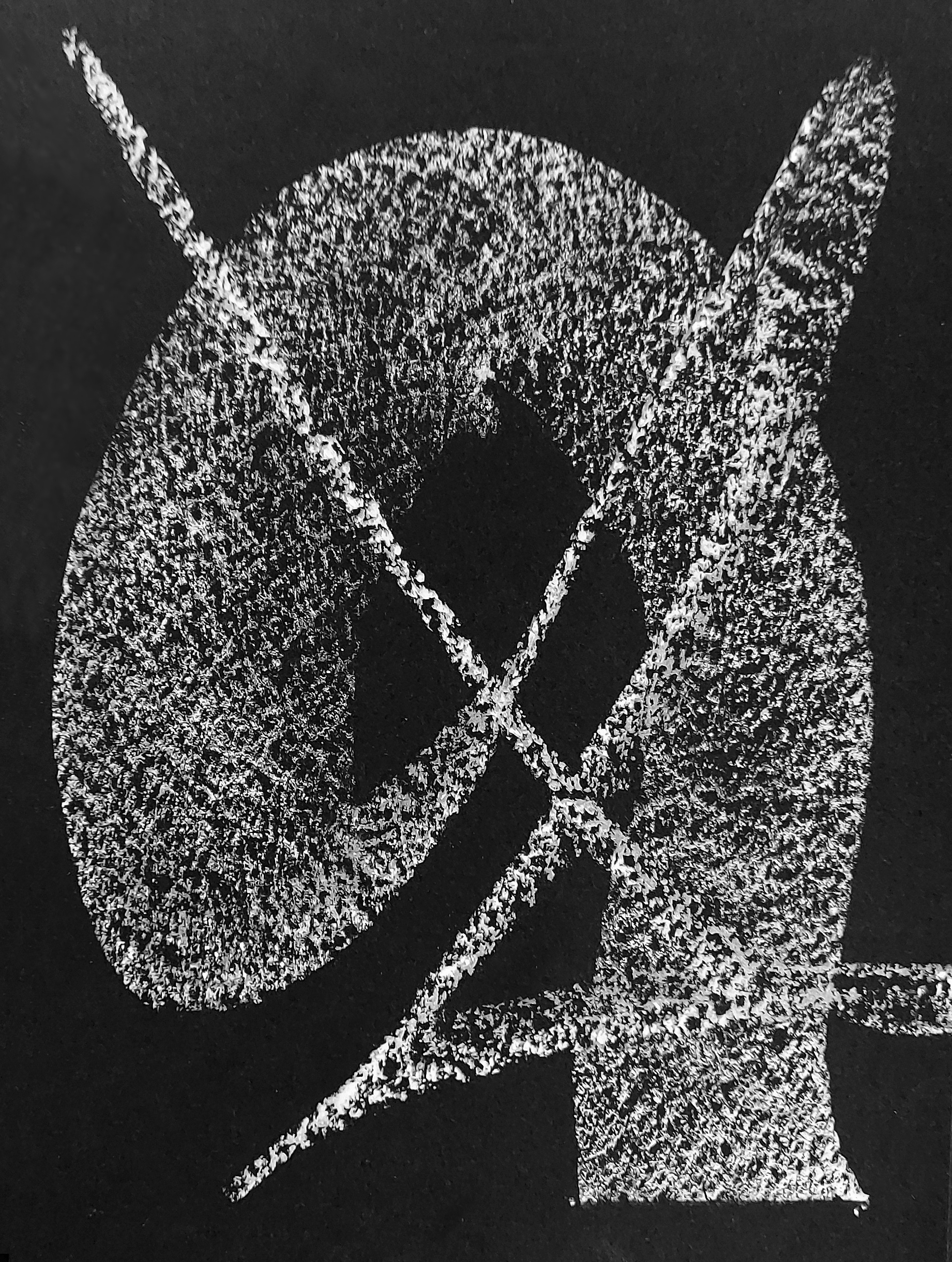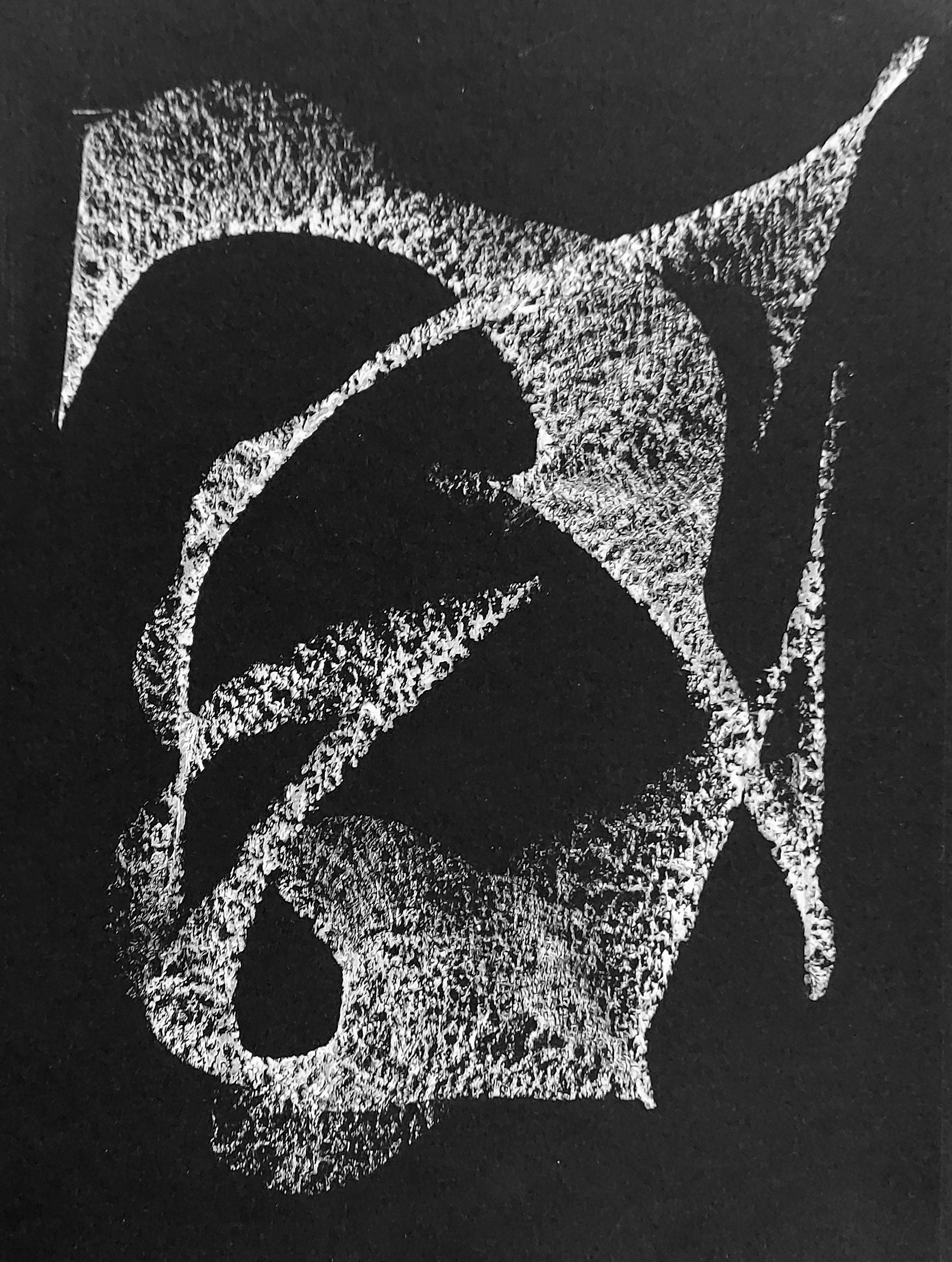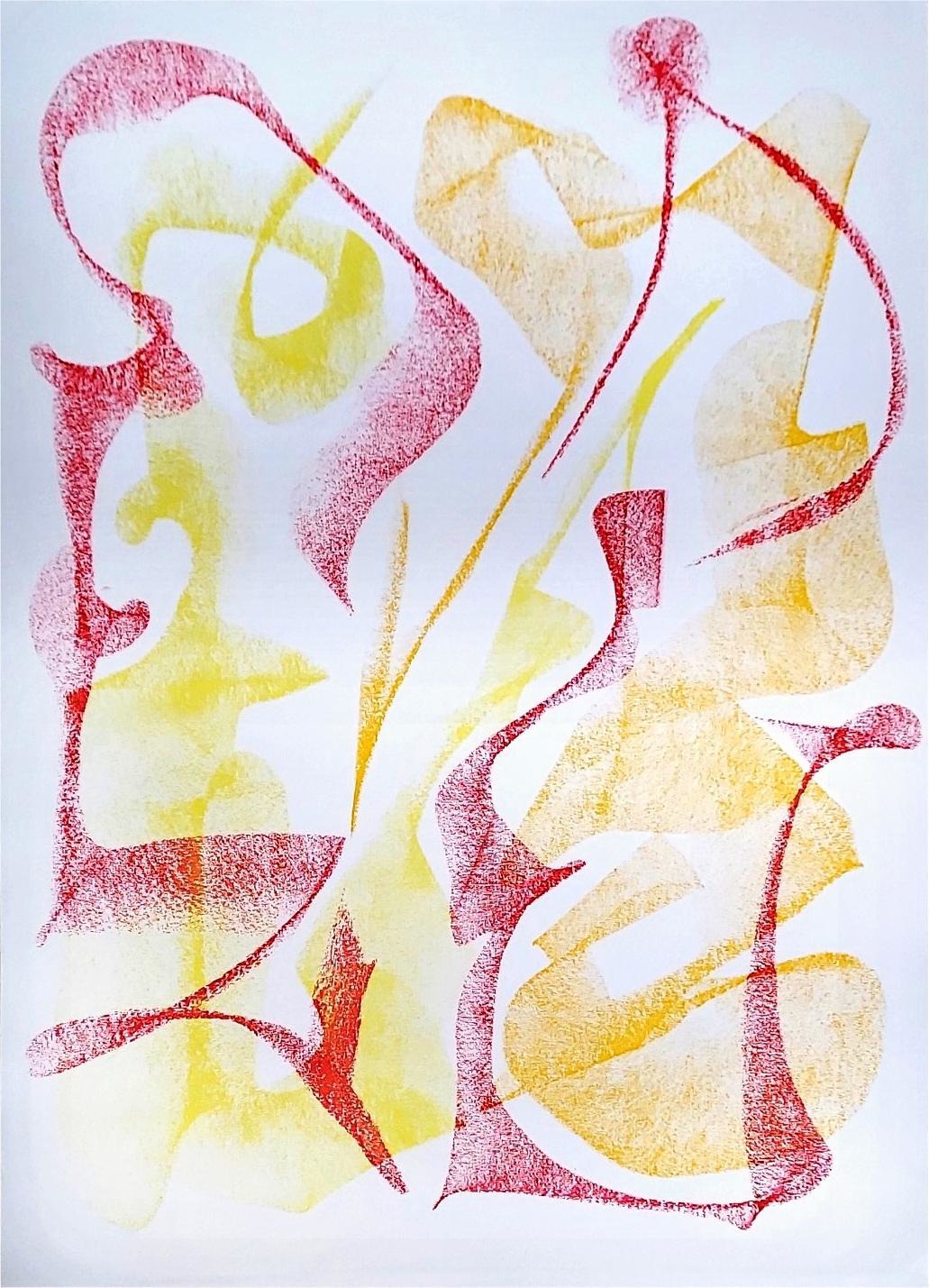
A three-stage composite event on one Canson XL sheet, moving from a near-invisible yellow Paul Rubens passage through lemon-yellow intensification to several red Sakura trajectiles that reveal and anchor the pale field. Number Twenty distinguishes material recording from optical visibility and establishes lightness as a condition made legible through distributed weight.
Nameless Number Twenty marks a visibility threshold within the Canson XL phase of Somacentric Trajectilery. The work is one physical sheet but a tripartite event: three successive material states remain superimposed as near-absence, increased visibility, and chromatic anchoring.
The first Paul Rubens yellow passage approached optical disappearance against the white paper.
Pigment had contacted the substrate and movement had been recorded, yet the event possessed little optical authority. A second, lemon-yellow continuation strengthened the field without erasing the first state. Recording and visibility therefore become distinct: a trajectile may exist materially before it becomes fully visible.
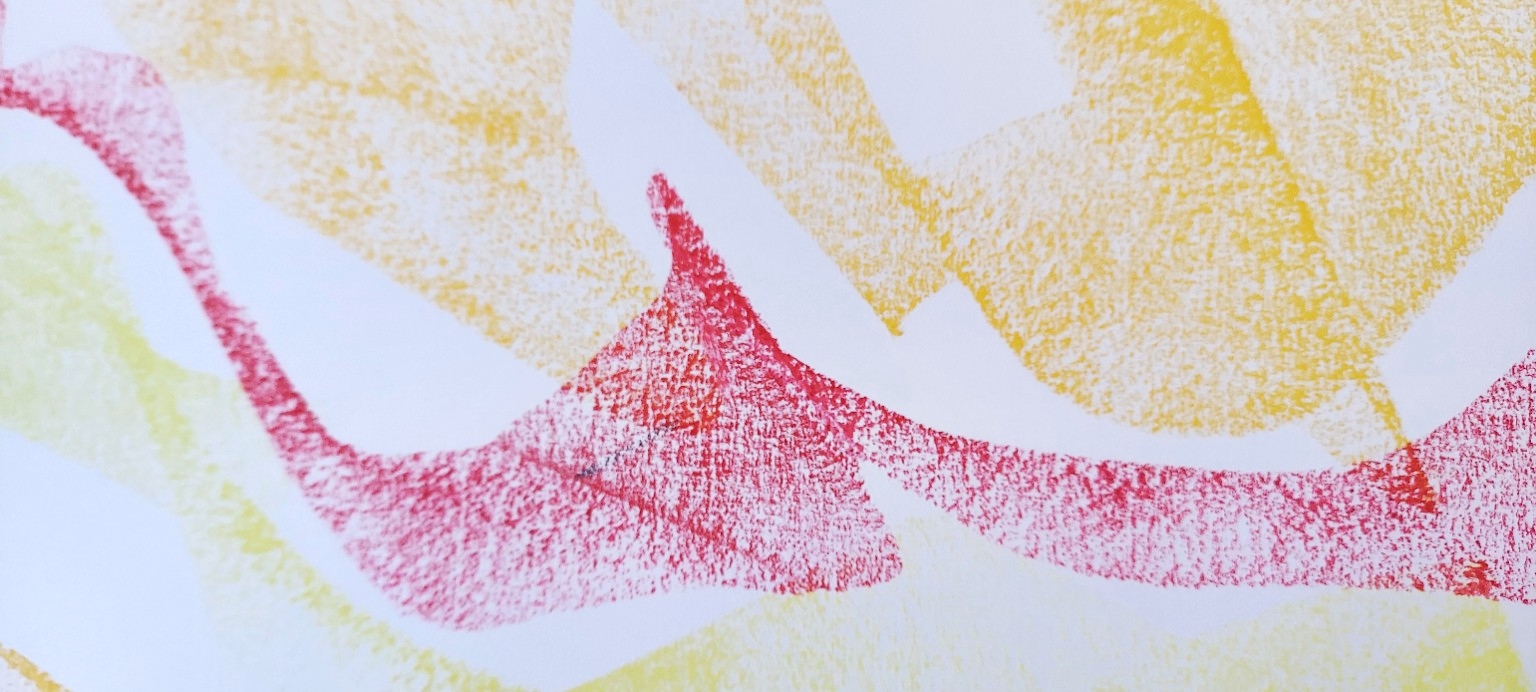
Several red trajectories made with a small Sakura Expressionist stick then entered as a distributed anchoring system. Broad bands, long sweeps, loops, narrow exits, and local concentrations give the pale field structural weight without enclosing it. The red does not correct or repair the yellows. It reveals relationships already latent within them and allows every preceding state to remain active.
Untouched white is the largest presence in the artifact.
It functions as atmosphere, separation, and buoyancy, holding trajectories apart and allowing their granular deposits to remain porous. The resulting register is airy, calm, and flamboyant—not as a predetermined expressive program, but as the consequence of a material investigation into visibility.
Number Twenty expands the ontology of the trajectile by demonstrating that several autonomous bodily-material passages can form one composite event without becoming a conventionally corrected composition. Placed in relation to the black-on-black inquiry of Nameless Number Fifteen, it tests the opposite perceptual limit. Its archival significance lies in the Non-Correction Principle: continuation can answer incompletion without declaring an earlier event a mistake.