Before Composition: Preutilization, Automatism, and Intention
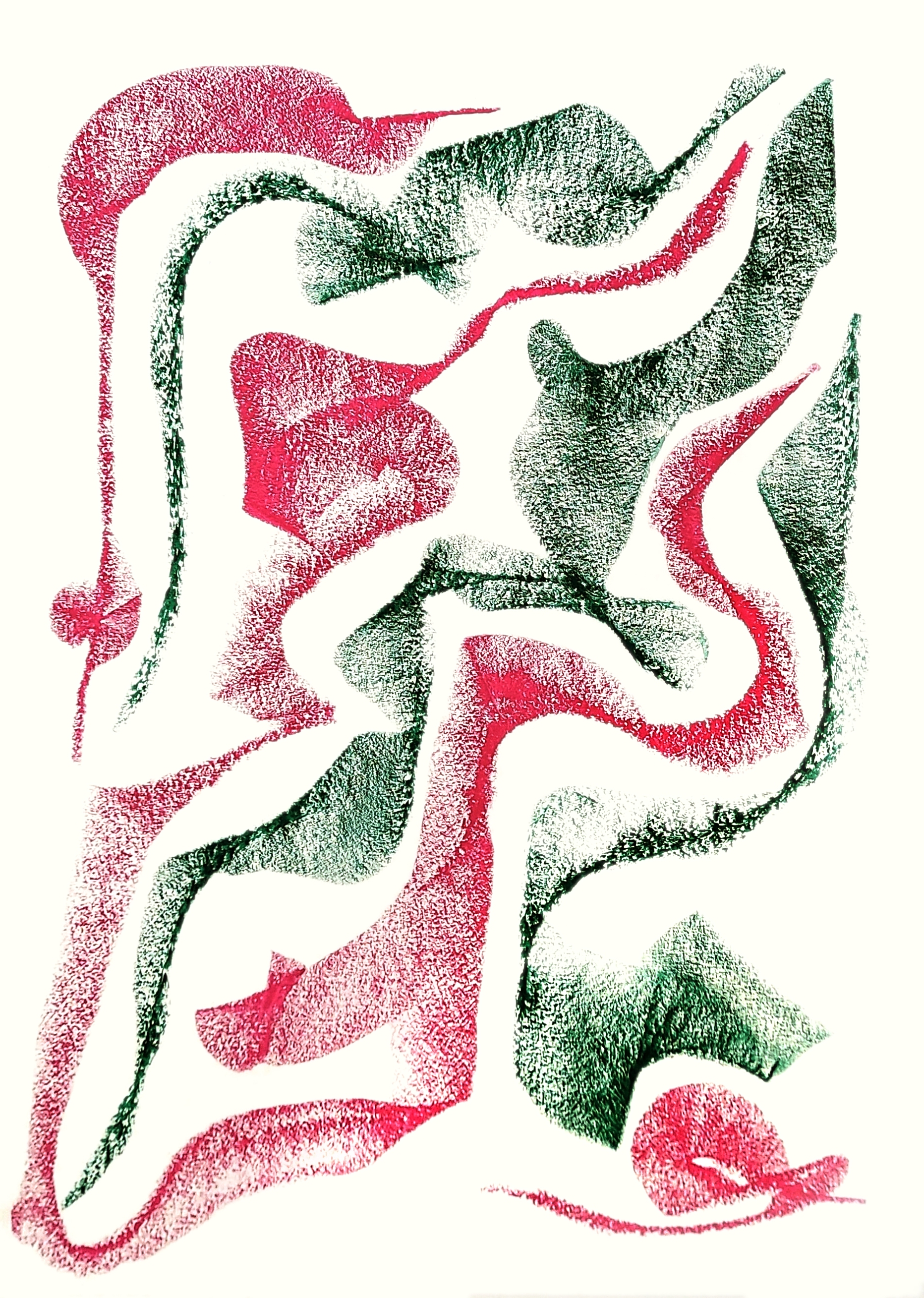
Yes. An artwork can be produced before the artist has formed a mental image of its result. In Somacentric Trajectilery, intention selects materials, establishes conditions, and may maintain local duties without possessing a target composition. Preutilization names the interval in which an emerging trait has not yet been recruited to serve a governing image or purpose. Automatism supplies a historical comparison, but the decisive distinction is not intention versus its absence: it is intention governing conditions rather than appropriating the emerging image. Nameless Number Twenty One and Nameless Number Twenty Two show how opposed rules can restrict compositional control without prescribing the finished form or surrendering the event to chance.
The distinction is not intention versus its absence, but intention governing conditions versus intention appropriating the emerging image. A rule can organize an event without specifying the composition that the event must produce.
What Automatism Makes Possible
Automatic drawing offers a familiar way to ask how an image might emerge without a fully formed plan. In Surrealist practice, automatism sought to loosen conscious direction and make room for processes associated with the unconscious. The comparison with Somacentric Trajectilery is genuine: both question the assumption that a completed image must first be conceived and then executed. The boundary at which bodily gesture exceeds its established historical category is examined in Somacentric Trajectilery and Gestural Abstraction.
Historical automatism was not necessarily an uninterrupted absence of conscious intervention. MoMA's account of André Masson's Automatic Drawing describes drawing begun without a preconceived subject or composition, followed by the recognition of emerging bodies and objects. Masson sometimes elaborated those forms through conscious additions. An automatic beginning could therefore coexist with subsequent representational development.
This is a productive point of difference, not a defect in automatism. Somacentric preutilization asks a more specific question: when a trait begins to appear, is it allowed to continue as an event, or is it enlisted to complete an image?
Preutilization Is a Temporal Distinction
Preutilization does not name a style of loose drawing or a general state of spontaneity. It names a relation to the emerging trait before that trait is assigned a governing use. A curve may appear, a fragment may suggest a figure, or an interval may seem to call for completion. The relevant boundary is crossed when such an appearance becomes an instruction for what must happen next.
The prefix does not imply a measurable neurological interval or a proven state of unconsciousness. It identifies a disciplinary condition: the developing mark is not yet subordinated to a representational or compositional purpose. The claim concerns the conduct of the event, not privileged access to the artist's inner life.
Nor does preutilization forbid later interpretation. A finished Trajectile can be examined, compared, named, exhibited, or discussed. What it restricts is the retrospective reading of an emerging feature becoming the directive that governs its production.
Intention Can Set Conditions Without Designing the Result
Choosing a substrate, selecting colors, establishing a rule, and beginning an action are intentional acts. Somacentric Trajectilery does not become less coherent by acknowledging them. Its concern is the scope of their authority.
A local duty can remain active while broader compositional control is withheld. The artist may attend to whether colors intersect without deciding the total arrangement of the sheet. Such a duty necessarily influences the trace; it does not leave the result causally untouched. But influence is not equivalent to a blueprint.
This also distinguishes preutilization from chance alone. An unpredictable outcome can still be selected, improved, or rearranged toward a desired picture. Conversely, an event governed by a strict rule can leave its overall configuration undetermined. Improvisation, randomness, and restricted intention may intersect, but they do not describe the same relation between action and purpose.
Two Different Duties: Twenty One and Twenty Two
In Nameless Number Twenty One, green preceded magenta. The later color entered an already occupied field under a restriction against crossing the earlier color. The artifact record describes approaches, turns, retreats, and reroutings. Unmarked intervals register the separation that this duty maintained.
The conscious task was therefore not simply to disappear. It was to attend to a boundary while relinquishing broader control over trajectory, pressure, pace, and final form. During a sharp two-handed turn, the magenta pastel fractured; both fragments continued within the event rather than being replaced to restore an intended mark.
Nameless Number Twenty Two tests a different assignment. Orange came first, black later, and the rule required continuation through an encountered boundary rather than hesitation, lifting, reversal, or turning aside. Here the local duty produced crossings instead of separation.
These works should not be collapsed into one universal prohibition. Their opposed conditions make the distinction clearer: a consciously maintained rule can determine what an encounter permits while leaving the whole image unresolved. The visible difference between the sheets belongs partly to that difference in permitted action.
What the Finished Image Cannot Establish Alone
A field of separated colors does not prove the absence of compositional planning. A crossing does not disclose, by itself, whether continuation was deliberate, automatic, accidental, or prescribed. The material configuration must be read alongside the recorded sequence and stated conditions.
The same caution applies to psychological language. Fluency is not a measurement of unconsciousness; awkwardness is not evidence of greater authenticity. The claim of preutilization rests on an account of how an emerging trait was treated, not on a visual test for the artist's mental state.
Later recognition need not invalidate the event. A viewer may find a figure or a balanced arrangement in the completed work. That discovery becomes evidence about reception, not proof that the figure or arrangement governed the original action.
Before Composition, Within Arteanity
Composition can mean an activity of arranging or the organization that a viewer encounters in a finished work. Preutilization restricts the former as a governing intervention without denying the latter. Relations can emerge without having been specified in advance. Their later readability is examined in Non-Objective Drawing, Structural Abstraction, and the Trajectile.
This distinction places Somacentric Trajectilery within Arteanity's wider inquiry into how creative force enters structures and acquires purposes. The relevant moment is not a romantic escape from all intention. It is the moment before an emerging trait is compelled to justify itself by serving an already authorized result.
Automatism opens the question of reduced conscious direction. Preutilization makes the question more exact: which duties remain, what may they govern, and when does the emerging image begin to govern the action in return?
References and Further Reading
The following sources establish the historical and theoretical vocabulary used in this essay. Arteanity-specific claims remain grounded in the linked archive and artifact records.
- The Museum of Modern Art. “Automatism.” Art Terms.
- The Museum of Modern Art. “André Masson. Automatic Drawing. (1924).” Collection record.
- The Museum of Modern Art. “Joan Miró.” Artist and collection record.
- Anscomb, Claire. “Creative Agency as Executive Agency: Grounding the Artistic Significance of Automatic Images.” The Journal of Aesthetics and Art Criticism 79, no. 4 (2021): 415–427.