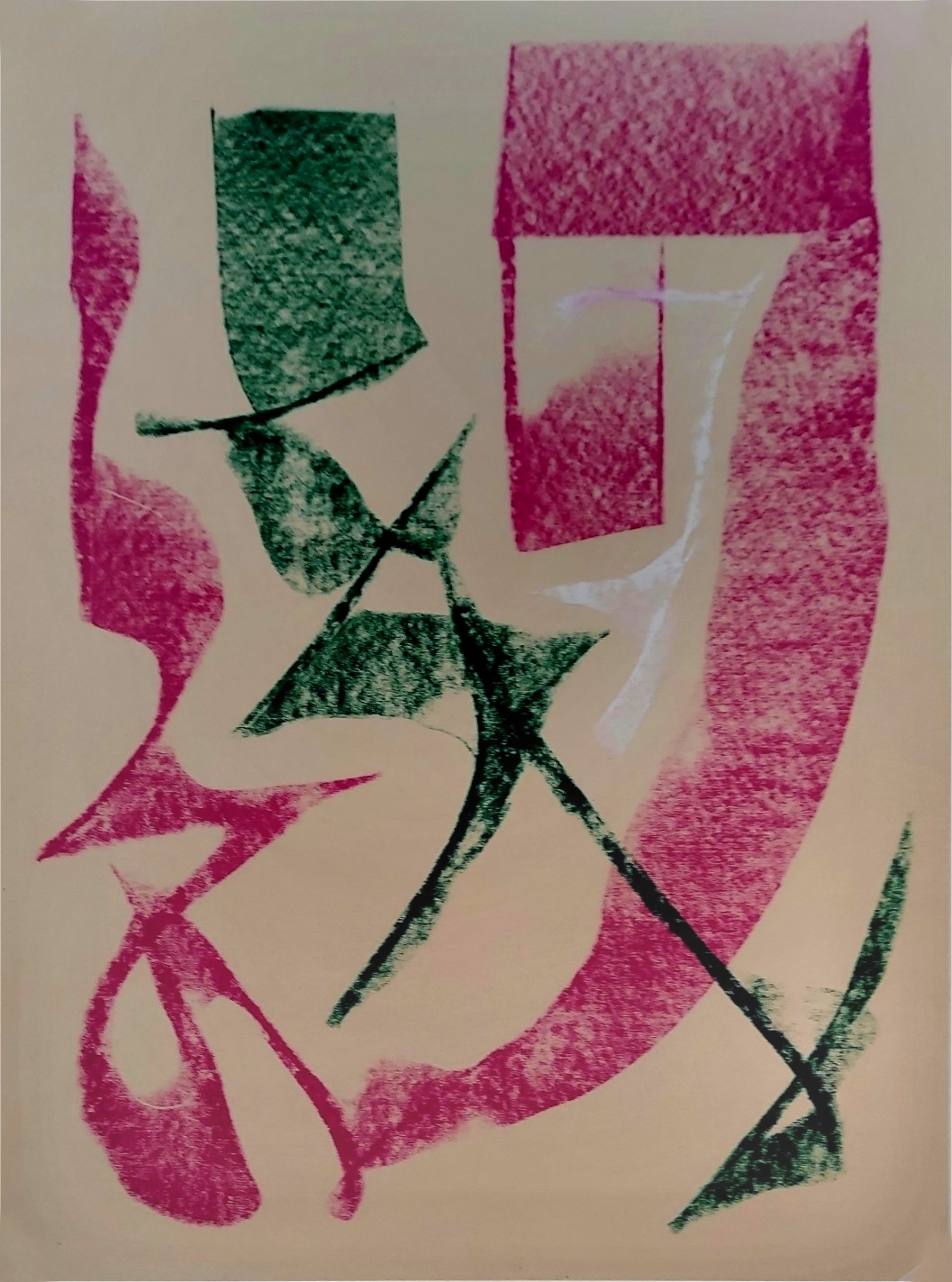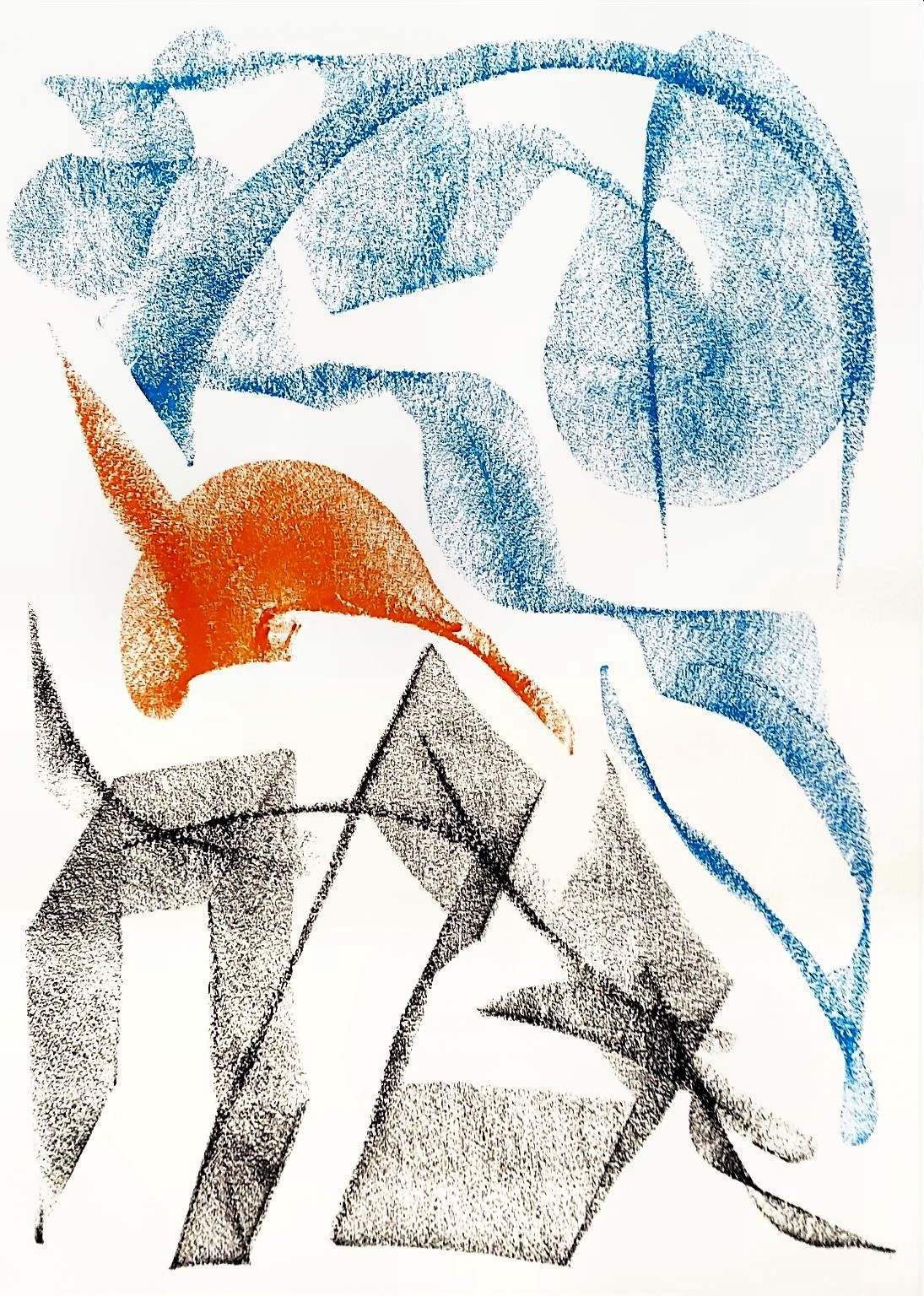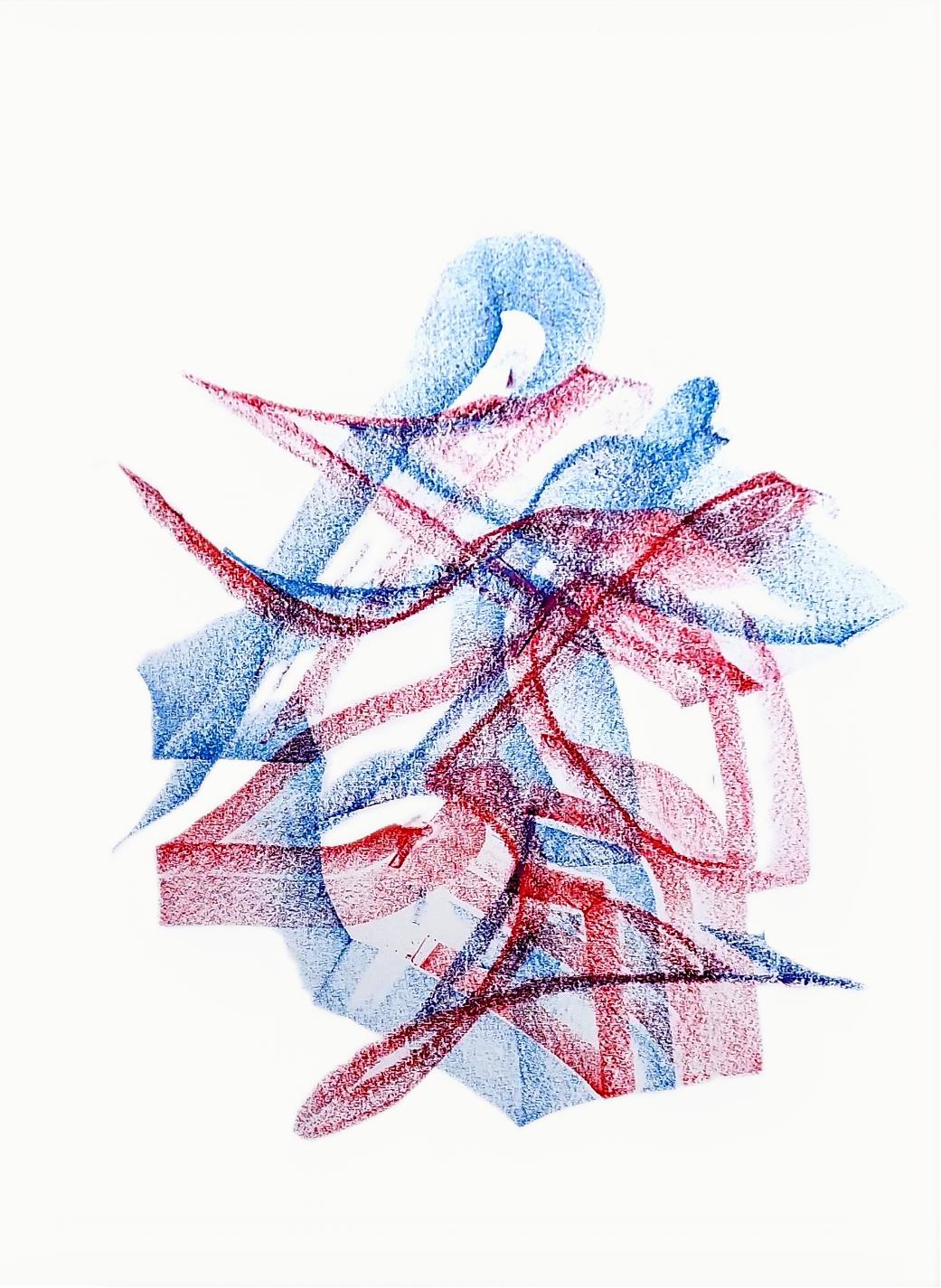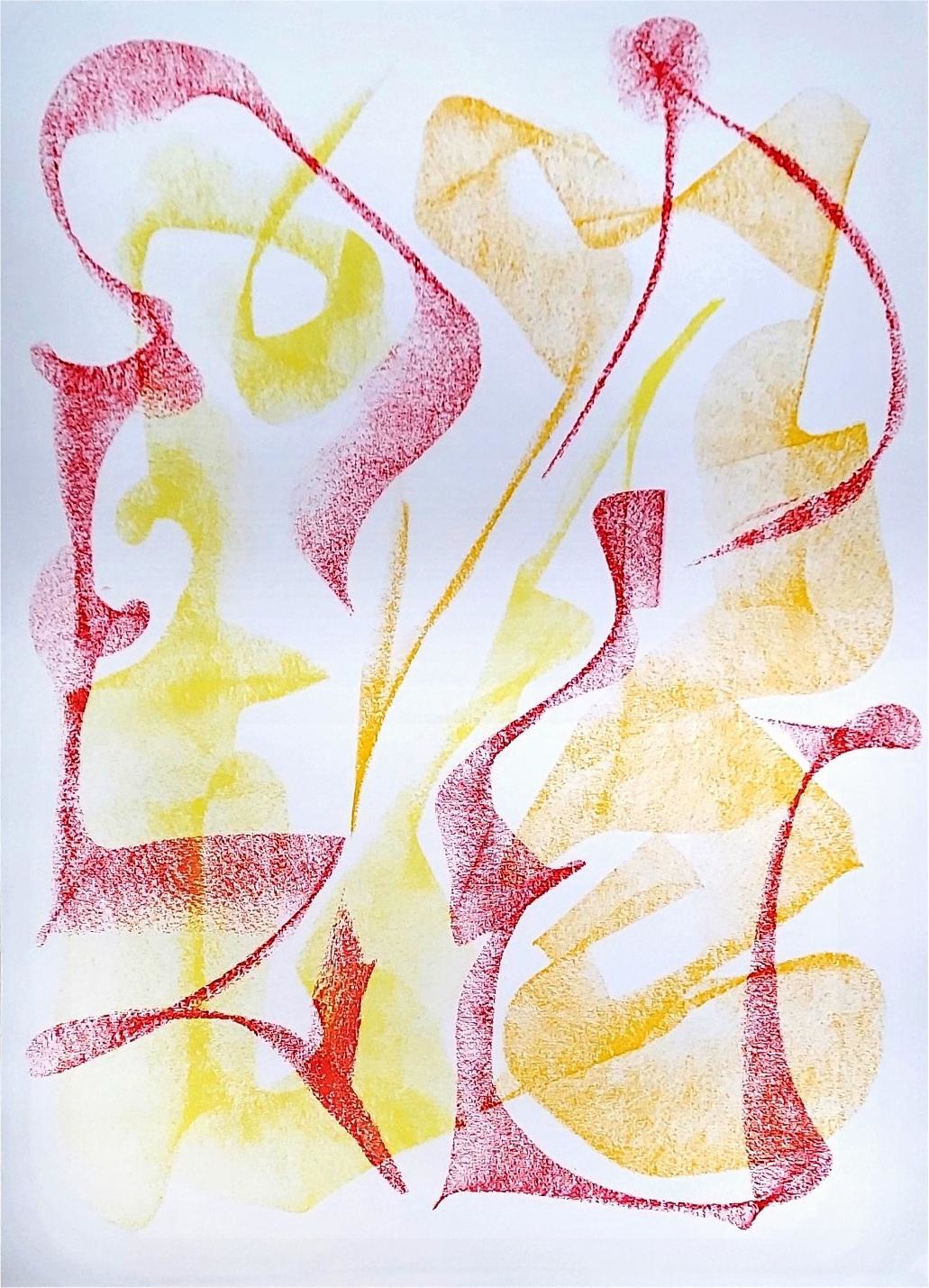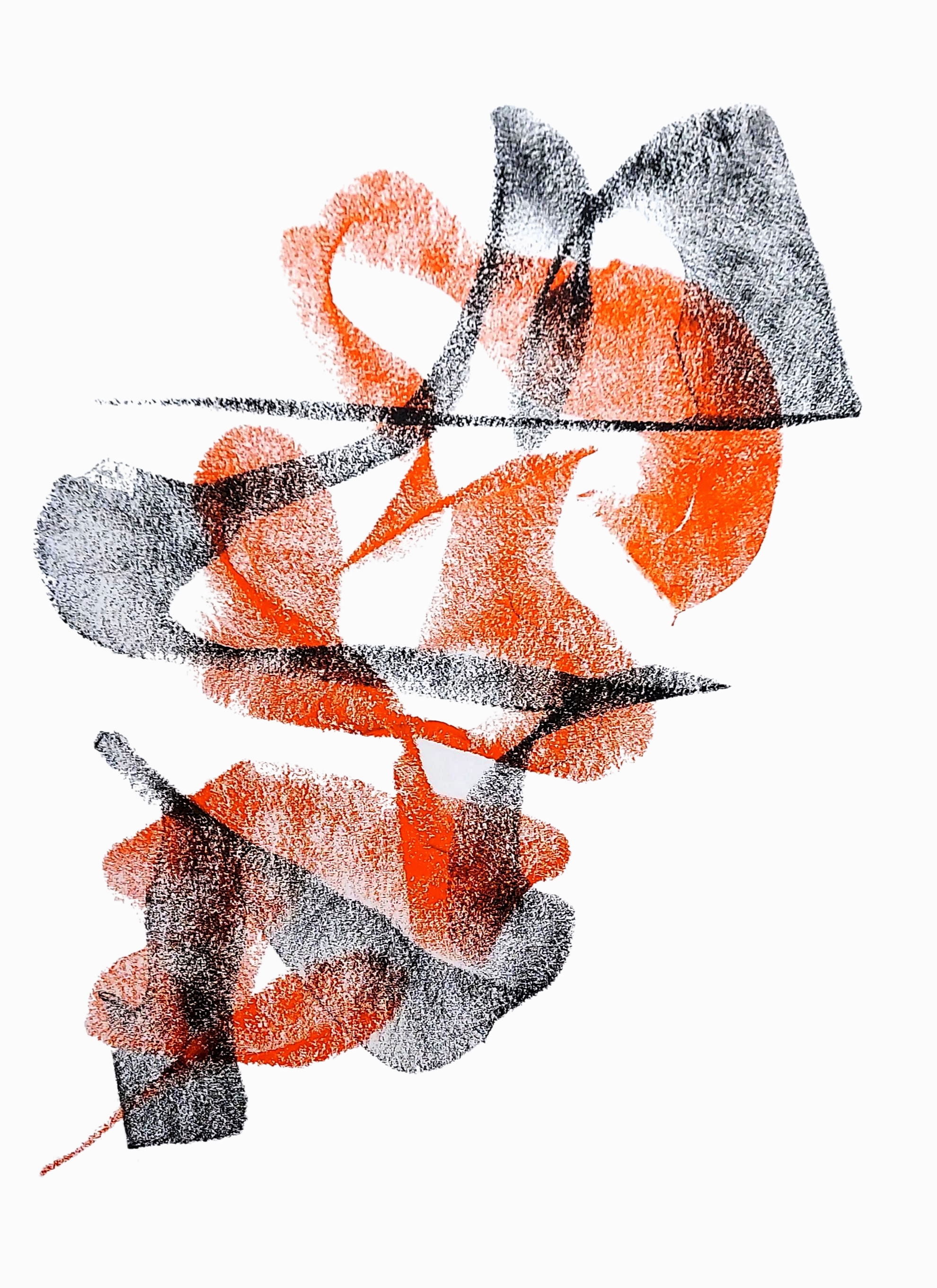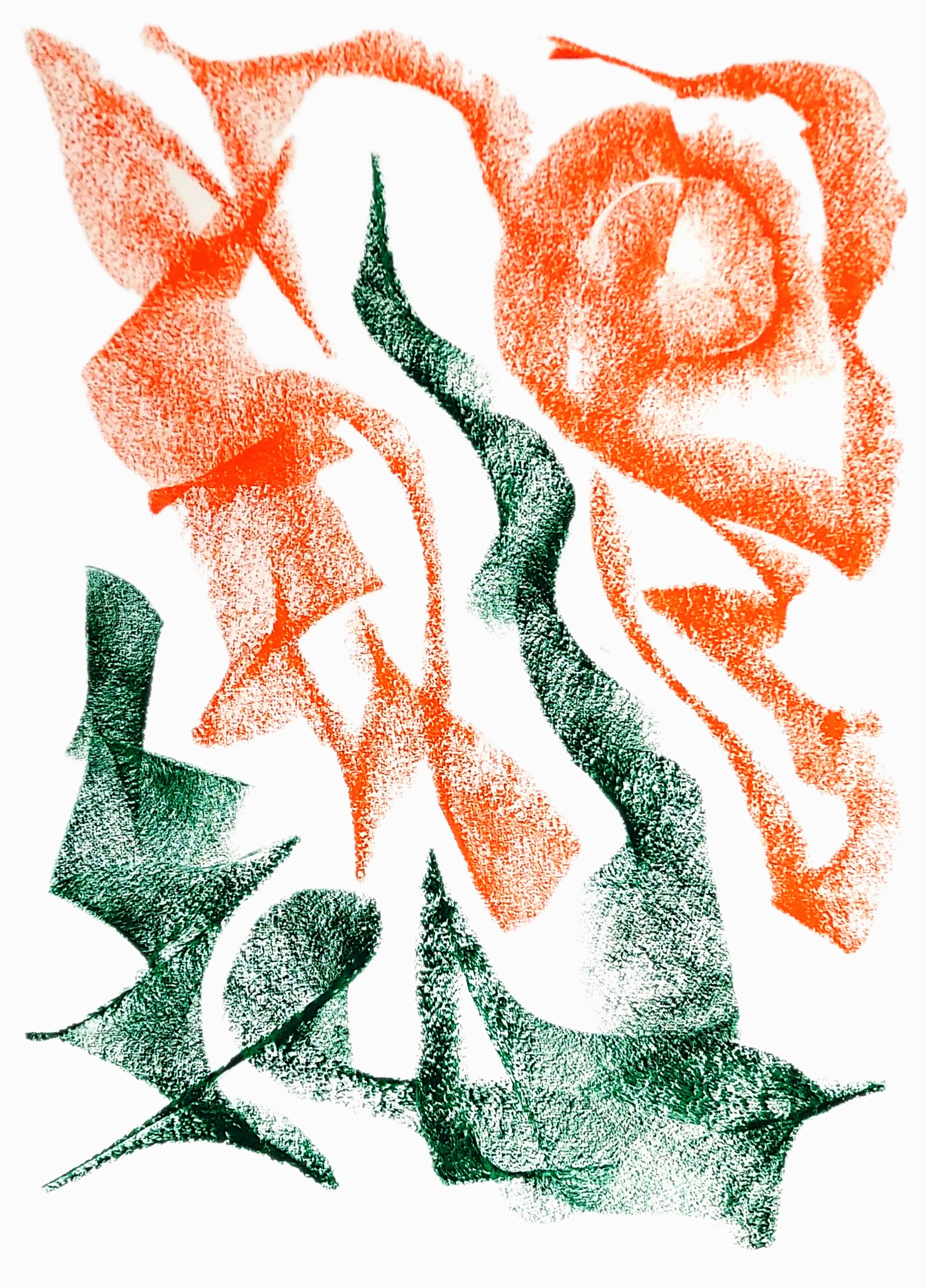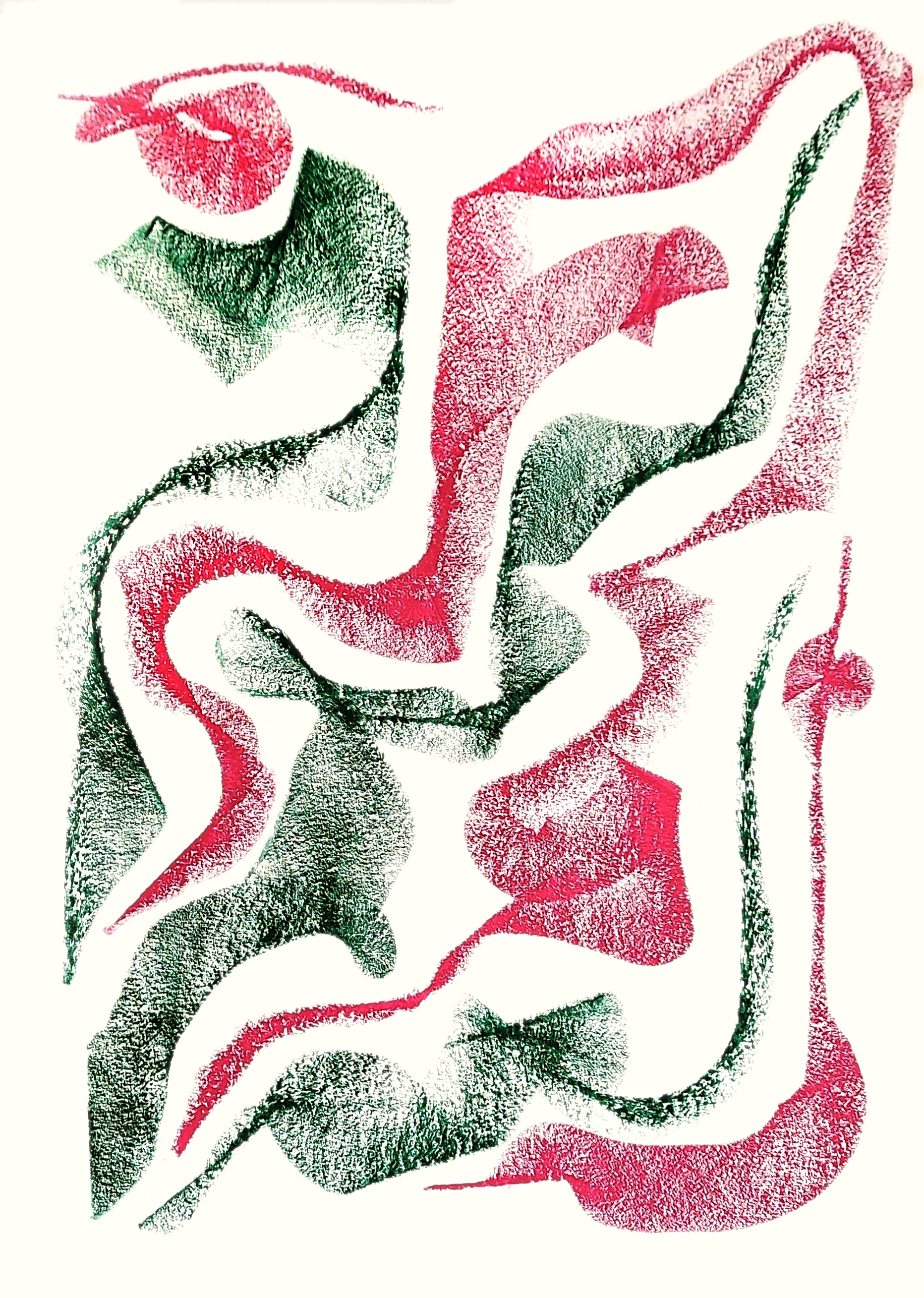
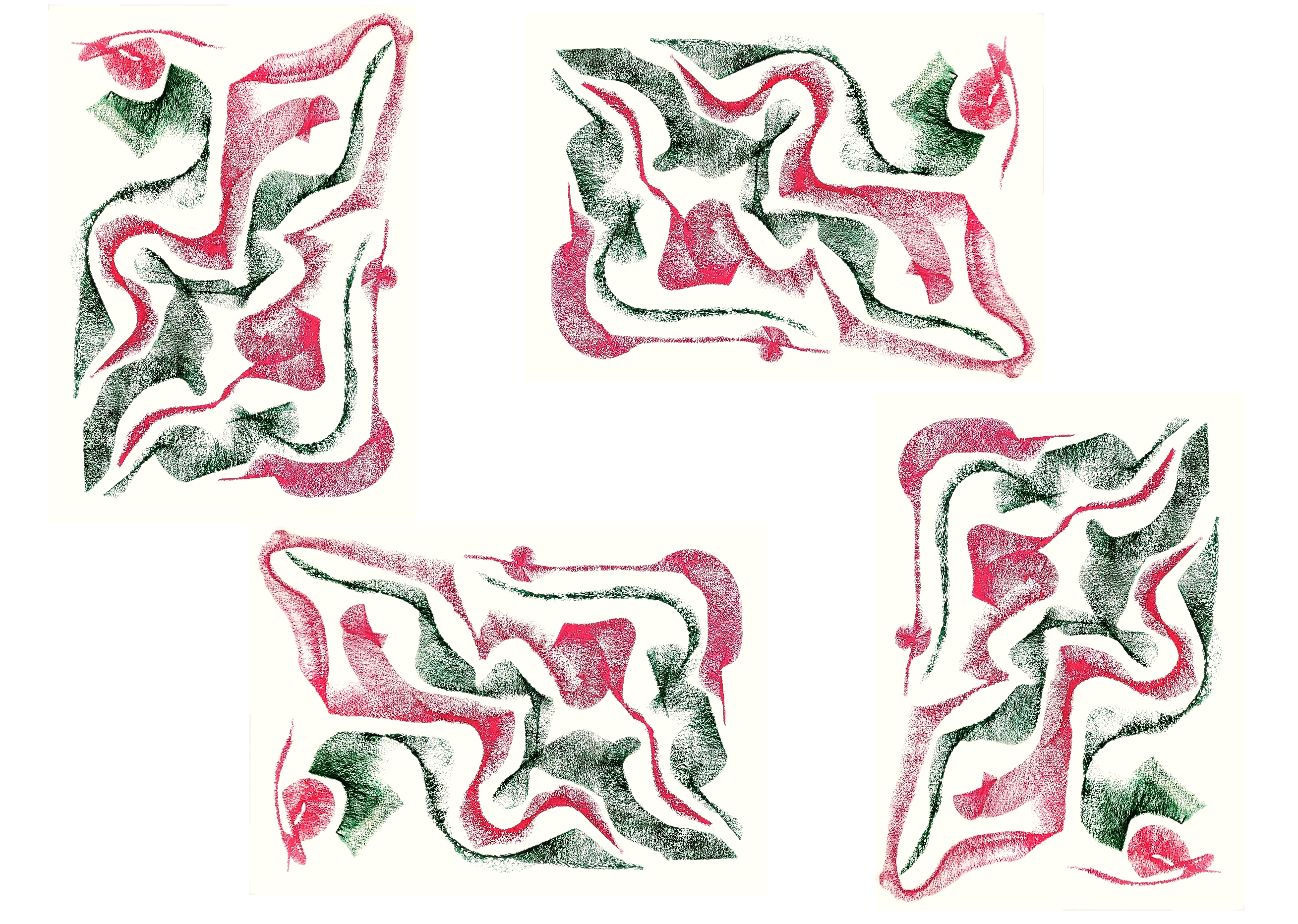
An oil-pastel trajectile made under one consciously monitored prohibition: different colors were not to intersect. The assignment redirected conscious attention toward maintaining that single boundary while leaving the emerging form undetermined.
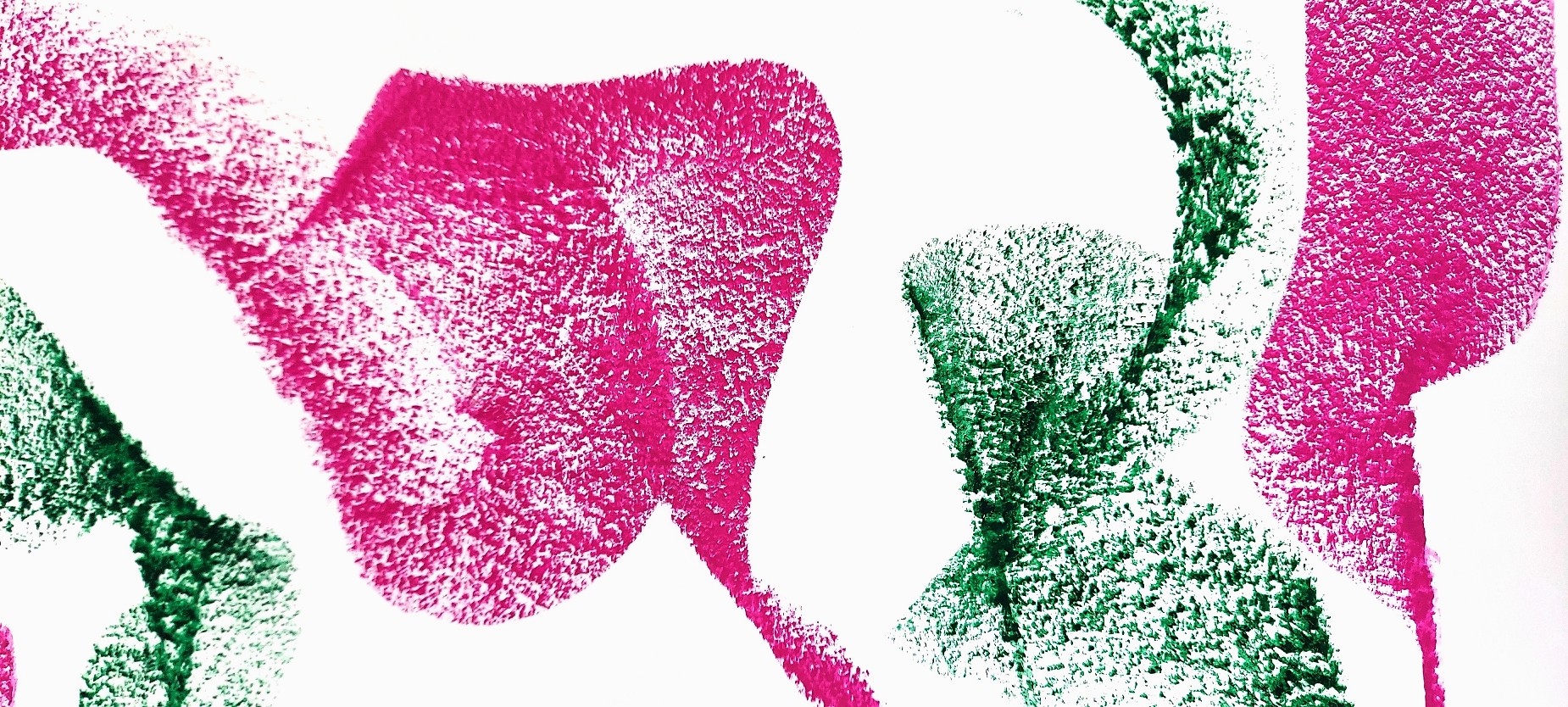
During execution, conscious attention was assigned one narrow task: make sure different colors did not intersect, and do not worry about anything else. Green was laid down first. Magenta entered afterward into a field already marked. The rule did not prescribe an image; it constrained one relationship while leaving the emerging form undetermined.
Earlier manifestations had repeatedly confronted the difficulty of limiting conscious pictorial control. Here conscious attention was not abolished. It remained present but localized, monitoring one prohibition rather than designing the overall form. The exposed paper that persists between green and magenta records the maintained non-intersection directly.
During the magenta trajectile, the Paul Rubens pastel fractured. The execution record establishes the fracture and the continuation that followed, but not a precise mechanical cause. For a period, both separated fragments remained active. The trajectile continued through the changed tool state without restoring the original condition or correcting the existing trace.
Twenty One and Twenty Two are independent manifestations, not a diptych. Twenty One prevented chromatic crossing; Twenty Two inverted the assignment and required crossing without hesitation when another color was encountered. The comparison shows that the assignment changes a condition of encounter without specifying the resulting image.
Archival documentation preserves four valid orientations for Nameless Number Twenty One. No single orientation is privileged as an absolute top, bottom, left, or right.