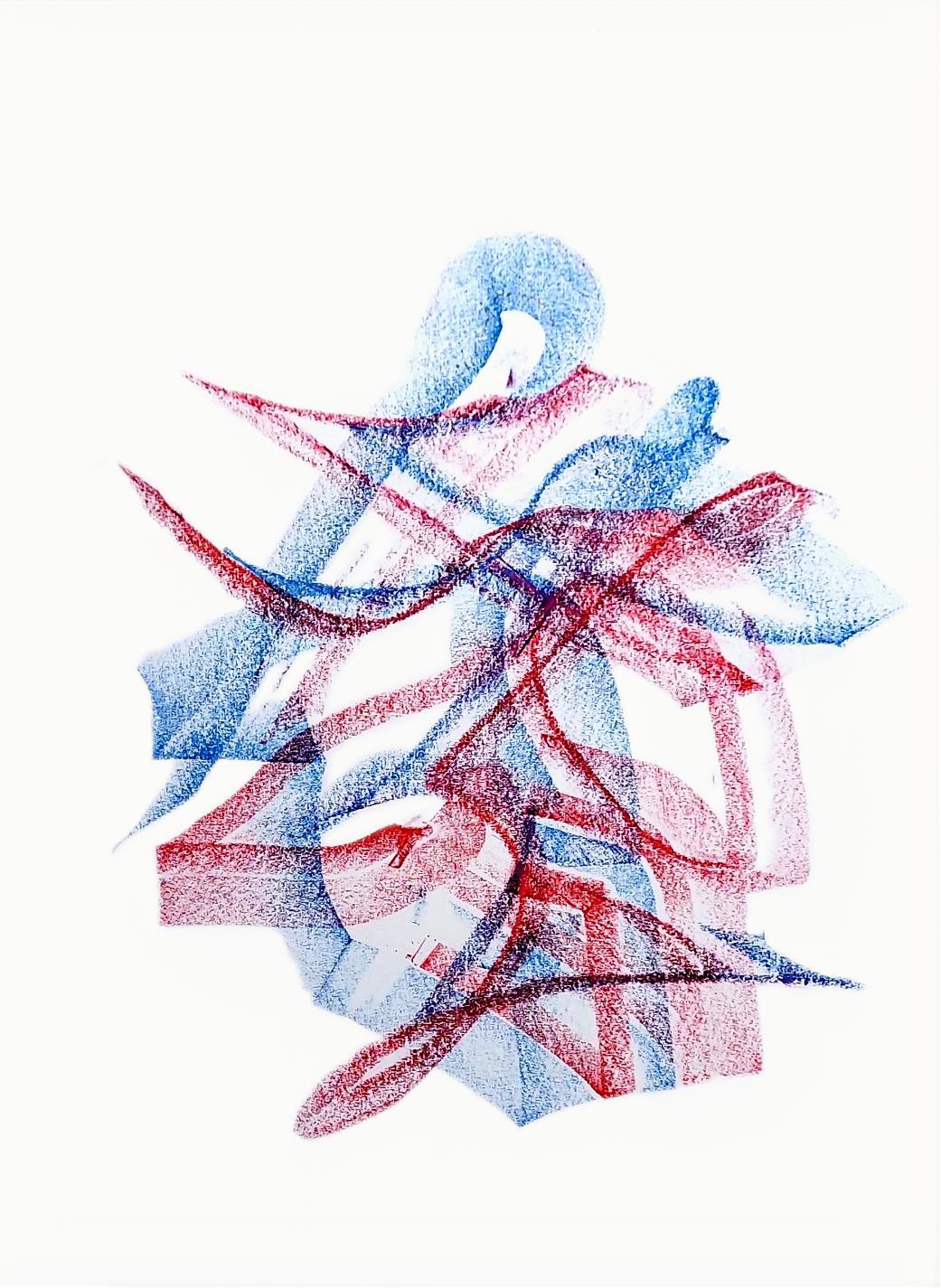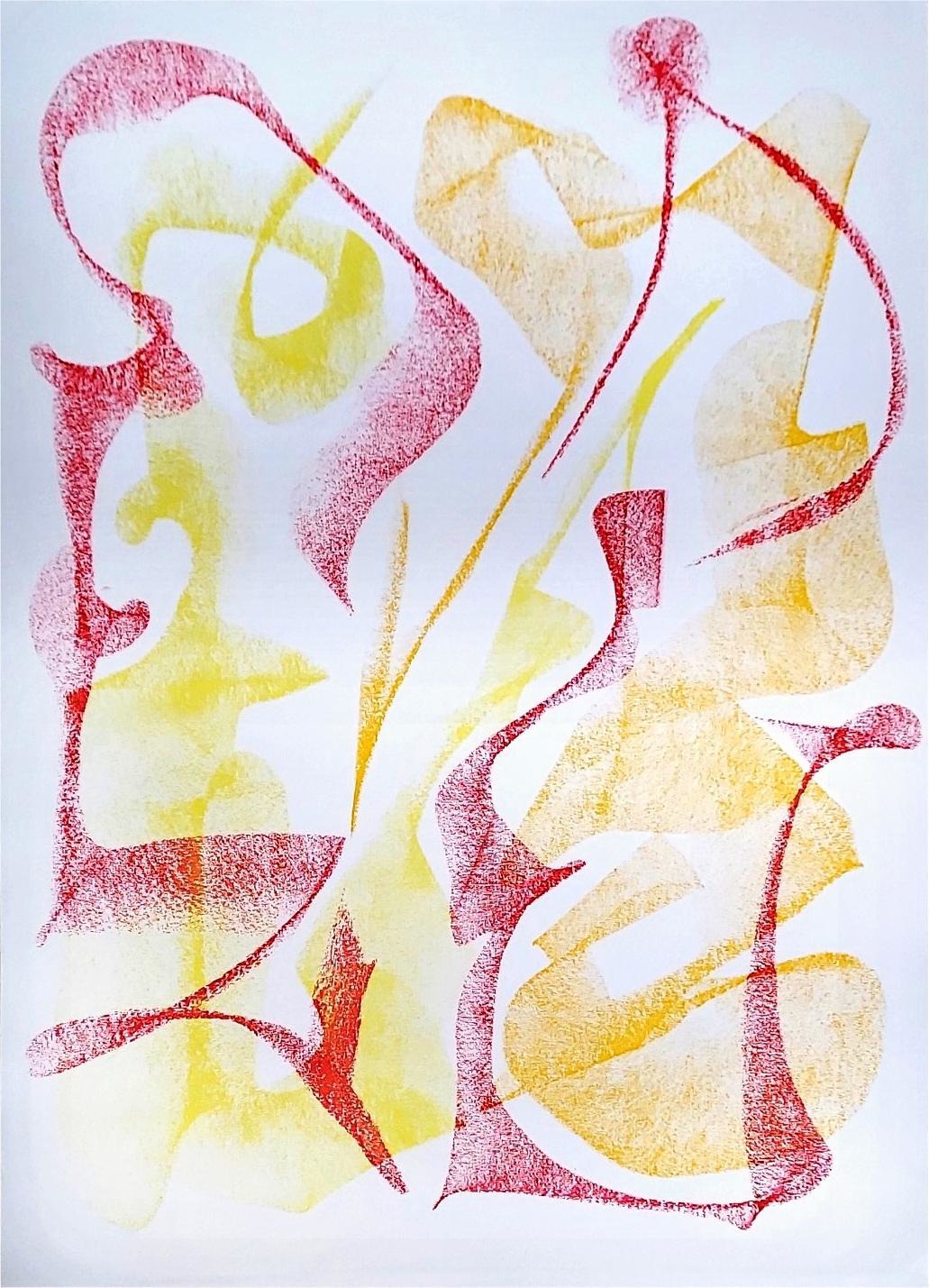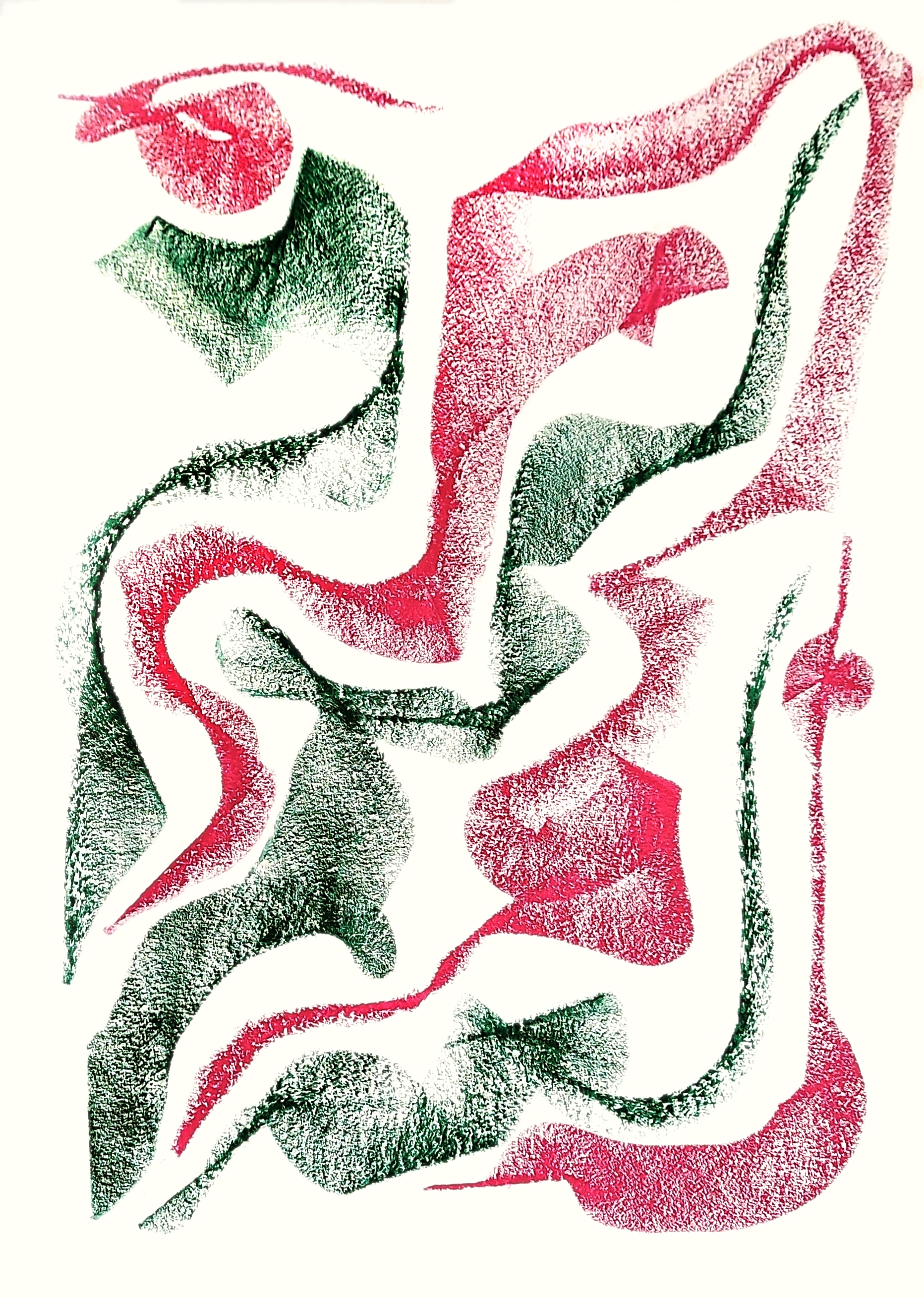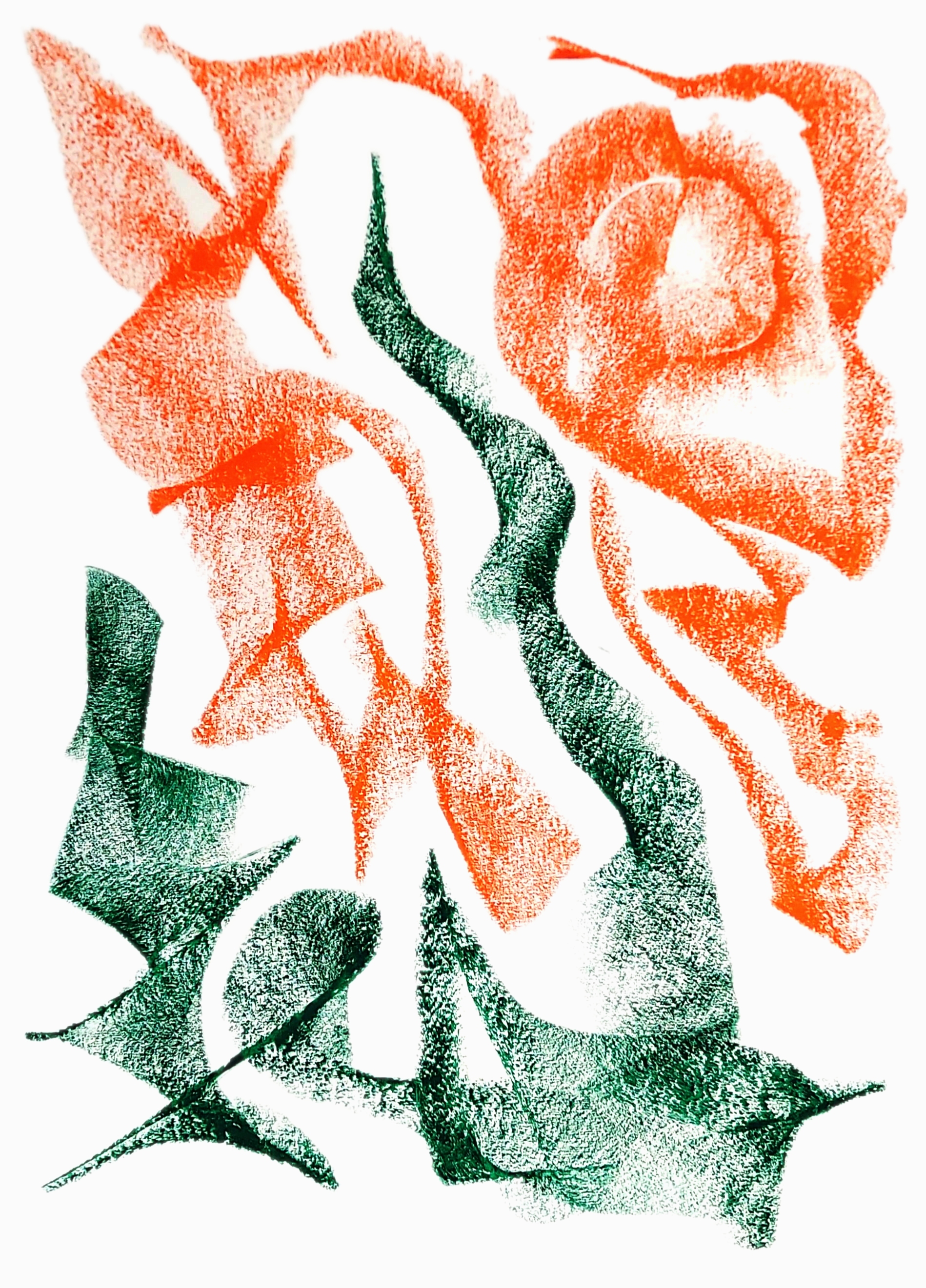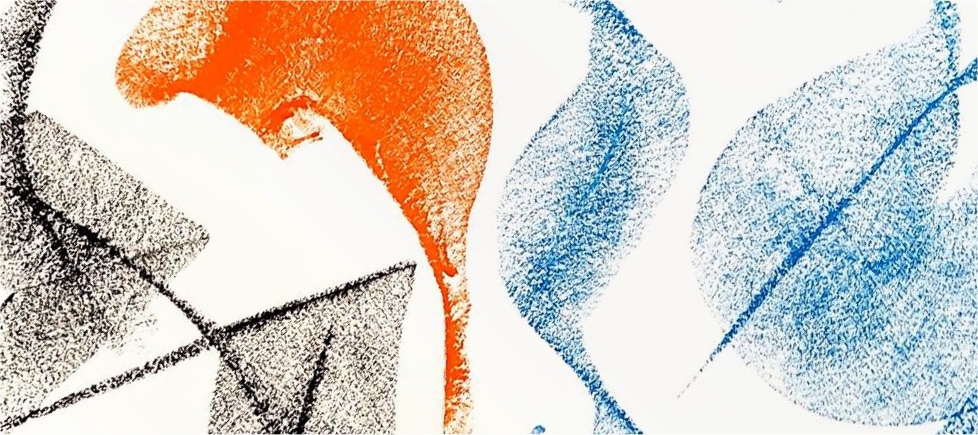
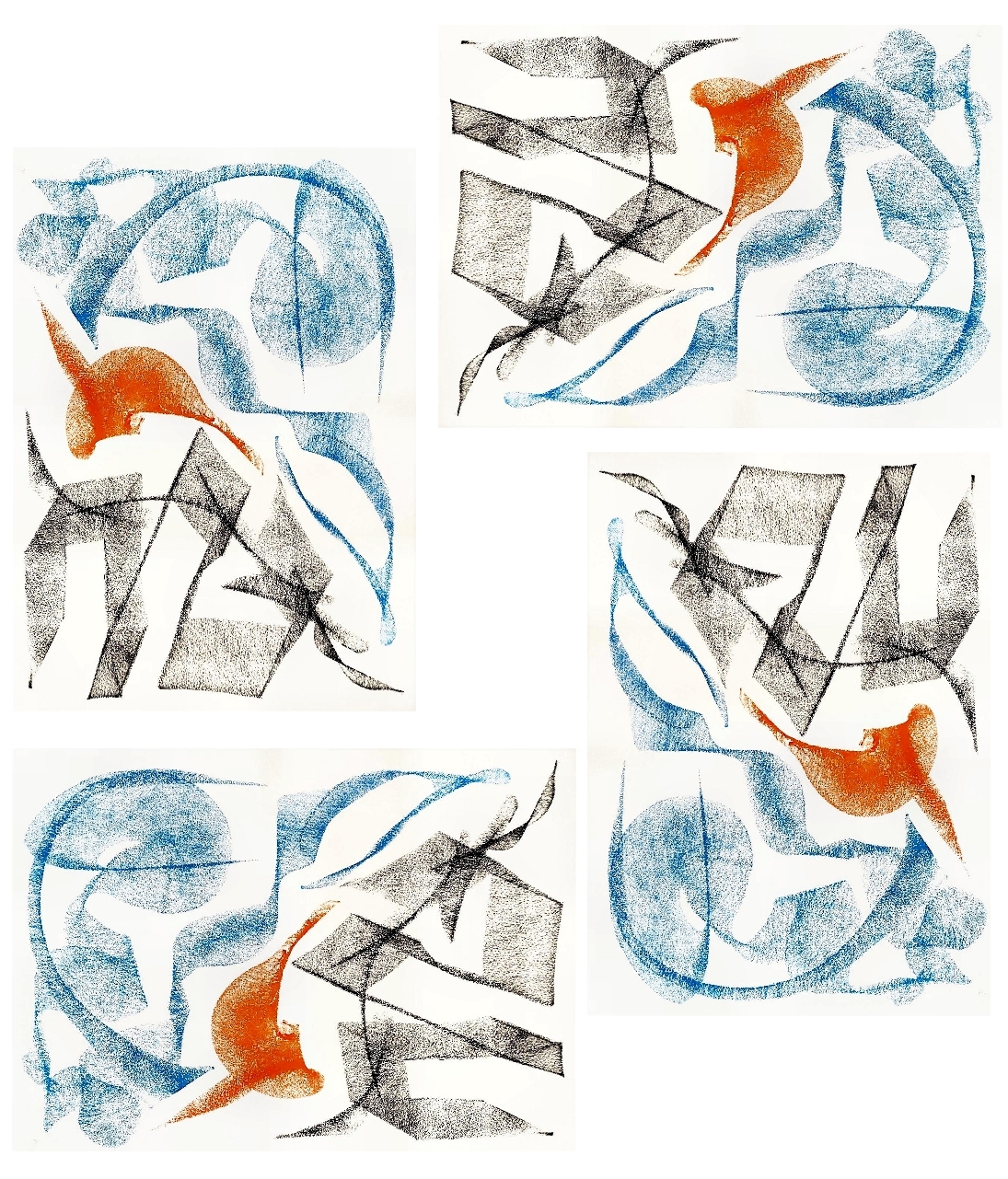
Following the substrate flaws of Nameless Numbers Sixteen and Seventeen, Nameless Number Eighteen established a more workable relation between Paul Rubens large-format oil pastel and Canson XL paper. Distinct force levels and separated chromatic fields made the material effects of half-power and full-force movement legible, while same-color overlays demonstrated the substrate’s capacity to retain repeated passage without excessive buildup. The work marks a material threshold in substrate–medium compatibility.
Nameless Number Eighteen followed the restricted recording capabilities encountered in Nameless Numbers Sixteen and Seventeen.
The aggressive tooth of their UArt substrate repeatedly interrupted the deposition of the oil pastel: pigment accumulated on the surface peaks, broad areas remained unfilled, and increased bodily force did not produce more continuous contact. These were limitations of the substrate–medium relation, not failures of the trajectile. The trajectile continued through every material condition, although the substrate retained its passage with differing degrees of continuity.
Executed with Paul Rubens large-format oil pastel on a 22 × 30-inch sheet of Canson XL paper, Nameless Number Eighteen established a more workable equilibrium among force, friction, contact, and accumulation. The paper offered enough resistance to register changes in velocity and pressure while permitting more continuous deposition. Most of the blue and black trajectories were produced at approximately half power, while the orange trajectory received full bodily force. The denser orange passage consequently records a distinct energy state within the same sheet.
Blue, orange, and black were kept chromatically separate.
Blue occupies an expansive field of loops, enclosures, and returns; black develops through more angular turns and extended passages; orange rises from the lower center as a concentrated thrust between them. The intervening paper preserves the distinct material identity of each trajectory. Their separation creates a field in which several bodily events coexist without chromatic merging.
The decisive experiment occurred within the blue and black territories.
Blue was passed over blue and black over black. The later trajectories remained within a surface already altered by earlier passages without dislodging them or producing excessive material buildup. Each new movement encountered a material field possessing its own physical past.
These overlays were not corrections.
No earlier state was concealed or replaced in pursuit of a preferred image. Each passage added another causal stratum to the artifact. Nameless Number Eighteen therefore records more than the location of a single bodily movement: it retains successive events within one material field.
Within Somacentric Trajectilery, the work marks a shift toward reciprocal inscription.
The body remains unmediated, while the substrate remains materially active rather than functioning as a neutral support. The trajectile continues regardless of the recording conditions; the substrate determines how—and to what degree—that passage becomes materially retained.
The blue-on-blue and black-on-black overlays were not corrections.
Each passage added another causal stratum to the artifact. Crossing, overlapping, and the accumulation of successive bodily events had already occurred in earlier works; Nameless Number Eighteen did not introduce these possibilities. Its significance lies in how the Canson XL paper recorded them in combination with the Paul Rubens oil pastel.
Within Somacentric Trajectilery, the trajectile continues under every material condition and never fails.
What varies is the capacity of the substrate–medium system to retain its passage. In Nameless Number Eighteen, differentiated force levels and repeated same-color passages remained materially legible without the interruptions and buildup observed on the preceding UArt substrate. The work therefore marks a more workable material calibration within the developing corpus.