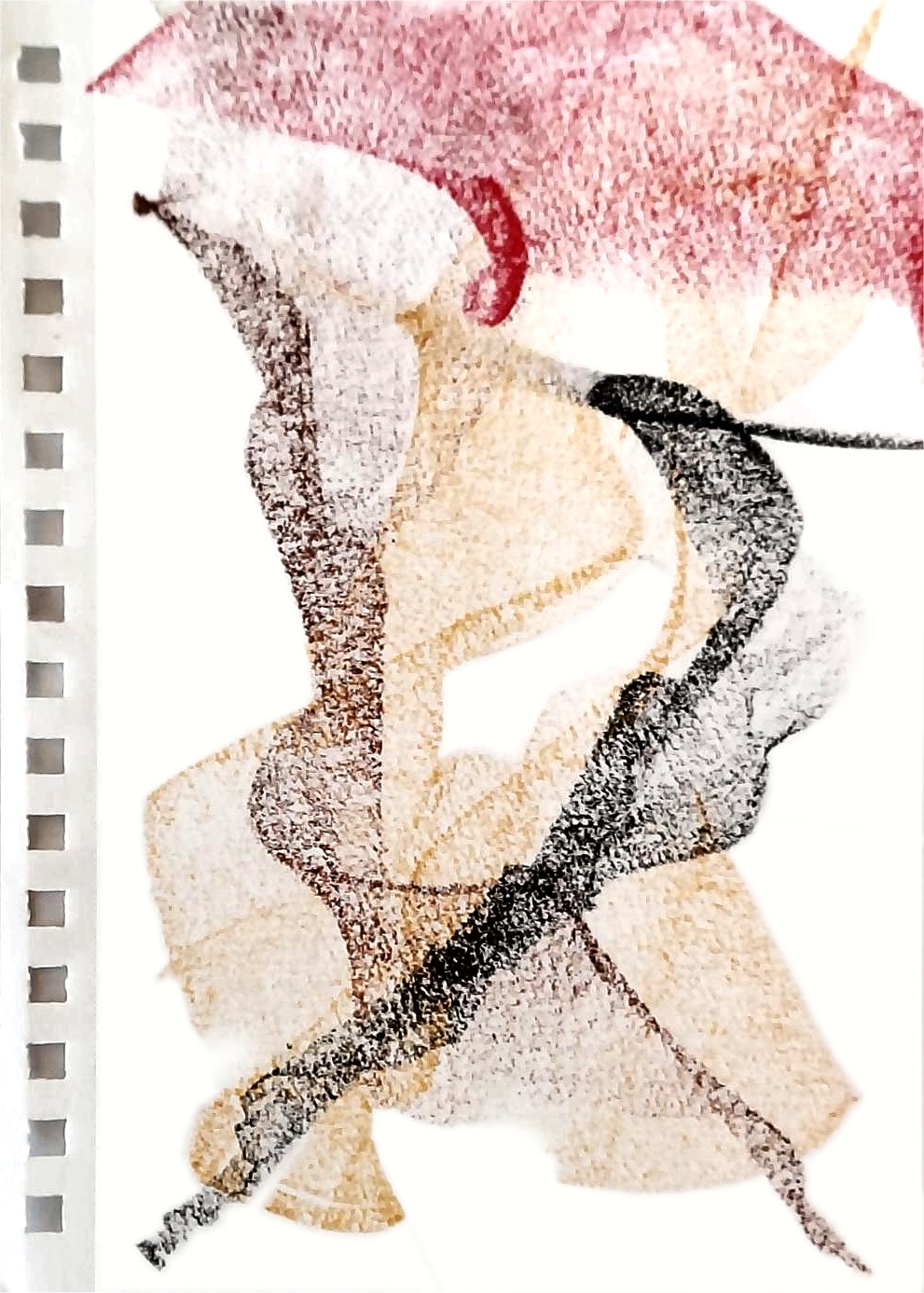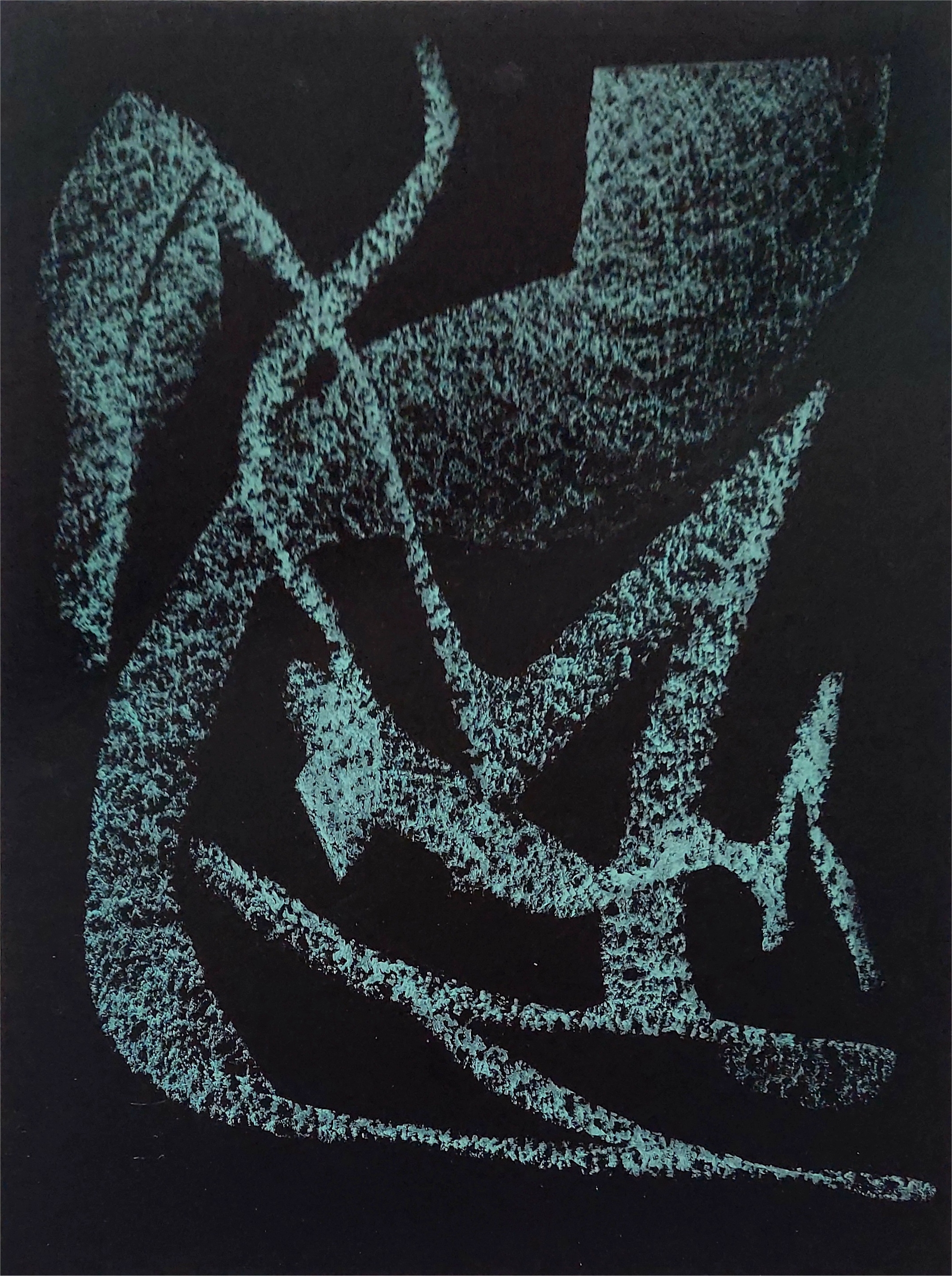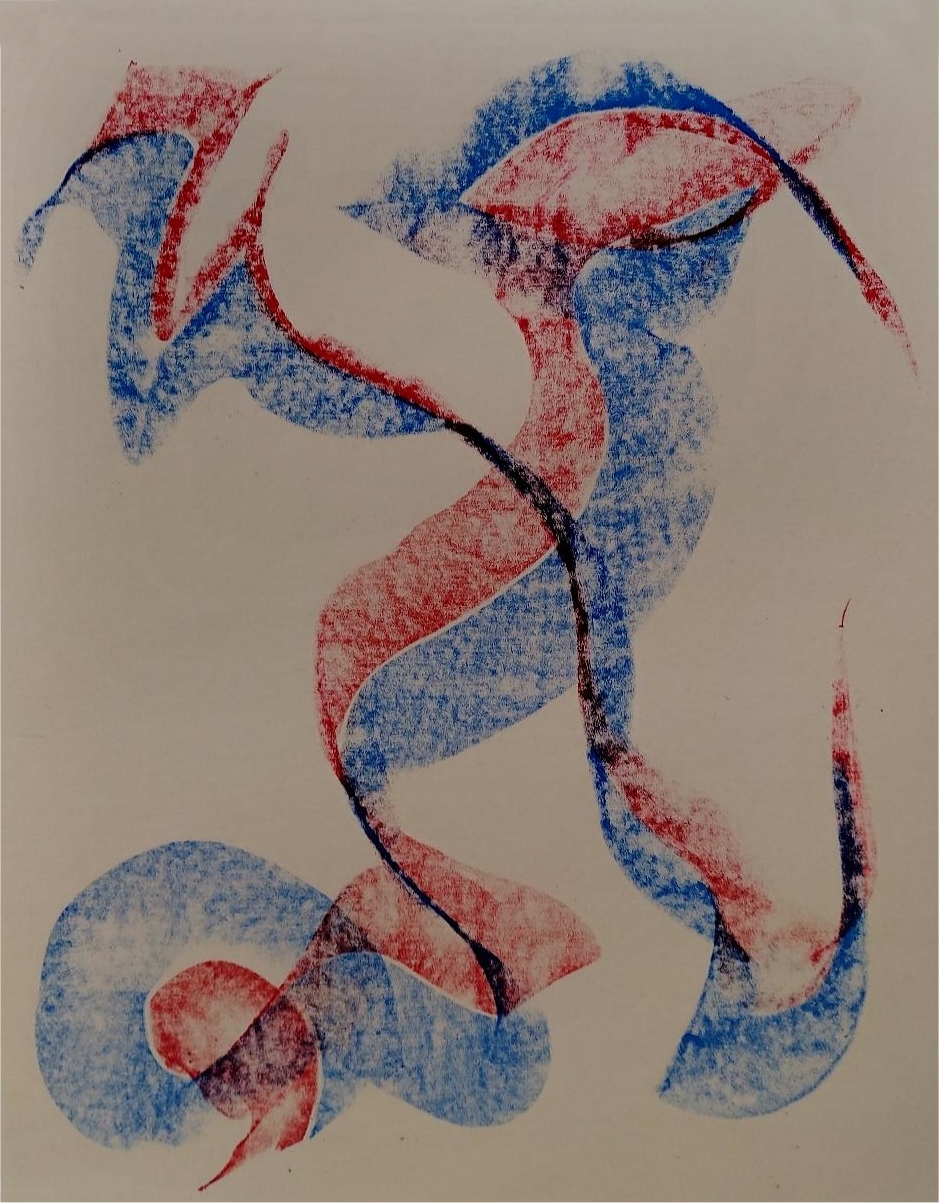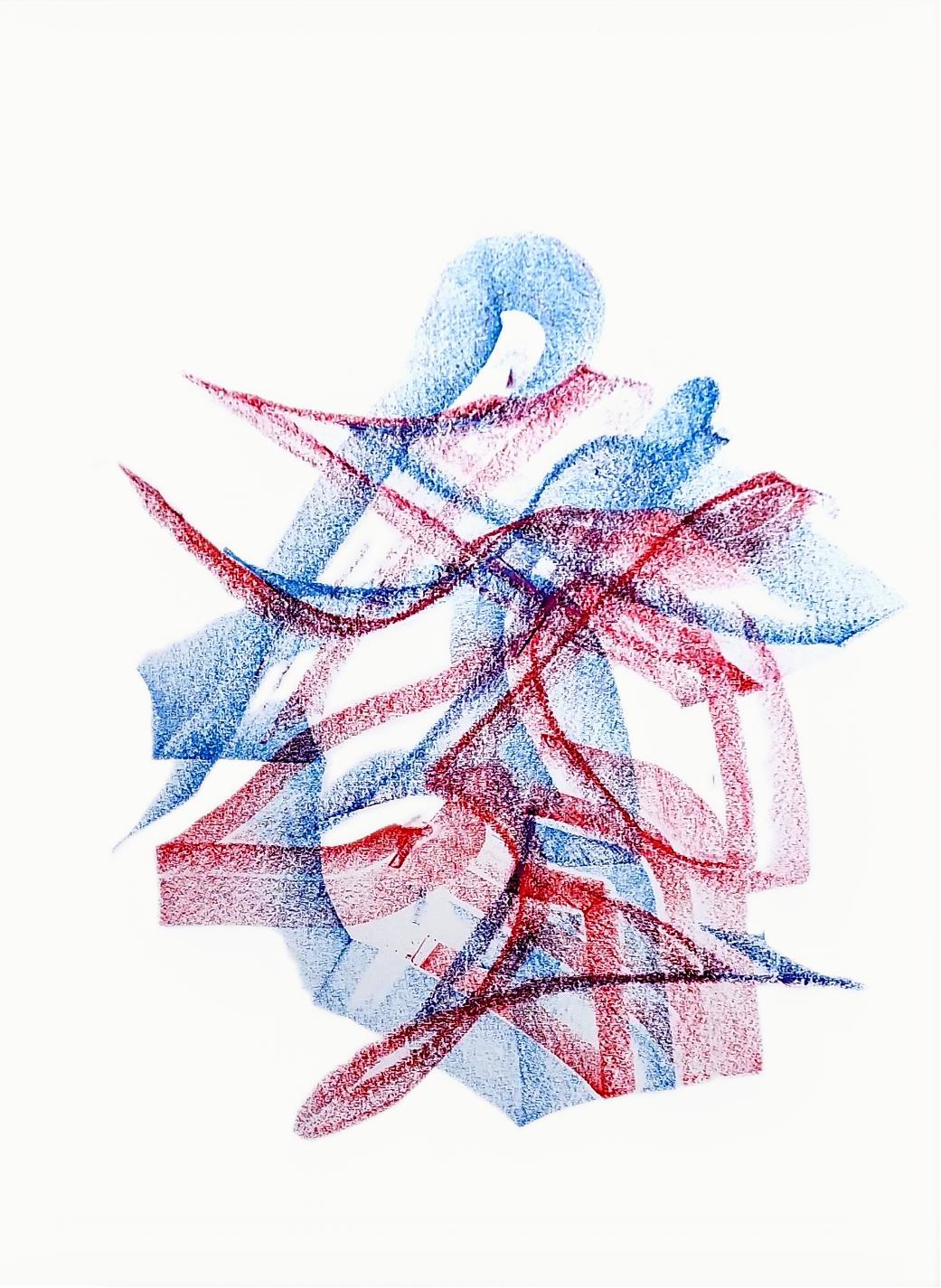

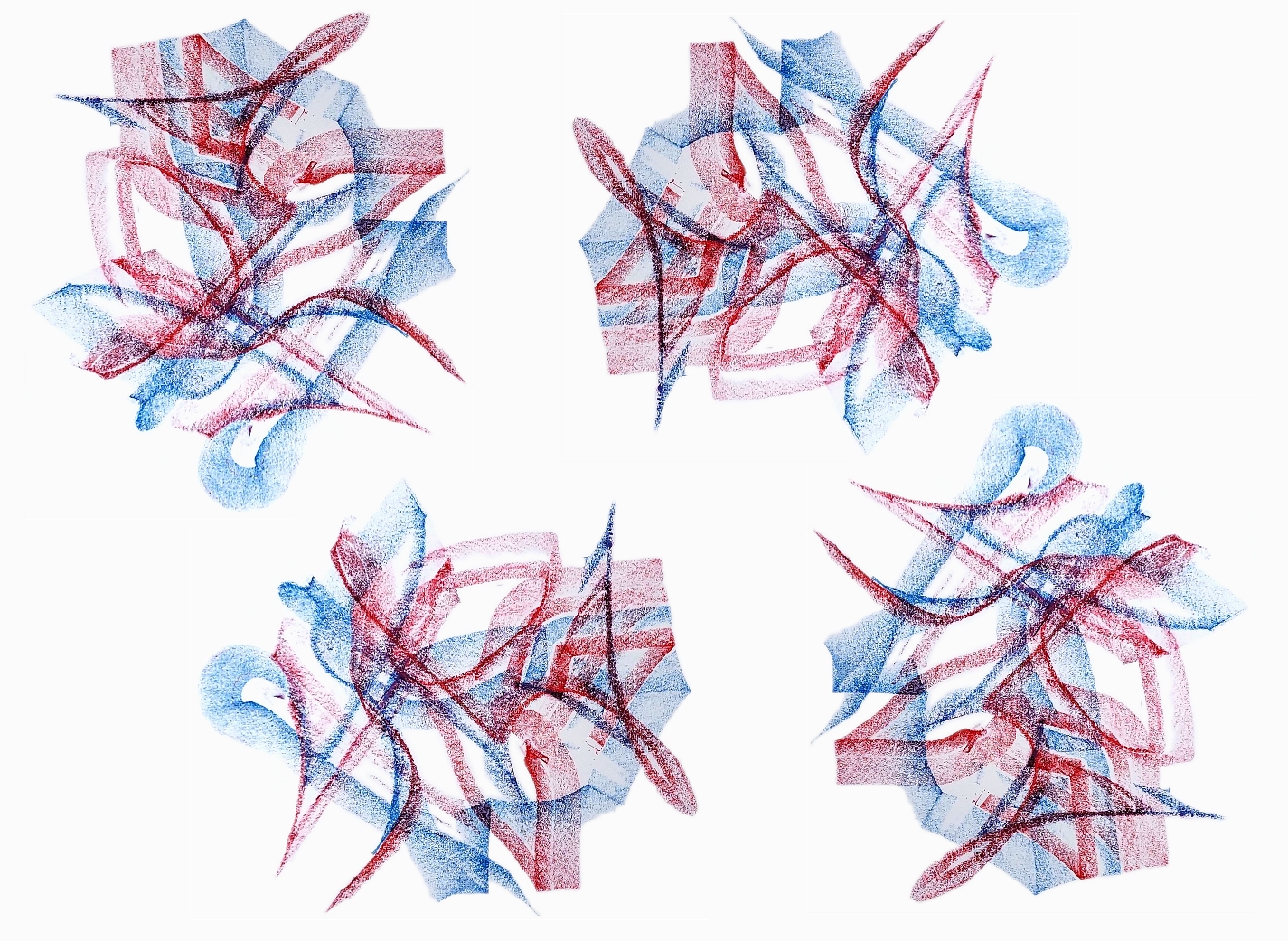
Nameless Number Nineteen was executed with a two-stick PVC holder repacked with previously broken red and blue soft-pastel remnants in a red-blue-red-blue sequence. During passage, the two middle fragments fell out. The recording apparatus changed from a four-part to a reduced state, but the trajectile continued without pause, retrieval, reconstruction, or corrective restart. The work made explicit the principle later named Trajectile Persistence: continuity of the event does not depend on stability of the apparatus.
The recording tool used for Nameless Number Nineteen was a PVC holder originally constructed to hold two pastel sticks. Those sticks had broken during an earlier trajectile. For Number Nineteen, the holder was repacked with surviving red and blue soft-pastel remnants arranged red-blue-red-blue, creating four material contacts within one compound recorder.
During execution, the two middle pastel fragments fell out of the holder.
They were not retrieved or replaced, and the apparatus was not restored to its initial configuration. The movement continued with the components that remained. The sheet therefore preserves the consequences of two states of the same recording apparatus: broader compound deposits produced by the initial four-part configuration and more exposed red and blue trajectories produced after the loss of the middle fragments.
This was not a decision to incorporate an accident after evaluating it.
There was no interval in which the emerging artifact was compared with an intended image. The material event occurred inside an already released trajectile, and continuation preceded interpretation.
Nameless Number Nineteen consequently distinguishes change within the recording apparatus from abandonment or corrective restart.
The apparatus lost components and its contact geometry changed, but the bodily passage remained continuous. No attempt was made to restore an earlier material state or return to a predetermined image. The work made explicit the principle later named Trajectile Persistence: a trajectile continues through changing material conditions without surrendering the continuity of its passage.