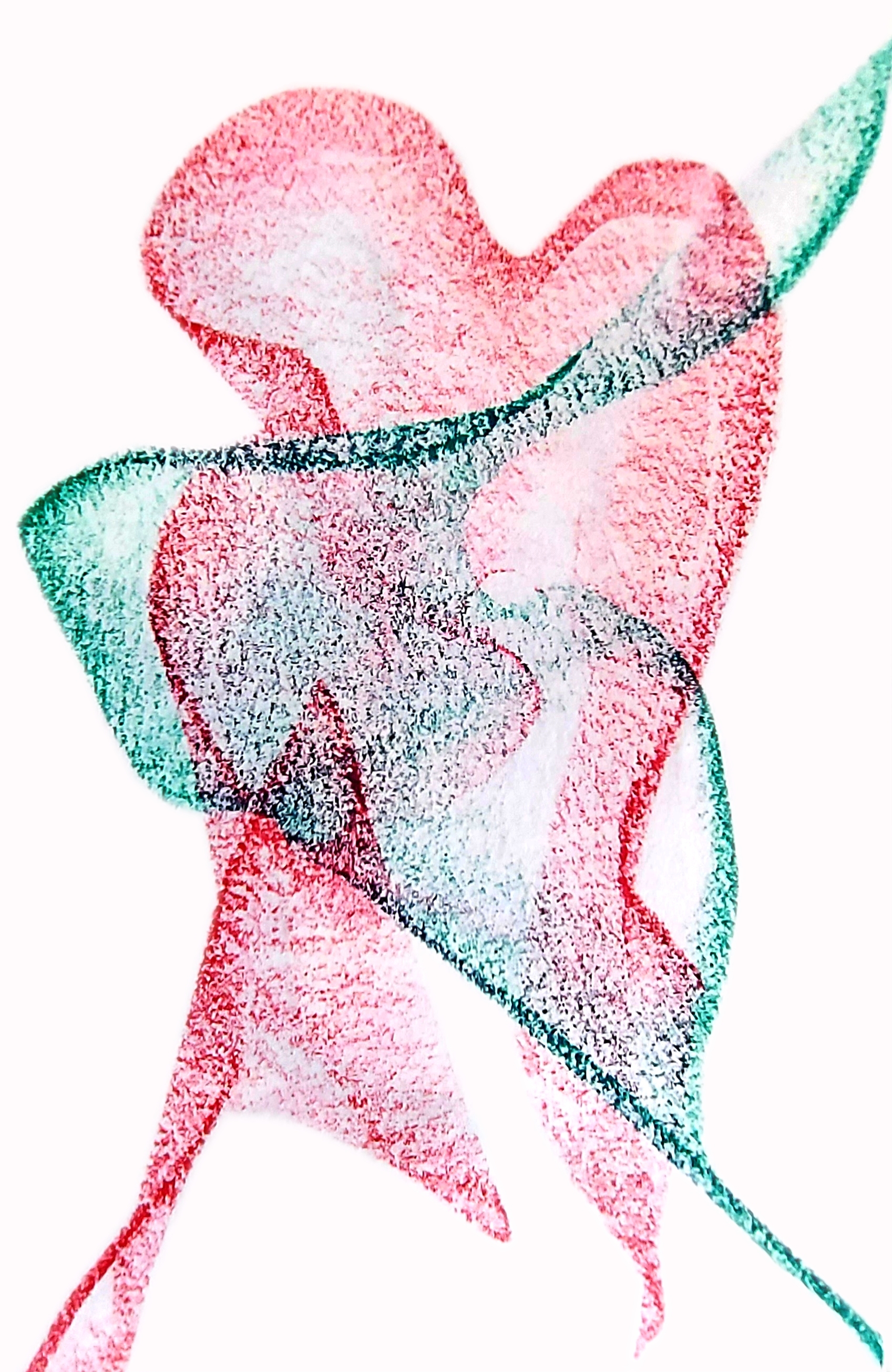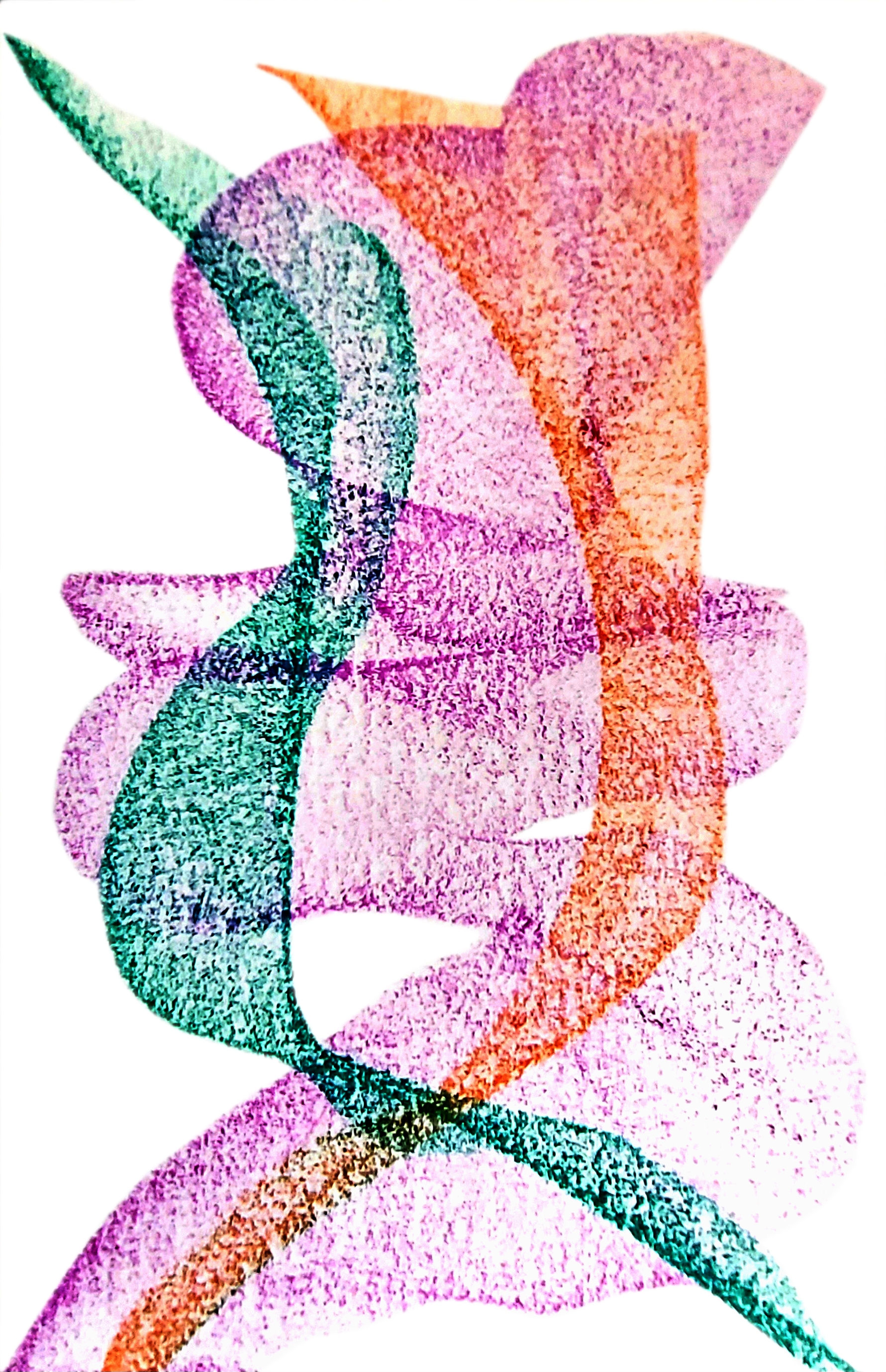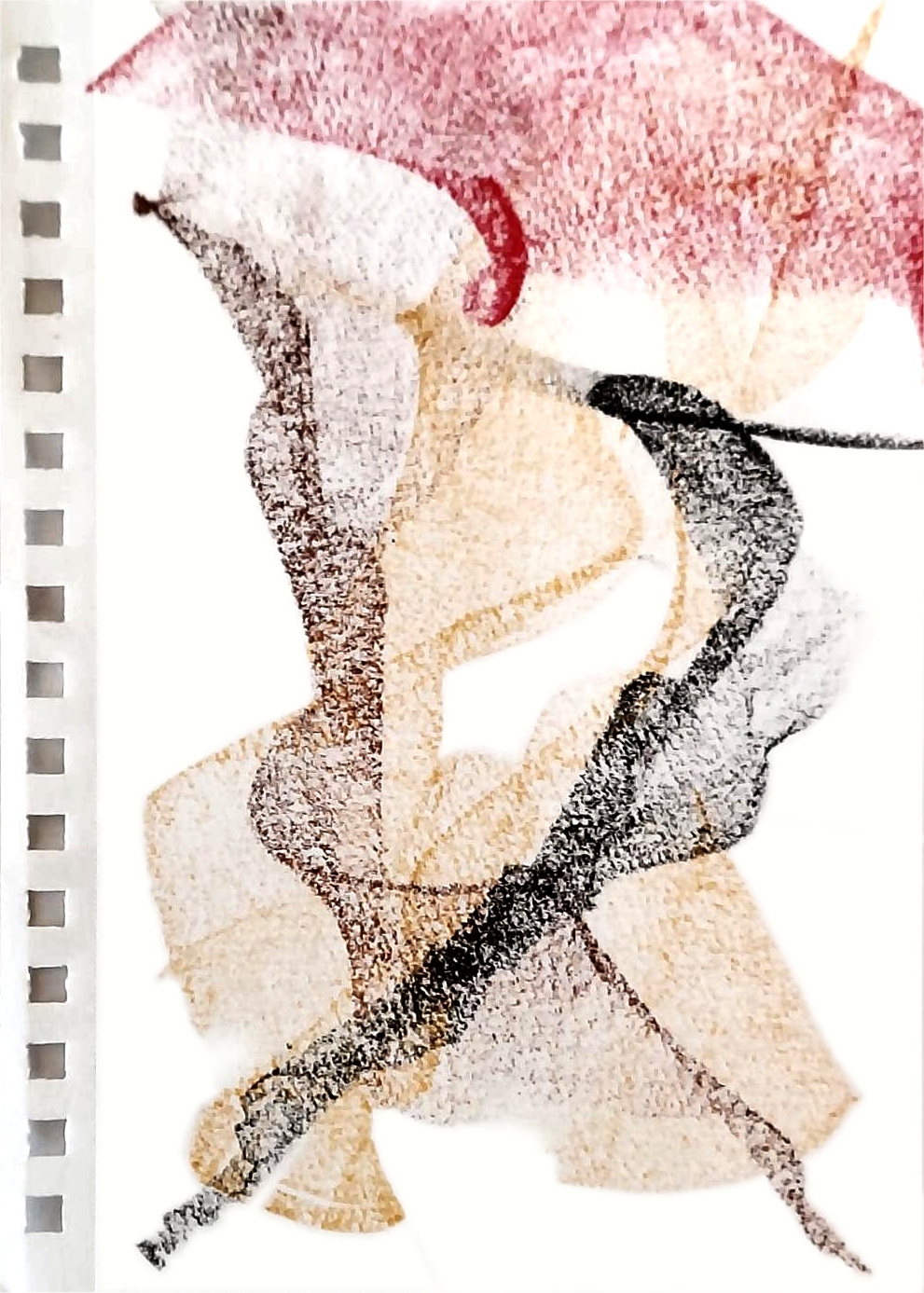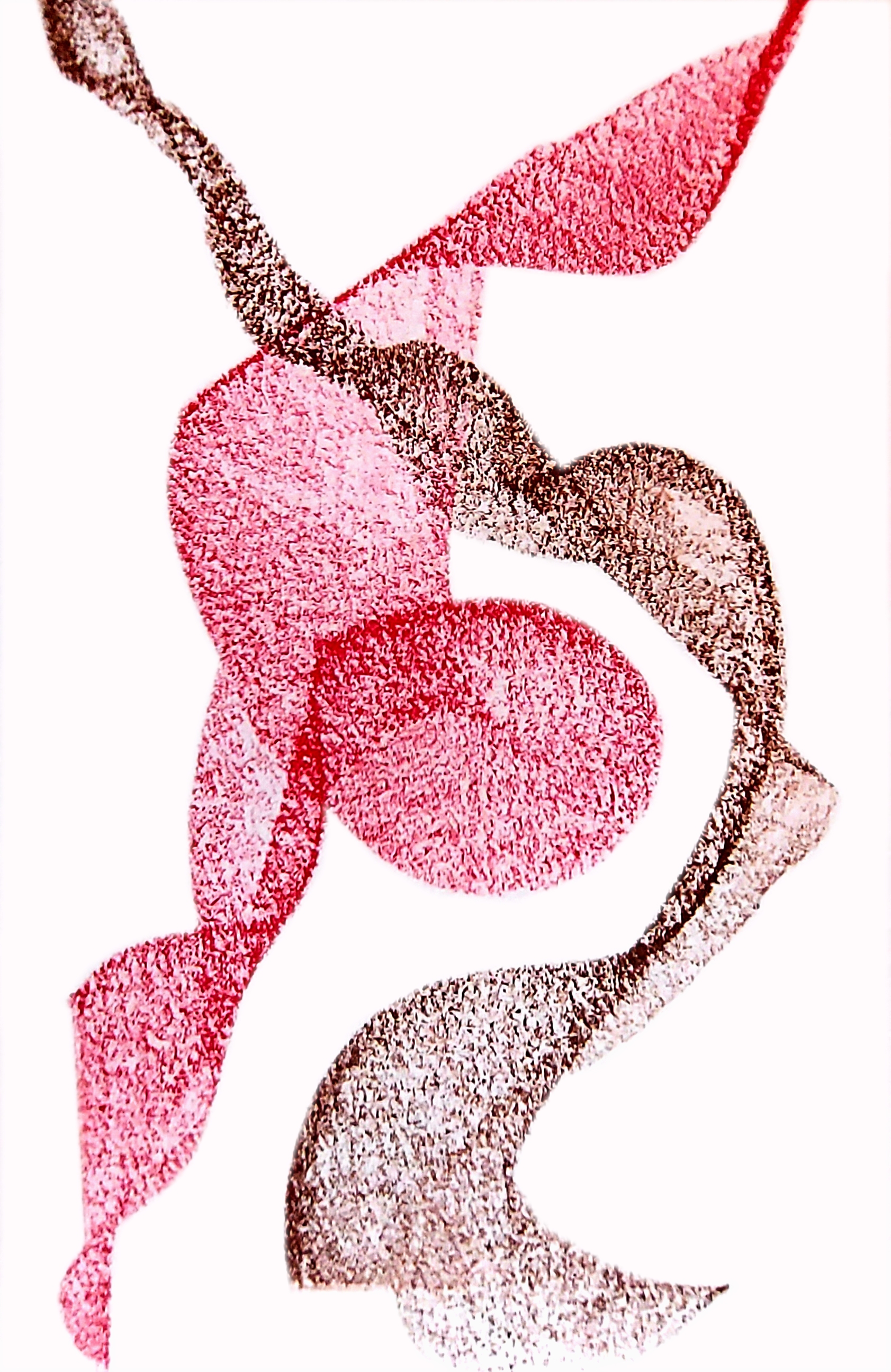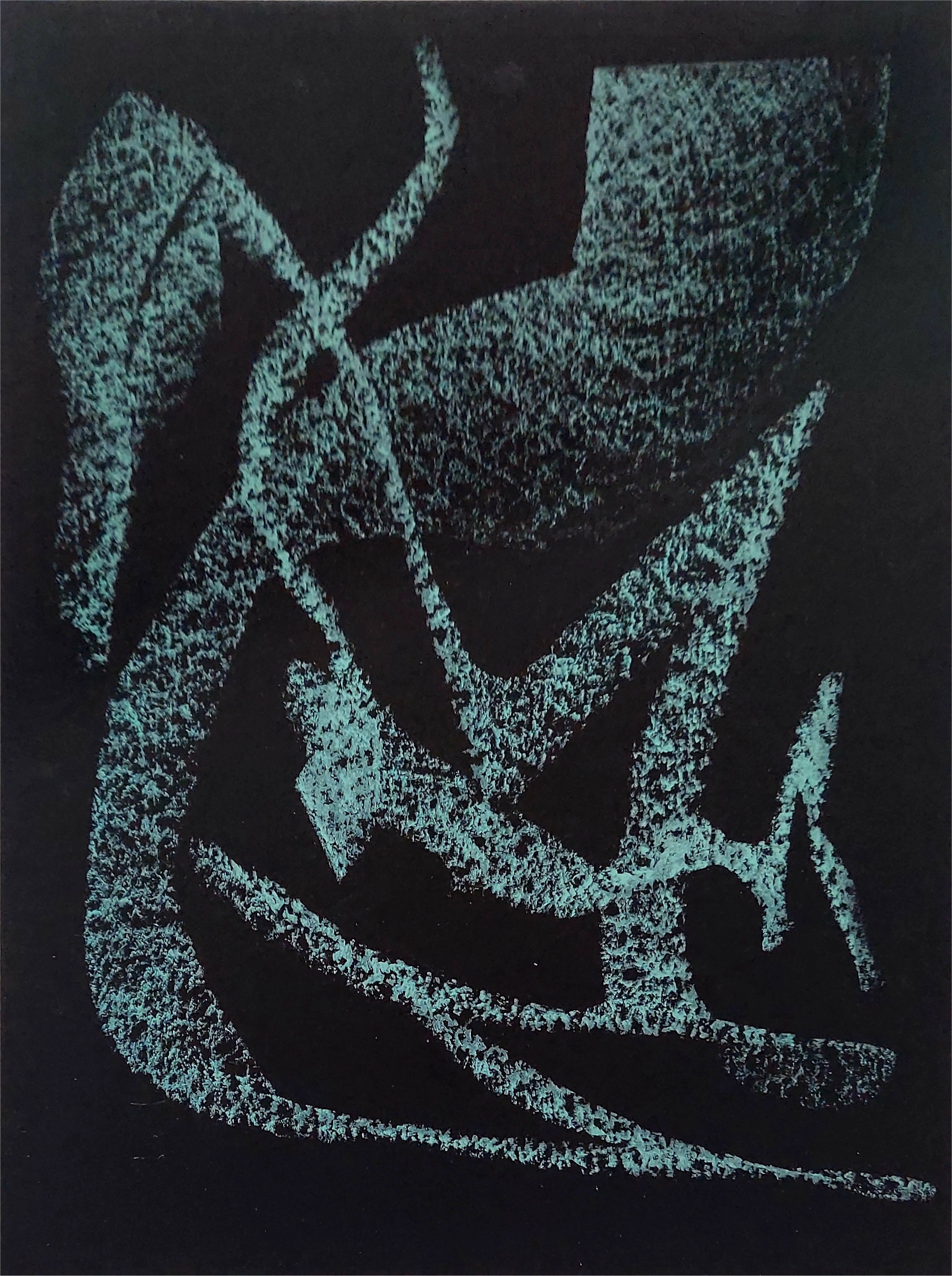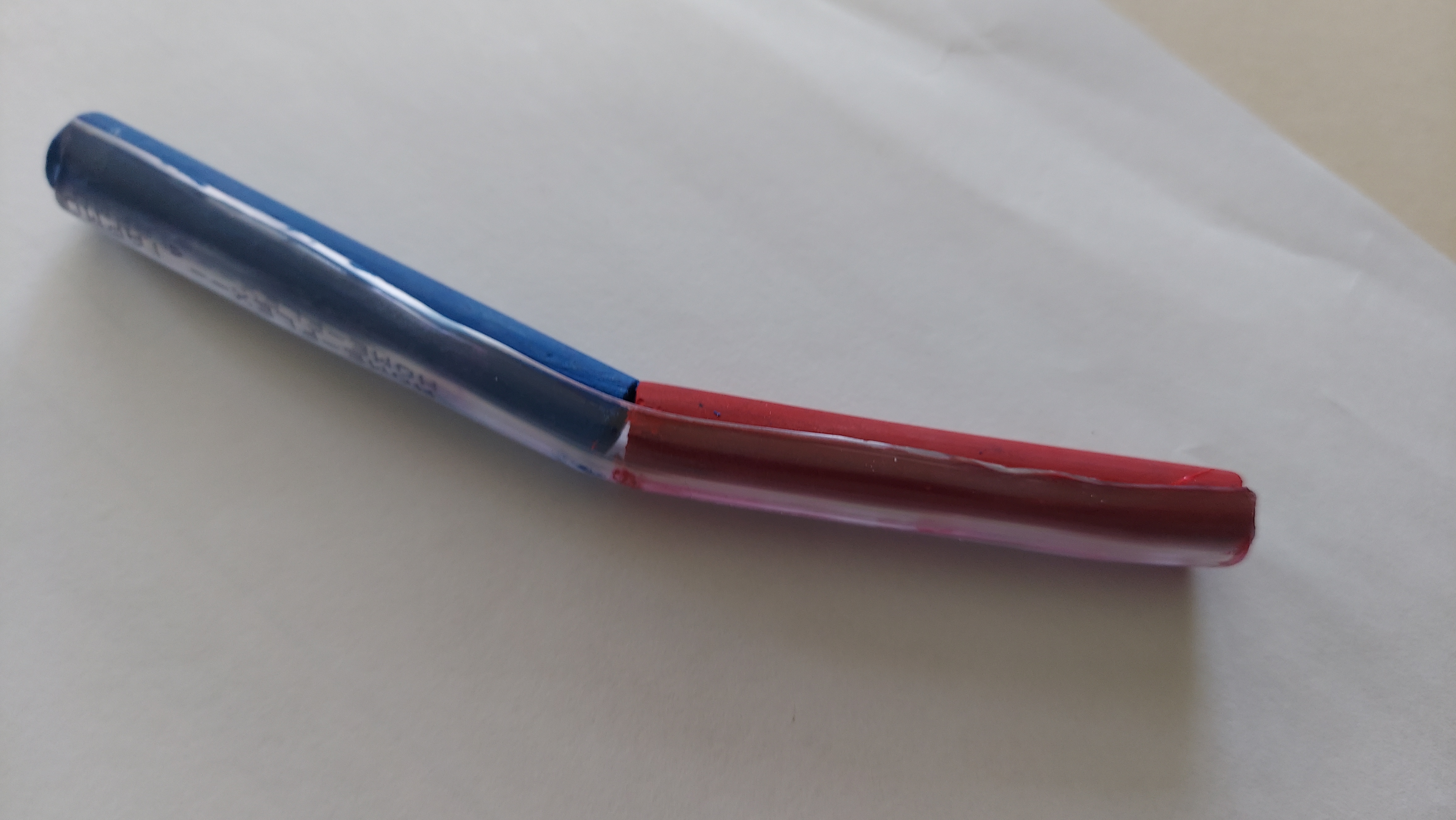
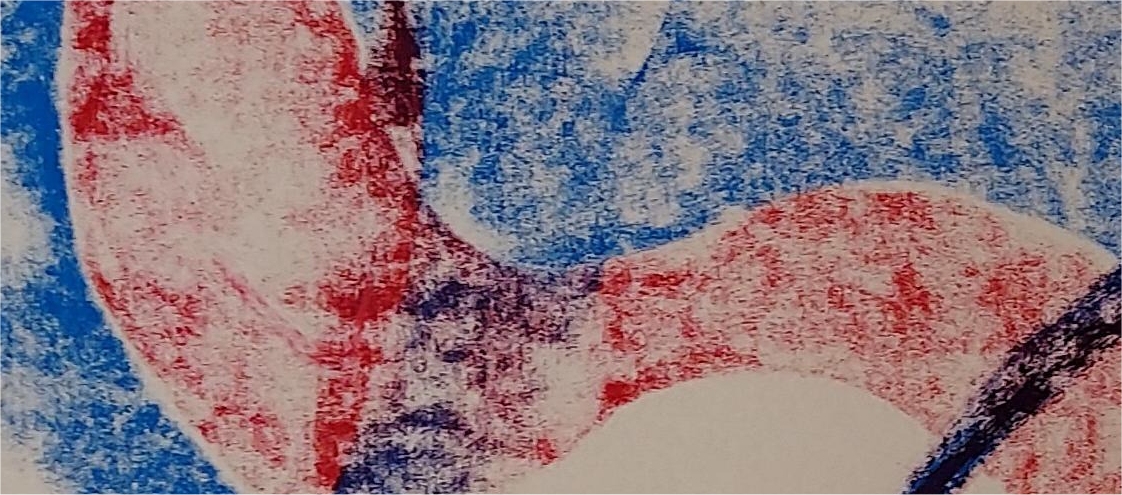
The first articulated coupled trajectile: red and blue soft pastels were joined by a cut-open flexible PVC sleeve and driven simultaneously by both hands across UArt 400 paper. The unstable coupling produced porous deposits, sliding voids, and dark collision nodes without regulating the bodily event.
Nameless Number Seventeen continued the 21 × 27-inch UArt 400 experiment begun with Nameless Number Sixteen, replacing its jumbo oil pastels with regular-size red and blue soft-pastel sticks.
A cut-open length of flexible PVC joined the two sticks while allowing them to retain different pressures, angles, and degrees of contact. Both hands remained active.
The device therefore coupled the trajectories without bringing them under mechanical control.
The abrasive tooth of the paper became an active participant in the event.
The sticks slid, skipped, caught, and accumulated pigment unevenly, producing broad porous fields, interrupted red and blue bands, and darkened nodes where the two colors compressed or crossed.
Areas of incomplete deposition are not omissions from an intended image.
They are pressure-gaps—material evidence of moments when velocity, angle, or contact exceeded the pastel’s ability to remain on the surface.
The work marks the first articulated coupled trajectile within Somacentric Trajectilery.
Its temporary mechanism multiplied the points of contact while remaining subordinate to bodily instability: it did not determine a path but introduced disagreement within a shared movement.
The resulting trace remains nonrepresentational, yet rotation can release involuntary impressions of wings, bodies, mandibles, or unfamiliar organisms.
These apparitions arise only after the act; they were neither subjects nor production intentions.